Episode Transcript
[00:00:00] Speaker A: That is the issue. How do you, as an individual contributor, contribute to the organization where we're working? And actually, one thing that's important about that is that I feel connected personally. My passion personally connects to what the purpose of that organization. That's an important piece of the puzzle.
[00:00:15] Speaker B: Welcome to Stand up, to Stand Out. In the high stakes, big bets world of biotech, breakthroughs are never the work of a single lone genius. They require an ecosystem. Scientists, clinicians, regulatory experts and operators.
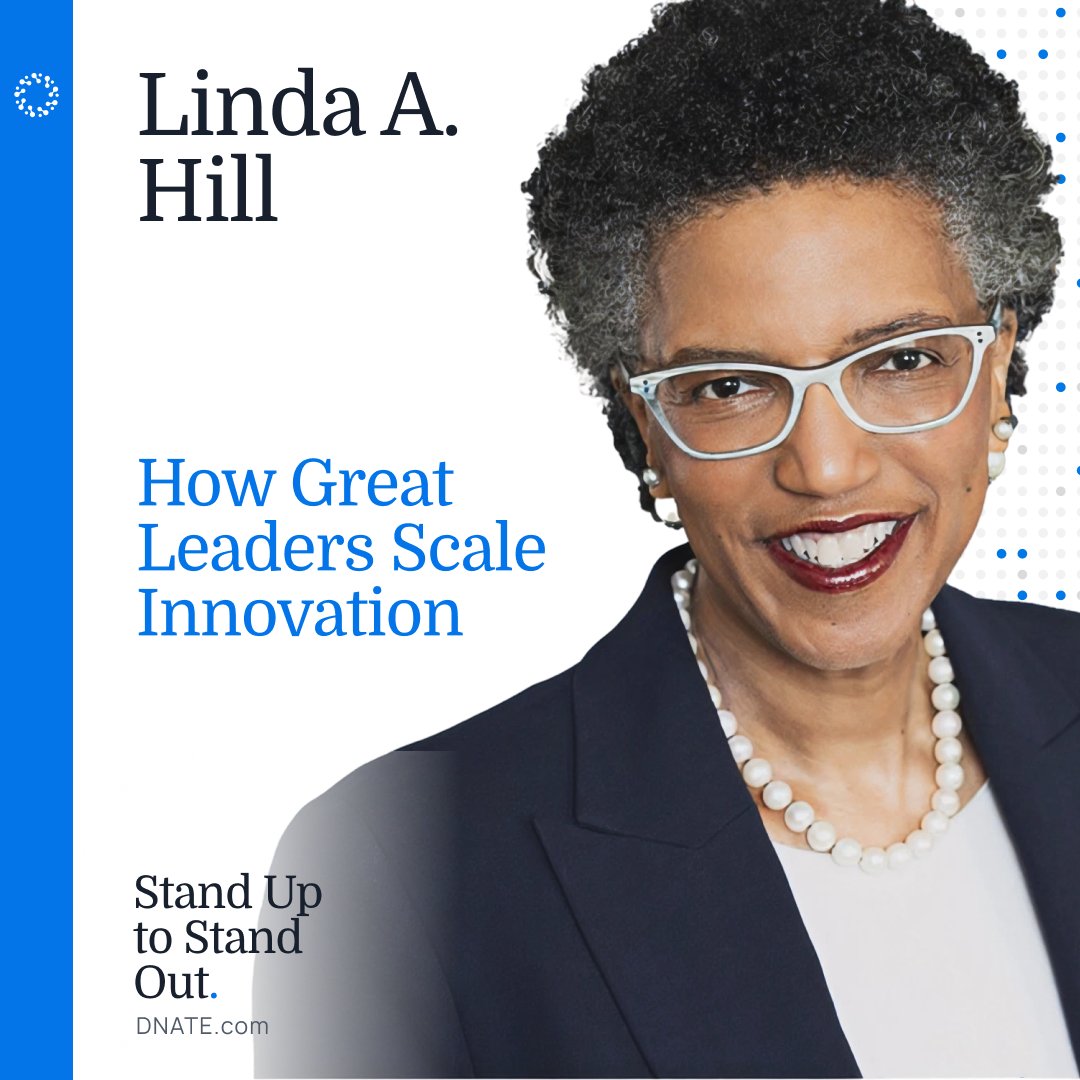
Everyone seeing the same complex problem, but through a completely different lens. So how do you lead a team of brilliant minds when you don't have all the answers? How do you transition from being valued for what you personally know to being responsible for what a team can build? Today's guest has spent her career answering those questions and a lot more. She is one of the world's leading scholars on leadership and innovation, the Wallace Brett Donham professor of Business Administration and and the faculty chair of the Leadership Initiative at Harvard Business School. She's the co author of Collective Genius and the brand new book Genius at Scale, and she recently won a lifetime achievement award from the Institute for Management Studies. It's my pleasure and Honor to welcome Dr. Linda A. Hill. I am Stuart Papp, founder of DN8 and welcome to Stand up to Stand Out. The podcast communication has changed my life and it will absolutely change yours. Because breakthrough innovating deserves, deserves breakthrough communicating. Every episode we bring you industry insiders, subject matter experts, and you can learn from my decades of experience to get the most practical and tactical advice that you can put to work. Now let's dive in to today's show.
Welcome to the show.
[00:01:46] Speaker A: Thank you for having me. I'm very much looking forward to our conversation.
[00:01:50] Speaker B: So my first question to you, welcome to the show, is you wrote the book Genius at Sky Scale, which is building on your first book, Collective Genius. And so I was hoping you could explain Genius at Scale. What's driving the impetus behind this book.
[00:02:04] Speaker A: Now, there really were, there really are two drivers. The first is Collective Genius was a book we wrote because we were interested in looking at the intersection of leadership and innovation. Because as it turns out, most people who study leadership don't study innovation and most people study innovation don't study leadership. So there was very little work that looked at what, what does it mean to be an exceptional leader of innovation. So we wrote Collective Genius to figure that out. And for maybe obvious reasons, back in the late, in the late 90s, we ended up going to Palo Alto, going to Seattle, looking at all of these New Internet companies, but I guess we'd call digital first companies. The company we studied first and for the longest was Pixar. And the leader we studied was Ed Catmull, one of the co founders of Pixar.
So that book we wrote, and we did look at that intersection and we ended up being able to write about, well, if you want to build a company that can innovate time and again, what do you, as a leader, need to do? The other theme that was in that book really was how do you get people to really adopt emerging technologies to deliver, you know, new value or change the game for your, for your customers and your stakeholders. So that book was finished, needless to say. I went out and we talked about the book with different audiences, etc. And people would frequently say to me, we're not Pixar, we're not Google, how about us? We're sort of in regulated industries, we're large multinationals. So one thing we wanted to do when we wrote this book, we still went out and studied entrepreneurial ventures and if you will, to some extent, companies that are now trying to use AI or the hyperscalers, et cetera. But one of the things we really wanted to do was to look at organizations that were really innovating, even though they were in what you might even describe as hostile environments to innovation because they were so large, because they were well over 100 years old, they were quite regulated. That was the first thing we wanted to kind of over sample on that group and look at the transformation process. What if you're not already innovative? How do you as a leader transform your organization to have the culture and capabilities to innovate? The second and really primary reason though was the other thing we heard as we were talking with people about our first book was that, you know what? We do know how to generate innovative solutions, but we don't know how to scale them. We don't know how to make sure they get launched, they get commercialized, or have the impact that we'd like for those innovative solutions to have. So genius at scale is really about how do you make sure you build an organization that not only generates innovative solutions, but in fact scales them. So the two pieces were one, how do you transform your organization if you're not already very innovative? And the second was how do you make sure that you can scale those innovations? Now, I would say in the first book, all of the leaders and all the people we studied, they actually had built organizations that could generate and scale. We just hadn't pulled out the scaling piece to understand that as much, since that is such a challenge, we really see that the scaling question has also become a question of speed. Because right now people are feeling, because of emerging technologies, emerging new science, et cetera, that they have to be able to innovate with more speed. Speed, and not only scale. So that's, that's the other theme we tried to look at.
[00:05:19] Speaker B: So I'm incredibly curious about this because many of my clients are in biotech and biopharma and they're, you know, a lot of people come over from clinical practice or they come from academia or running a lab, and all of a sudden they're in an environment where there are multiple stakeholders and cross functional groups. And so I always thought about this tension between being celebrated for being an individual contributor. You are the best of the best, you're class valedictorian, you went all honors to some Ivy League, and it's always you, you, you. And now you're in an environment where they're saying, hey, it's we, we, we.
And people are looking and they're saying, how do I, how do I make sure that I'm being contributing in a way that's useful, but also contributing to the collective value? And so I was hoping you could explain or your understanding of navigating the tension between wanting to be an individual contributor, but also seeing the value that your collective genius can create for the market, for patients, you name it.
[00:06:21] Speaker A: When I first came to Harvard Business School, what I studied was how do stars learn to lead?
And it turns out that stars have more trouble learning to lead than people who are not stars. So exactly the group you're describing are the group that I began to study initially. And in fact, I looked at people like physicians who decided to go, or scientists or technologists who decided to try to build a company around some of their expertise and had to learn how to innovate with others in a very active way.
So that is the first thing I studied and it does show up again in the work that I'm doing now on innovation. Now, one of the things we know is it is really hard. And we could talk about why it's so hard for stars. But one of the things that I learned working at Pixar is this notion or one of the concepts that I learned was what they say at Pixar is that everybody has a slice of genius. Everybody has a slice of genius. Everybody has talents, everybody has passions. Your role as a leader is to figure out how to unleash those talents and passions and use them to get something done that the organization wants to get done. So this idea that everybody has a slice, now not all slices are equal, not what they're saying, but everybody has it. And if you as a leader don't know how to use that slice of genius in front of you, then shame on you. That is your job to make sure you understand how to unleash and use and leverage those slices of genius. So this idea that, yes, I've come and I, and, and one of the challenges you have though, so you do normally want to make sure it gets used. Now one thing that we know from other work and even some work we did at Harvard Business School to understand who we should accept, if you will, into our MBA program is we discovered that sometimes your A plus students are not your best entrepreneurs.
They are actually relatively risk averse. And that's partly, you know, what we do in school and what we make people do to make sure they get that A plus, if you will. So we actually begin to change even our own criteria for how we think about who we accept at the school, which is very in line with this issue. Okay, you may have talent, but if you can't use that talent, you can't use that passion to align with others, there's going to be a real limit to your potential to have impact.
For me, when we look at these organizations like if you think of Pixar, they have I don't know how many Academy Award winners, et cetera. And I remember one student said to Ed Catmull, the co founder of Pixar, the reason why Pixar has been so successful is you have more talent than the other studios. And Ed, who's a very thoughtful man, sat back, he thought, he said, you know what, we really do have a lot of talent. But I don't think it's because we have a lot of talent, I that we have been able to be so successful. I think that it's because we understand that innovation is the result of teamwork. Filmmaking is a team sport. And if you don't know how to play on the team, then guess what? Takes about 500 people to make one of these movies. If we have one person who can't play on the team properly and throws off that team dynamic, that movie is not going to be what it needs to be. So I think that that is, that is the issue. How do you, as an individual contributor, you all want to make sure, we all want to make sure that we can contribute to the organization we're working, you know, where we're working and we hope. And actually, one thing that's important about that is that I feel connected personally. My passion personally connects to what the purpose of that organization. That's an important piece of the puzzle. And you do want to use that, make your contribution. But you kind of got to learn how to work with other really star talent yourself and use that talent to help your talent even, you know, even improve more.
[00:09:51] Speaker B: Well, I remember reading a piece of that book, Creativity Inc. Written by Ed Catmull about Pixar. And in one particular anecdote, he shares how when people join Pixar, they're all gathered into a room and says to them, no matter what your role is, whether you're coming in as a. An editor or a color correctionist or a graphic artist, you are now filmmakers. You are now a filmmaker. And your job is to serve the greatest films possible and to make a quick connection. Mr. Beast is, I think, the number one YouTube creator on the Internet and similar. He actually has a manifesto that leaked and it says, how to succeed at Mr. Beast Enterprises. And they have hundreds of millions, if not billions of views per day. And he said, there's only one thing I'm interested in, which is making great YouTube videos. They have a shared purpose, but they also deputize everybody who joins them at whatever level is serving that purpose. Do you think that's a component of this genius at scale, that people feel truly connected to the purpose and can point a clear line of logic to how their contributions are adding to that collective genius at scale?
[00:11:08] Speaker A: Yes. And I think even more precisely, one of the people that, in fact, maybe you would know of him or have seen in some of his work is a Dr. Rakesh Suri. So Dr. Suri is a pioneer in robotic surgery, cardiac surgery, and he is a Rhodes scholar. Talk about a star. Fly his own plane. Just really brilliant man. And he became the CEO of Cleveland Clinic, Abu Dhabi. I started studying him a little bit before COVID and during COVID but I remember one day he said to me, you know, and this is, this is something true about, about Cleveland Clinic in general. Everyone in the hospital is called a caregiver. Doesn't matter what your role. If you work in the kitchen, you're a caregiver. If you're the senior physician, you're a caregiver. So this whole idea that everybody is a caregiver is a piece of it. And when we were going through Covid, and this is a man who's used to knowing if you will, and, you know, he's A surgeon as well. One day he said to me, linda, I feel like I'm leading through a fog. What does it mean to lead when you can't see, when you have no vision? Emotionally, very complicated for him or anybody at a time like this. He's got to lead this hospital through this crisis and he can't see. He has no vision. And what he said was, I thought my job was to take charge and steer the ship. But then I realized that was exactly the wrong thing for me to do because everybody in this hospital matters. Anybody can make a mistake or a misstep that leads to this horrible disease spreading through the hospital and spreading through the country.
So everybody in this organization has to be an innovative problem solver. Everybody has to understand that there is nothing called business as usual. We all need to appreciate that everything we do is a working hypothesis because we don't know. So for him to say this, and we've talked every morning for a number of. For a number of weeks, actually, because he, he was in quarantine for a while there, and consequently he couldn't. He couldn't be at the hospital, which was really hard. He had to learn how to. How to lead virtually. But we talked a lot and talked about how he worked hard to make sure that everyone understood they mattered and that they were an innovative problem solver and an innovative problem solver who would make a difference in this case to, you know, health, whether or not people could. Would live or die. And so that sort of mindset that everyone matters is the first thing you see about these leaders. So when people ask me who can't lead this way, sometimes what I end up saying is people who can't see the slice of genius in other people, people who can't really work with people who might be smarter than them or more talented than them. In fact, those people want to be parts of teams and organizations where really everybody is very capable.
[00:13:55] Speaker B: One thing I've noticed about truly effective leaders is that they have this meta skill that unleashes their superpower, which is self awareness. Right. You see it in Ed Catmull, you heard in this story about the Cleveland Clinic. And there's this real deep sense of being comfortable, not knowing. Have you noticed that as a theme for people who tend to be exceptional leaders through innovation, that they have a sense of deep self awareness?
[00:14:22] Speaker A: I think, you know, they do. And many of them will describe how they had to learn and develop their self awareness. They didn't necessarily start out that way. Two parts of it. Dr. Suri, I don't know if I'd say they're comfortable because one day Dr. Suri said to the entire organization, I'm scared, but I trust you. I know we can do this. So it's not like he's comfortable. He was scared. He was not comfortable having to lead through these times. Right? So they will admit this is self awareness, how they feel. He actually said to people, we're going to sort of do an assessment every day of how we're feeling on a scale From I think 0 to 8, 0 to 10, I think it was, how are you feeling today? At first everybody felt like a 9 or a 10. You know, it's not easy, particularly my husband's a professor at Harvard Medical School, so I'm going to pick on physicians.
You know, there's not easy for them to say I don't feel a 10 or whatever. But eventually people began to say how they really felt. Dr. Suri said to them was, you know what, the reason why we have to know how people are feeling is because if I tell you I'm a six today, or four even, what that means is pay attention to me. I need your help, I need your support. I'm not my usual self. So that self awareness and these leaders not only want to have it, but they start to build it in others.
The man I'm going to stay in the pharma industry on that part of the world is actually Michael Ku who was at Pfizer and he's the person who led the team that ran the COVID vaccine trials in 266 days. And as the economist says, you know, helped millions of people live. So there's lots we could say about Michael. But Michael, when he first came into the organization, he wasn't as effective as he became. And at one point someone said to him, for instance, you keep talking about change, change, change, change, change. Now he was an outsider who would come in, so the people were feeling a little insulted. What do you mean we got to change all of this. Who are you? She said to him, can you think about using the word evolution? Evolution. Now first he thought evolution reminds him of dinosaurs. He's like, oh no, right. But what she was really saying, can you respect what we already have here and what we've done in your language? And yes, we need to move because something is changing about our circumstances. And after that he actually got a 360 degree feedback survey done. When he saw how he was not his intent, because he, his intent was very honorable. When he saw his impact, he began to make lots of changes. And he shared with the entire, his entire team, this is my feedback. I hear you loud and clear.
These are some of my behaviors that I guess I'm feeling urgent, I'm a little impatient, I'm this. But these are some of the behaviors that are getting in the way of us being effective. And I want you to hold me accountable for changing those behaviors.
So yes, he would not say, not that he wasn't, you know, somewhat self aware, but this was not an easy task to go through. And another, another CEO in India did a similar thing. He got feedback and he actually put it up on the intranet and he said to people, to the whole, I mean this is, you know, I think there are 80,000 people and this, this is my feedback. I'm sharing it with you because I have a lot of learning to do and a lot of self development and I hope you will do the same and think about your impact.
[00:17:30] Speaker B: What's illustrative about that? My first guest on this show was the former CEO of Baxter, Professor Harry Kramer, who's at Kellogg now. But you know, one of the things he talked about, he came in as an analyst and became eventually the CFO and then eventually the CEO. But he said, you know, when I, the higher up I went in leadership, the more I was cognizant to speak last because I knew that my opinions and points of view would shape the room even in real time. And so to me that's a keen sense of self awareness. And I think what I'm hearing from this example is if the CEO is willing to share how they're falling short, I think other people will then feel more comfortable. And it's something I try to tell people in leadership positions. And I'd be curious your point of view that any change you want to see, it does have to start as high up as possible to normalize that sense of vulnerability so that other people feel able to do the same. Is that consistent with your experience?
[00:18:29] Speaker A: Very, very consistent. And indeed you need to be willing to role model the behavior that you actually expect from others, which is not easy. And often people, I think junior, you see this with senior people too. But people who are new managers often feel that they are the one who's supposed to have the answers.
So they actually think that when they're speaking first they're leading, if you will, you know, they're showing that they're visionaries or whatever it is. But you know, innovation is actually different than leading change and related and as relates to what you're saying about it, it does fit my experience really. When you're trying to innovate, you're not trying to say to people I have a vision, follow me to the future. Instead when you're trying to innovate, you're trying to create an environment in which people will co create the future with you. It's not a followership model. It's about how do we collaborate, experiment and learn together and get that breakthrough innovation we're hoping to get or whatever it might be, it could be incremental. So that mindset moving from I'm the one who's supposed to have the answers, I'm the one who's supposed to have the vision to it's co creation or even as far as Dr. Suri saying I have no vision, I can't even see now when the fog clears, you know, he moved into more visionary leadership. But frankly, you know, in the business that you're in and I'm on the board of Relay Therapeutics so I know a little bit about biotech. You all are making big bets. We know a lot, but we don't know everything for sure. And really innovation is about working through, navigating through uncertainty almost like you know, the explorers had to when we had unchartered seas. So that mix of trying to get to the answers as urgently as possible, but understanding that in fact we're, it's going to take a lot of us to get there and a lot of us who have different expertise and different points of view.
[00:20:17] Speaker B: One of the things that I think about, and I do a lot with innovation initiatives, that's actually how I started working with biotech and biopharma was the hard part wasn't the idea generation. I mean people are just full of ideas, but it's getting those not only prioritized and chosen, but actually executed and scaled. How do you see the shift from, from being in ideation mode where you're thinking rigorously about a problem and then shifting to a different phase where it's about choosing, prioritizing, resourcing and then ultimately executing or iterating, however you want to call it. How do teams successfully manage those different components or phases or whatever I may have missed?
[00:21:02] Speaker A: Well, I'm going to talk about a little differently. There are phases but really the reason why the organizations we've written about and we've studied many organizations, many leaders who would not end up in the book because they, they in fact weren't able to innovate time and again. But what you see is initially going back to something we discussed a little while ago. Initially, what they do is they try to create a culture where everyone understands that they're an innovative problem solver, not just a special group.
So we've been studying innovation labs and corporate accelerators. And so often in that innovation lab or corporate accelerator, you'll have the people who are supposed to be the innovators, what we call the, that we refer to as the game changers.
So that's your job. The rest of us are supposed to be, if you will, the value creators, the executors. Well, when you set up your organization that way, guess what? When these people create these new innovative solutions and they pass it over to us, those people supposed to execute, we resist. We say, no, thank you very much. Because in fact, for us to deliver what they have created, we also have to innovate. We also have to work in new and different ways and come up with different solutions. So when we were studying Procter and Gamble, you know that yes, they're R and D, they invest a lot in R and D, a lot in innovation. But then they couldn't scale it because when they sent it over to be manufactured or when they sent it over to finance to figure out, you know, how to invest, et cetera, because those people weren't seen as, quote, innovators too. They just tried, you know, they just resisted because they knew that the ways they were used to working and the ways they were being rewarded for, given their metrics given, were inconsistent with what was going to be required if they were going to deliver that. So what? Finally they just, I shouldn't say finally there was lots working on. But one of the innovator, one of the heads of innovation said, we're going to innovate on how we innovate and no longer is it going to be R&D's responsibility to be the innovators. We all are the innovators.
So when we come up with something, they moved to a lean sort of startup kind of approach to doing work.
And the idea there was that everyone develops the mindset of how do we collaborate across our differences, how do we learn how to experiment and learn? And she said one of the biggest problems they had is they had all type A people who were used to A pluses, who suddenly were being told, it's okay, quote, to fail, it's okay to take a risk. Well, it wasn't okay from everything they had seen in their careers in the past. So they had to shift their thinking. So in terms of the first thing I would Say, don't divide the world up that way. The innovators and the non, that's not what the exceptional leaders do. They try to create a culture and build the muscles necessary for everyone to be able to see themselves as people who can change the game. So then when you do pass, it's still going to be hard when you, when you come up with a solution and you have to work with more people, because by definition, when you go to launch something or commercialize it, you're bringing on, you know, more and more people and actually more and more people who have different expertise. So like in a biotech company, maybe you start with the scientists and the technologists, eventually you have to run the trials and you bring in the people that you know can do that. And they're a different kind of. They have different mindset, different preferred working styles. Then you bring in the commercializers and you have even more diversity. The second thing we see about these, these companies that are able to execute is they're actually very good at working through differences. They have a muscle we and others refer to as creative abrasion. They know how to create a marketplace of ideas through debate and discourse, that you actually have to have that diversity.
It's right that we have different priorities and working styles, but can we rub up against each other, Create this marketplace of ideas through competition and through debate, actually, and discourse.
And frankly, everybody's supposed to inquire about each other's ideas, but you're also supposed to advocate for your own. So it's going to get a little heated, but that is how you actually, that is usually how innovative solutions come about, not because we haven't been able to work across that difference. And I think, Stuart, going back to why we don't launch, is that often in many organizations, because so many organizations are so siloed.
And actually at Procter and Gamble, some of their most successful innovations were actually across business units, not just functions. And they're not used to working across business units. But as they begin to put together these diverse teams across business units, they came up with even more, if you will, innovative solutions.
And they over time got better at moving from incubation, if you will, to scaling them as they learn to work through those differences. Because initially when you bring those groups together, in fact, they're not good at it. So the research, we don't say this enough. When you look at who's really better at innovative problem solving, we often see statements that say, the more diverse your team, the more innovative your solution. That's Only true if you can embrace that diversity. Cause what you really see is that teams that are more homogeneous in some ways there, if you look at the normal curve, they're kind of in the middle. Then the ones that are more diverse, either they do worse or they do better. And often they do worse. So the launching, when you introduce that new diversity necessary, all these different kinds of people to launch, that's when we suddenly find we can't work very well together. We really aren't so good at collaborating across difference.
[00:26:31] Speaker B: It reminds me there's a parable of, of a school which has students who are in pottery and group A, the teacher says, at the end of the semester, you'll be judged by the quality of the pot that you throw. In group B, they say you'll be measured by the quantity of pots that you throw. And of course, the parable pays off this way. The ones who actually did more effort, they actually produced a higher quality because they had a different relationship with effort and failure. And so the reason I shared that parable, I always find it illustrative is it normalizes what you're managing to in a semester. That's an easy thing to do. What I notice is, and I just had a conversation this morning with a VP at a biopharma who's in a function that it's harder to quantify the value. They're not in commercial, they're in a different team.
And they said, you know, one of the friction points is we have to constantly sort of fight for our declaration of value. How do we keep explaining? And so now when I'm thinking about innovation and I'm managing in that environment where you have a diverse team and you may have people who are bumping up against each other and articulating different points of view. I can imagine in a leadership role, if you're getting pressure from the executive committee, you know, while we've got quarterly earnings and we've got pressure from stakeholders, I just feel that there's an implicit friction, not negative, between sort of generating the best ideas that will ultimately scale and help everyone drive value, and also explaining that or normalizing that for people who are looking at Excel spreadsheets and saying, where does this show up on the bottom line or top line?
[00:28:14] Speaker A: So when I often ask people, and I'm, I'm obviously, I hope this won't be taken the wrong way. When I ask people, what group makes it hardest for you to innovate? Almost always the finance group comes up. And then after that might be compliance or regulation or Something. And actually at Procter and Gamble, one of the things they discovered is, again, the people in finance were very well intended, but the people in finance did not think like venture capitalists. They thought, you know, big company, what you need to do, stability, you got to make. And as I told you, the time we were studying them, they were actually, they were. Maybe they were struggling because they actually had an activist on their board because they weren't growing at the rate that the market expected.
The business unit presidents and everybody felt a lot of pressure, you know, and Kathy said, we're going to innovate on how we innovate. So a couple things that happened. One is they realized that they needed to. The finance people actually needed to be educated about what it means to invest more like a venture capitalist.
So they literally, you know, began to think about how they went through a whole design thinking process where they looked at their own processes and said, given what we need to do now, do we need to rethink some of the processes and ways we're doing things to include using whatever the latest technologies might be, digital or otherwise, so that we can actually do our jobs differently? We have to innovate on how we're working. If the whole organization, we're going to hold up things. Another leader that we studied, he basically said, I'm going to put a moat around innovation. So for two years, the finance office is going to leave you alone. Obviously, they will completely leave you alone. The other one, the last one that I'll mention, because people do respond to what's immediate. You know, we all know what's urgent versus what's important. And what's urgent is making sure you meet that quarterly, those quarterly expectations, et cetera. The other thing that one leader did was actually said to the very senior, the top of the house people, the heads of these business units, how do you think you should be measured or your innovations, your efforts to innovate and what. Yeah, you know, you run these businesses, who knows the business better, you know how much innovation is needed, you know how much priority there should be there, etc. So what do you think are the appropriate metrics to measure your efforts with regard to innovation? Which is fuzzy. Right.
And so the business unit heads came back and said, well, this is given the state of our business, how mature it is, or the competition, this is what the percentage should be. You know, one said, 50% of our time should be on growing the core, and 50% better be on diversifying our business or moving to new businesses.
And consequently, this is how I'd like to be evaluate, evaluated. And the C suite said they, you know, they obviously tussled a bit to stretch people, etc. But then they said, okay, whatever you say, we're going to go to the board, I'm going to support you as you explain to the board that you think this is how you should be evaluated.
And the only thing we're going to require is next year you're going to have to come back and tell them how you did relative to your own metric. Now they did that for a couple of years until they actually all got a little bit more comfortable with understanding what metrics were good milestones to say, you know, they were making progress. But it was a, you know, it was a shocking thing in a company, very metrics driven company to have C suite. But they said, well, who knows better? The business and the people that we think are the presidents of the business of the different units, nobody knows it better.
So formal authority doesn't work, frankly. It's a limited source of power. When you're asking people to use, to take risks and use their talents and passions in new ways, you can only invite them.
So that was the logic, they didn't come to it easily of the C suite that went down this path. They said we can invite them, what can we do to make it to help break, help them break, frame and do what's going to be right for this business over time.
But I think that it's for me to say to people, just ignore the short term. No, of course not. It's a balancing act.
So I think leadership is hard and you know this from all the people you've spoken to and the work you've done and these trade offs are complicated ones. And again, going back to what a comment you made earlier about, it starts with the leader. The leader has to role model the right behavior and what the priorities really need to be.
[00:32:33] Speaker B: Do you want your team to have a seat at the table? Would you like your team to speak with clarity, confidence and influence? Reach out to us DNA.com for more information.
One of the things I was thinking about is just what it takes to be an innovator, an entrepreneur. You have to take on, I guess people would say risk or you know, the likelihood that things don't work out. But ultimately when things do, I think it's tempting for people to say, okay, now that we have some cash flow and sales, it's now time to start tightening the ship and sort of manage and what you highlighted there with finance sort of redirecting their mission or governance or whoever it would be, compliance, saying, look, we are all responsible for driving the growth and the expansion of the company and reaching who we're here to do. And even if my remit says I am, you know, a bookkeeper, you still have to put yourself in the lens of how am I contributing to the innovation and growth of this company in everything that I do. And maybe you just have to reframe the way you think about it because what gets you where you are has to be kept in the DNA of the company to continue growing. And I see this every single day, that people lose that sense of who they were or the company was because now they're at the new phase or next phase of growth.
[00:33:58] Speaker A: Must be thousands or hundreds of thousands of dissertations written about what you just described. And what I'm describing is sort of people who were able to beat the odds here. As I said, companies get larger, they become more multi net. All of these pressures make it harder for us to have some sense of community or common culture and to build the three muscles that are needed and for innovation. The three muscles are can we collaborate across difference? Do we know how to do experimentation in an efficient and effective way? And do we know how to learn from that experimentation and share the learning? Turns out in many organizations, even not so big ones, there's not a lot of sharing of the learning. There may not even be the learning because if you don't reflect on the experience, you don't learn the lessons. And very few companies take the time to reflect on successes. For instance, we sometimes do reflect on our failures, not always, but we're more prone to wonder about that. We don't necessarily do it collectively. So as one, as actually Michael Ku advisor said, you know, Linda, good news travels around here much faster than bad news.
We have to make sure that bad and good news both travel and we're learning from that. So one of the things that they got very, very disciplined about were they did pre mortems and postmortems and they, you know, they looked at what did we, we did the pre mortem. We thought these were going to be the challenges, opportunities, whatever. And after we've done it, now what the post mortem, were we right, were we wrong? What adjustments do we need to make? And he began to do these very, very systematic reviews. The other thing that came up as they did the reviews is how to think about risk.
So it turns out, and maybe have a little bit more of it in biotech, I don't know, but I Haven't studied this as, you know, a sector per se, but one of the things we know is that people don't normally like to say, I have a really risky project for us to do. It's really risky, but we need to do it.
So in his organization and Michael's organization, he was running the global clinical supply manufacturer. People who were manufacturing, who were doing packaging, you know, he. They did not think about. They first off, they didn't think they were innovators. And he had to convince them that it wasn't simply the scientists, it was also them going back to what I was describing about making sure that everybody knows they have a role to play. But they wouldn't talk about risk. It was sort of taboo in a way. And they also could never have, in a pharma company, they could never have, you know, fail fast if the regulators saw some big sign. And actually they had learn fast. And if you're learning fast, there are going to be some missteps and some failures. At Pixar, they also had learn fast, not fail fast. We're not valuing failure, we're valuing learning. And when you try to learn, you're going to have some missteps. So the first one of the things that Michael put in place was they won't talk about risk, but Linda, maybe they'll talk about complexity. He had a complexity index. If your project was very complex, it was a red. If it was medium, yellow, green if it wasn't so complex. Again, complexity often is correlated with risk. Particularly in his. If you think about the trial business, right? So he thought that we need to have some common understanding, some case law about risk. But I'm going to use the word complexity.
And therefore, when we have something very complex, we know everyone needs to pay more attention to that because it is so complex. Interestingly enough, I was doing some work with NASA, and NASA at the time had said they had lost their capacity to innovate. They had lost their capacity to take risks. I found very shocking because, I mean. And so I actually took Michael with me once to do some work we were doing together, and he shared with them the complexity index. And they loved it. They said, you know, we don't like to talk about risk either, but we can talk about complexity. So even if you can't have a conversation, if you don't have a common language to talk about risk or complexity, well, you know, that's a problem.
So to think that NASA, they don't like to talk about risk either, and we know their consequences, they Loved it. They moved. This was a group who was in Florida and they began to use the complexity index as a way of people understanding risk and thinking through.
We need to do some innovative problem solving. But how we're going to mitigate the risk associated with this very complex project. If you're, in a way it was. So it's interesting how, how I guess conflict and risk even is, are, are both, you know, concepts or experiences that worry us as, as people or most of us.
[00:38:35] Speaker B: I would say I'm thinking of a, a physician and clinician who's in industry right now. And she incredibly bright, you know, medical degree, PhD. But she said, you know, I've been in other companies where the assets have not worked and they've dissolved the teams. Now I'm in a position where I'm, you know, I'm incredibly ambitious, you know, but I, I want to be in a situation where I can do my best work. And so when you're talking about NASA as you were, what I've noticed most of my clients have in common is they join biopharma or biotech to have an impact and what impact means to them is if I'm going to trade being in a smaller environment where I may have more hands on patient experience for a larger matrix environment where I'm going to be 1, 2, 3 steps removed from being with patients or whoever the clients are.
Ultimately I would like to know that what I'm doing is contributing value and it can get away from you. And what I keep hearing from what you're sharing in your, your work and your experience and your writing and your studies is that the more a leader can shape the environment in which people can feel safe to try things, learn quickly, speed up those feedback loops, normalize being vulnerable, but ultimately keep connecting the dots between what efforts you're contributing and how it's ultimately driving what the company values.
Those seem like some of the key themes that I'm hearing through your work and I'm sure I'm missing some.
[00:40:11] Speaker A: No, well, no, I think that one of the things that we have, it's sort of a false distinction we talk about are people going to be willing to innovate and are people going to be able to innovate? And so what I think you just described are the conditions that actually allow people to be more willing to innovate.
Whether they're able to is a separate but related question.
So I think that the able is I want to do this, I'm here, I've come, I've taken this position as this individual, my husband actually left Harvard Medical School, he's a pediatric cardiologist to go help start Millennium Pharmaceuticals with two of his friends who were also physicians. Turns out after six years, my husband decided I really miss patient care. The other two physicians gave up their licenses and they loved, you know, biotech.
So he actually realized, you know what, I'm not as happy as if I want to go back to the hospital now. He had never completely left.
So you find out often you cannot know what you want to do and what you're going to enjoy and what you're going to be good at until you try it.
So I think he, I think he was good at it from everything I understood from everybody else. But he just realized going back to self awareness, you know what I actually. He was a micro. He's also a molecular biologist. So he loved the work they were doing and didn't have to apply for grants. What a blessing, all of that. But he thought in the end, I really like the babies and their families. So one thing I would say is you discover what makes you willing is where do you think you want to contribute and how does it fit your slice of genius, your passions? The able is actually goes back to can I collaborate across difference? Can I experiment and learn with larger groups of people who are more different if I can use that. I don't know if that's good English, but who are really more different than what I would find if I was still in the hospital or where or in the lab because of the range of people. He had to go actually he was working globally, he has global patients, but he had to go, you know, they had partners around the world. So he had to learn how to bridge between what they were doing in this biotech company and large pharma companies that they were doing deals with. He had to also.
And that, that he, I guess he was fairly good at in particular because he has apparently has good bedside manner. So he used that empathy that those empathic skills to build to be a bridger, which is another very, very important role.
So going back to these individual contributors, these professionals who go into these roles, they have to learn how to bridge, how to translate and integrate with people who do things differently and might be actually coming at the work with slightly different motivations and passions.
So you've got to be able to do that. And so you can build the willingness. But if you don't build those three muscles of collaboration, experimentation and learning, people aren't going to be able to do the work. So yes, I Think you captured it. It seems to me that what you described explained more the willing, if you will, than the able. But of course, if you're not willing, you're probably not going to be so able. I don't know which comes first. I mean, you have to. Why do I want to bang my head up against a brick wall and try to work with these difficult people if I don't really care about the outcome?
So, you know, Michael actually at Pfizer said, what is our purpose? Hope. Bring hope to patients. And the faster we can bring hope to them, the sooner they feel better, they can go back and live their lives. So that is why we as a global supply team must learn to do our work more efficiently, must figure out how we're going to adopt. Right now he's working a lot with AI, how to use digital tools, data, and now AI to actually be able to do these trials faster.
Because speed matters. Because every day that someone is sick, every day we don't take that what we've created, the scientists have created and get it to people is a day that they're not living the full lives they deserve to live. Or at MasterCard, when they were doing a major transformation of being a credit card company to being a fintech, basically what the leader there said was, what are we about? We're about financial inclusion. If we can adopt digital methodologies and AI, et cetera, we will be able to give access to financial resources to individuals in small and SMEs that didn't have access to those, those resources before. And if we give them access, they can build their businesses, they can have their livelihoods will improve and their lives will improve. And so again, the work needs to be meaningful.
And many people might say, well, what's meaningful about being in a credit card company?
Yeah, it's meaningful. If people can get credit, guess what they can do with it. So I think that, yes, it always starts with, why should I care about taking on these risks and working with these difficult people? Because if I can get it right, I'm going to make a difference in their lives.
[00:45:01] Speaker B: One of the themes that originally attracted me to your work was this sort of transition of a star performer to a star leader.
And I remember recently I was asked by one of the top execs to work with somebody in a research department who was absolutely responsible for one of the most groundbreaking therapies coming to market. What I was told was, we need this star to be a leader of stars. That's what the company needs. And I could see that it was a real personal struggle.
Someone who had invested their entire career at being a star was now being asked to change roles. And you talk about this and I was wondering if you could shed some light on that process and what's possible for people who are stars in one domain and need to evolve their sense of self or maybe are willing to, to uplift the entire organization.
[00:45:59] Speaker A: Yeah. And I think that frankly, I'd say probably all of the people that I have written about in those two books, they were all stars and they were all visionaries. And one of the people I had the privilege of spending a little bit of time with and studying the group who worked with him was President Mandela. And one thing that everyone said about President Mandela is that he was a big, you know, he has vision like you would not believe, but he always knew how to make space for other people to share their vision or put their vision into the story.
So learning how, when you, how to manage your own talent, if you will, nonetheless, energy and passion is a big deal.
So one thing that we do see when you become, you know, one of, one of the, when you become a, a leader of stars, which of course we had at Pixar, when you move into those roles, you've got to really redefine your own professional identity. You actually have to learn how to get satisfaction from work again, because it's a different source of satisfaction than if you're doing it yourself. Now sometimes you have to be extremely top down as well, because you need to say, this is what we need to do so we can move forward and get that innovation done. So what you see about people who are stars, leaders of stars, is first off, they had to become, they have to become more versatile in their leadership styles because you need to be able to adapt what you're doing, your behavior, to give the team what the team needs at that moment. Sometimes the team will need you to be very supportive and other times the team will need you to be very confrontational.
Sometimes the teams will need you to be kind of to improvise. Other times they're going to need you to put in structure. So one of the challenges stars face when they go to lead is there's not one right way. It's actually about judgment and you figuring out what does the team need. For me right now, if we're going to continue to innovate, whatever phase we're in, and you need to be able to adapt your behavior. So one thing that, that Ed Catmull used to say is mostly what I need to worry about is how do I amplify the people's talents and passions? Many of us actually minimize them so we won't have too much conflict. But once he amplified them, which meant, you know, creating enough psychological safety for people to say what they really thought about each other's work, et cetera, he then had to figure out how to harness them to make sure they got some, you know, did something for the collective good. Because once you unleash talented, passionate people, they can go every which way.
You have to figure out time for us to move in a certain direction. So I think for those stars, that's one piece of it, that there's not one right answer. You're going to have to learn how to be versatile. The two other things that really happen with stars that I see a lot is one is that being brilliant is actually complicated because being brilliant can intimidate people.
So on the one hand, people might like it about you. On the other hand, guess what, they're very nervous around you. On some level, they're not going to be as willing to share and be vulnerable with you because you're really good at what you do. And so you have to understand that this strength can become a weakness. The other piece of it that happens if you also. If you're really brilliant and you're also quite ambitious and driven, people can be very worried that what is driving all of that, Is this about the company or is this about you? Because you, You. You tend to move faster than others because you are such a star, et cetera, and you leave people behind, fundamentally. So that's. And then the final one is that people who are stars often have what is described as a very high need for achievement.
They really like to achieve. Now, if you have a high need for achievement, interestingly enough, what can happen to you is you basically become the star producer of your group. You have enough talent and passion that you are either pulling or pushing the group along. And you frankly never lead. You never step back and say, have I created the context in which everybody can do their own work? Because you actually have enough talent, energy to push the group forward or pull their different approaches. And the last thing I would say that you see with people who are very talented, if you're not careful, is you don't get very much positive feedback. You immediately see when people give you work what they haven't done. You see it within seconds. And so what you often hear about working for stars is stars don't let you. They don't give you a lot of feedback. And they are quick to micromanage you. Instead of coaching you on how to get better, they step in and fix it. So they end up in a cycle where they're not developing people who they can delegate to.
And the way it first shows up usually is people start getting burned out. They can't keep up, they're burned out. Eventually you will burn yourself out because you can't take care of the whole group. But those are the most, I mean, I, those are the most common. I think I've listed four problems that happen for stars who have to learn how to lead and really figure out how do you get satisfaction from work when you're working with others or through others to get something done. And that, that getting that satisfaction and learning it can take a little bit of time.
[00:51:03] Speaker B: Frankly, I couldn't help but notice just in the public sphere in sports, how many, you know, how many stars of any era become as successful a coach in a later era. And it seems like there's.
I don't know what the correlation is, but it seems pretty low. Whereas oftentimes you see these superstar teams that, yes, are full of talent players, but they also have coaches who seem to adopt some of these principles that you're, you're talking about more readily.
And I think that my observation, of course your, your data is, is, is far more important here. But they probably have an easier time adapting their self perception to say now I'm in a role where I'm serving a different purpose and I thus need to adapt. The skills that got me here won't necessarily get me there. I need to change and adapt.
[00:51:59] Speaker A: I've actually studied a couple of. I don't know if you'd call formula one a sport, but the one leader that I've had the absolute privilege of spending time with is Joe Mazzulla, who's the head coach of the Celtics. Now, Joe had an injury in college. He went to college on a basketball scholarship, had an injury, and while he was injured, the coach of the team actually told him to come observe and sort of see what coaches do. And Joe did that and discovered, you know what, this coach, I kind of like this coach and stuff. He liked both the strategy part of it as well as what it means to work with other people and help them get better. So even though I think his own image of himself initially was I'm going to be a star basketball player, he found because of this injury that at first was, needless to say, extremely disappointing, that he discovered that he might really like coaching.
And he ended up Becoming a coach at a very young age under very trying circumstances because one coach had lost his position because of. He had violated a policy of the Celtics. And suddenly Joe found himself the interim coach and then made the actual coach. But I think there. One of the pieces of the puzzle you have, of course, is you're leading a team of stars and most of whom make a lot more money than you do. They're extremely talented. You do not get to the NBA, even if you're on the bench in the NBA, unless you are an exceptionally good basketball player. So in a way, I suppose he was trying to lead. He was a star in his own right, in his environment, but he actually had to lead people who. You know, I think this is that. Or Even on an F1 team, the people that I spoke to, you are leading people who are really, really good at what they do.
And I think what he understood, and I'm so impressed with him as a leader. He actually. There's a whole lot that he did, but he's really one of the finest leaders I've ever seen. In his capacity to figure out what does that individual player need and what does the whole team need and how do I continually recalibrate that. I don't know if it's a balance.
And knowing how to really tailor his approach to this is what makes this particular player. And he's known to be a very contrarian, innovative coach, actually in some of the ways and things, etc.
They didn't win last time, but we actually were studying them when they. They got. Won the championship, which was. Which was really fun. Marvelous to see. I didn't realize how hard it was to repeat. Boy, I've learned a lot about that.
Not only in basketball, but in other sports as well. But he really focused on how do I build an environment in which we really respect the individual player and what he needs as well as make sure we get done what the team needs, that it is really a team sport. Going back to what. What we said about Pixar. So he focuses on every aspect of the environment. I mean, down to what color the walls are painted, what. What sayings are up on the walls during different, quote, micro seasons, as he calls them, because he breaks up the 82 games into different seasons and they have different priorities in those seasons, every detail. And he has a.
I guess. I guess it's a department of culture, a man who leads culture. But it wasn't simply the culture associated with the basketball team or even the basketball operation. He's a real bridger. Or a catalyst even. He also focuses time and attention on the business operation to make sure the business operation is aligned with the basketball organization.
He also, very early on, really thought about the Boston fans. Apparently we're some tough fans. Everybody tells me this. I've been doing work with a lot of different basketball teams.
Apparently the Boston fans are some. Not just basketball, but I've been doing some work with an organization that works with people who are in sports, right. And they said the Boston fans, those are some serious people.
So Joe understood that if he could get alignment between the fans and the media, all the way down to the basketball team, that's when you create the environment that allows the basketball players to do their best work. Again, you know, thinking through and having the energy to. You can only imagine what the social media writes about him. You see about all of that going back to the emotions, the emotions that must be associated with that.
Incredible. So I think that yes, coaches, if you.
And really one of the things I've learned not so much from the Celtics, but more from this other project I've been doing with sports is people who are being led or coached like to know that you played the game. You're more credible initially if in fact, you know, you know, you've experienced it. And if you haven't been an NBA player yourself, then you have to build, you have to earn that credibility. It's a little harder to earn it. And he was what they call is, he was in the back bench and he wasn't even a front bench coach, coach. So that whole process of understanding that you need to earn the right to lead a group of stars and you know, is that's, that's a tough one because you'd like to be of just. People say, they gave me the job, I'm ready. And many people actually say that. And that, as you know, I'm sure doesn't really work so well.
[00:57:19] Speaker B: It can actually backfire. I mean, I feel like you, you just gave a mini masterclass about Joe. The way that. What I really got from it was a. That he spent time with individuals so that they felt heard, respected. And he built that trust because without that, it doesn't really matter. But ultimately he was thinking about how do I serve the team. But then you even shared that, even down to the media and fans, everyone here has a role to play in the successful organization that is the Celtics. And that goes down to the season ticket holder, the persons who is their first game, whoever. And I love that sort of woven narrative. But then you used alignment In a way that really brought it to life. People hear alignment all the time. I speak about it with my clients all the time. But to me, alignment is about. It's almost like the physics principle. Can you get everyone to sort of point in the same direction such that you reduce the friction to move forward on your goals?
[00:58:19] Speaker A: You know what? I love what I get to do. I love being able to spend time with people who are doing work I could never do myself and learn from them. And so I think it was funny, one of his themes, which might surprise some people there, and maybe some of you are big Celtics fans, so you read it all. It's like his theme is like, choose love this very competitive sport, but choose love and love of what we're up to, the journey that we're on together.
And I think it's quite sincere, very authentic in him to say that and what that means. It was funny when I was working and going back to that alignment, as you're talking about and how. And again, putting the emotion. Leadership is always about an emotional connection. Doesn't matter. It's always an emotional connection. When I was doing a project for actually for Davos, and it was very funny, they asked me if I would lead some workshops for. With senior executives, C suite executives and Formula one champions and Le Mans champions. And I thought, well, this will be interesting. So. And it was. But the only problem I have is I don't even drive. So unfortunately or fortunately, my co author of Collective Genius builds Porsches and races them. So I interviewed him a lot about why do you crazy people get in those cars and drive? Like, why do you do this, Greg?
So when I was trying to figure out when to tell these. These champions that I don't even drive, and they looked at me like, after we finished, I told them, sort of in the middle of the workshop, they said, you don't drive. And they were surprised that I could ask, you know, interesting questions. No. And they said, well, we'll take you far. I said, no, no, I don't need to go for a ride with you. I trust me, I can send one of my friends to do it or somebody, but I don't want to get in one of your race cars. What was interesting about them is how they told me that really winning F1, you know, being an F1 champion is really about your mind.
It's not. Everybody is fast. Everybody's fast. That is not the differentiator. The differentiator is your capacity to manage your own emotions in mind and really stay focused on what needs to happen for you to win the race. And many of them, and what's interesting, many of them told me that a month before a really big race, they don't even, they don't allow themselves to go look at social media, go on their email. They just don't do it because when they see someone writing something negative about them, it hurts them just like it can hurt us. They get distracted. So I was, it was so interesting to hear them describe how they remove distraction from their lives when right before they're getting ready to do something that is really going to be hard, where they have to be totally focused on what they're going to be doing. Whatever that race is, of course, they practice, practice, practice. But I, I, I, I didn't know much about racing. So the idea that it's really who you know, it's in your mind and how you manage your mind and your emotions that is going to determine whether you win that race. Because, I mean, assuming you have a fast car, so obviously if you don't have the right equipment, then you're not going to win. But so don't, it's not going to be about you being faster. That's, that's not how you win. Become an F, an F1 champion.
[01:01:30] Speaker B: Yeah. Are you willing and are you able? And, and it reminds me of in Tim Grover's book on, he was a coach, a performance coach for Michael Jordan and Kobe Bryant. But he talks a lot about how he would talk about compartmentalizing that when things are going in one direction or the media or whatever, that we only focus on what we can control and not letting those outside distractions. And, and that seems a key component of effective leadership. And just managing leading oneself can lead others.
[01:02:01] Speaker A: Exactly. And one of the things that one of the Formula One champions commented about, though, is that they are actually afraid. He said when he, he quit racing, when he realized he was no longer afraid because that was when he was going to kill himself. And so the fear is there. It's not that you're removing the fear going back to when you're working on, you know, when you're in a biotech company and you're trying to raise Series A, all of the complexity of doing that and all of the stress, it's not that you're, you're not having, you're not fearful. It's that you have figured out how to manage that fear. And as he said, when you're not aware of the risks, and so that's what allows you not to be fearful, then that's when it's over for you, that's when you're going to have a really bad accident. And it was interesting when he talked about that to see all the heads nodding that. Yeah, when you, that fear is with you and you are managing it, it's not that, you know, you're so superhuman that you're not. You are human. So make sure you, you pay attention to that and that's what will keep you being able to not only win but, you know, stay alive because you are doing a very dangerous sport.
[01:03:08] Speaker B: So one of the applicable questions, just two more questions here and I, I feel like I could take up your whole afternoon. I won't but. Genius at scale. When we think about businesses that are scaling and growing 2x3x3 10x what, what's happening from my perspective is people are brought in as stars and then they're promoted to leaders. But it seems that you have to embed some of these principles into your growth formula to say that this is how we will continue to scale because, you know, to, to reach your goals, you know, next year is a new year and to go, to keep doubling every year becomes exponentially harder.
And I'm wondering from your lens, you know, for companies that want to continue to scale or want to scale and they need people to step up and change their roles and, and lead from where they are, what are some principles that are, you feel evergreen, that that will just stand the test of time? Based on your research, based on everything you've learned that could be embedded into the culture of a company that says, look, what got us here isn't going to get us where we want to go. And thus we have to rethink how we're going to scale with everyone here and new, new people coming in.
[01:04:27] Speaker A: So what we're really talking about in part is how do you make sure your organization remains agile?
And one thing I want to say about that agility is sometimes you need to put in more structures to remain agile, not as bureaucracy. But you know what? We've gotten so big now that for us to collaborate, we actually have to have a cadence, a regular cadence to our meetings. And when we come together in a way that we didn't before because we'd run into each other, I'm sort of, this is from a startup to wherever it is. So one of the things that you often see does not happen when you want to scale is that you act like you can still run the organization as if it was a startup and it is no longer. And so in Fact, making that move from being leading people that you can touch and feel because you're still two people, you're leading from a distance and maybe is another whole, whole matter and how you do that part of it. But one of the things I see is because people who are stars often don't need as much structure, which is why I'm bringing structure.
They can do it in their heads. They can hold all of the complexity in their heads. They sometimes are a little slow to put in place some of those structures that will let the rest of us have more predictability in our environment.
So I think that what do you really want people to use their judgment about what, what issues, what problems or whatever it is and the rest of it, you might actually want to have a discipline to it so they don't have to. And as you think about those, those, those structures, this is one piece of it that you, you first off, make sure you continue to maintain that everybody is an innovator. Don't let that go and start. You know, instead you still want to think about that culture and those capabilities and maintain them. But you are going to have to do your work differently because you have more people and it's more complex. So as I said, one thing that I see that is a signal to you that you need to do something differently is you begin to see people burning out because in fact you're making them make judgments about all this stuff that frankly now needs to be more structured and more disciplined. What you also, I would say that you really want to think about is what should the cadence of work be as you move forward.
So for instance, sometimes we put in place structures that don't really fit in the iterative cycle of innovation.
So if this maybe is too micro, I hope not. But when I often go into startups and I look at what they've done, say you have a set of meetings, people don't like meetings. This really came up a lot when I was working at ebay and Google when it first started, et cetera. So one thing that happened was people didn't like to have meetings because they were seen as not productive. But they ended up deciding the ones that worked well as having short meetings that were very focused. Like one of the leaders said at Google, don't have a meeting unless you know what action you want people to take after that meeting. But you still needed to have a meeting.
Because what people will do is they'll continue to rely on one on one kinds of interactions instead of thinking about time for us to be more organized and think about what the collective needs to stay aligned, to know what's happening, etc. So that's one thing that I know goes wrong first, goes wrong that you actually separate out your, your innovators from your non innovators and you create that dynamic we already discussed. The second is as you put in place structures, you're a little late to do it and you don't think enough about cadence and how the pace at which you want work to be done and have you set it up in a way that fits us being able to experiment and learn together.
That is something that I see going back to. If you're going to have impact and be able to scale, then you need some of that discipline, frankly, in the system. And often the leader, him or herself or their selves, they may not need that much structure because they're holding it, but other people do, and so they're slow to do that. I think that one of the things you were talking about self awareness, but looking for those signs that the organization is stressed and taking them seriously and not saying, oh, it's just because the people aren't, you know, willing to step up, the people are trying to step up. If you've built a culture where they care, etc. And when you're getting signals that things aren't working, you always have to ask yourself, am I part of the problem?
Am I rising to the occasion? Have we are restructuring ourselves in a way that makes sense, moving forward, or are we putting in place, you know, what feels like bureaucracy because no one understands why. In fact, we've made this particular shift. So that's your job. What's the narrative? What's the story you're telling to help people understand why we're making these changes? We don't tell people the why, we just make them the what or the how. But we don't tell them the why. You have to explain why. Are we working in these ways that I don't like as well or as much or don't feel as natural to me? Well, this is the reason why. And if you can't convince them, then maybe you're, you know, that's on you for not being able to tell what that story is. Your storytelling skills as you move through different life cycles and make shifts that need to be made, those storytelling skills and having the narrative that people can hold on to because people really mourn the loss of the way it used to be, and you need to tell a compelling story about why we're actually moving in the direction we need to move to take advantage of all that we've done for these last number of years getting to the place we are right now. And if you're not telling that story in a compelling, inspiring way, they lose that connection between. It just doesn't time for me to go to another startup.
[01:09:53] Speaker B: I think it's normal to mourn the sort of death of, of the beginning.
[01:09:58] Speaker A: Yeah.
[01:09:59] Speaker B: But it's also okay to normalize that Today is day one and if we were starting from look at all of this momentum now, who are we going to serve? How can we 10x or 100xr impact
[01:10:10] Speaker A: and it's going to be hard. You're actually going to make a lot of missteps. I guess the other very common and which is why I talked about the meetings, et cetera. Very, very senior leaders can actually think that managing one on one relationships with all the relevant party is the same as being able to lead a group. It is not.
And so you. They set themselves up almost like a hub and spoke with all the different, the key players that they see, et cetera as opposed to saying again, going back to the environment one on one is important but really when the group comes together and the group has to make those decisions and get the work done, that's a very different kind of process and you get different outcomes than if you were the one who took all those individual relationships and conversations together and said this is what we're going to do. That is not co creation. Instead, instead co creation is doing that. It feels more inefficient and it can be a nuisance and I'm not one who loves to go to meetings and things either. But it's not the same and that is a very common mistake as you begin to delegate of course.
And actually the man who built out the infrastructure for Google when I finished studying him, there were about a thousand engineers and he was the SVP of engineering at Google and they were working out storage issues, how to store YouTube, et cetera. And one of the things he also said to me is never give them answers, just ask them questions.
So as the organization grew and he knew in some ways he needed to delegate more, he needed more people to take responsibility for co creation of solutions because now there were a thousand of them. He actually had 60 direct reports. I have 60 direct reports for two reasons, Linda. One, so I won't ever be able to micromanage and two, because people don't come to me unless they know it's really serious because they know I have 60 direct reports, right? So when they come into my office, they, they really have something they need to talk to me about because they know I'm busy, right? So that was one. And then the third thing, as he said, he said, but when they come in and they're coming looking for the answer, never give them the answers, even if you knew them. Because we were breaking new ground. I wasn't sure. He said, ask them a series of questions that will help them go back and do the work they need to do to come up with the answer themselves. Otherwise they're going to become so dependent on you. You're not going to scale yourself because you're not going to have anyone to delegate to so that you can grow. And you know how fast Google is growing. So those are some of the rules. And we actually have the story about him in Collective Genius. Another spectacular leader, Bill, he just said, let me tell you, because this work is so hard that if you start giving them answers, trust me, you'll become their crutch.
So he said, just, nope, just have the conversation, listen to them, ask them, prompt them with some questions that will help them know to explore this way or that way. But don't say do this, do that, or this will work or this.
Otherwise, when they get stressed and they feel overwhelmed, it'll be you. And you will not be able to help. You won't be able to do your role to grow Google because not only are you managing this team of a thousand or this group of a thousand engineers, you have to manage up. You know, you've got to manage peers and other parts of Google. You are the, you're the bridge with other pieces to know how to set priorities, et cetera. You'll have new time to manage that network of people.
[01:13:33] Speaker B: I feel like if I could summarize that principle in one statement, it would be become the person who instead of giving answers, asks the better question. Because then you really open up what's possible. And, and it's something I think about that oftentimes if you let them arrive at the conclusion to your point, they're going to be more loyal to that, they're going to take more action on it, and it's going to have come from within. They're, they literally architected the solution themselves. You were just there to be their sounding board and, and a thought partner. But ultimately they have to own that decision and outcome.
[01:14:07] Speaker A: You're right. A thought partner actually going back to Rakesh, the Dr. Rakesh Suri, he actually had a sparring partner because he needed feedback on his impact, not his intent. And he picked another physician who was from a bit different discipline.
And that person was, you know, supposed to, was allowed to speak truth to power, straight talk. Right. He had coaches when he needed them too. Actually at Procter and Gamble, the C suite got coaches to come talk with them about how to ask good questions. Because the first coach found that when people came to them with innovative ideas or something they wanted to do that was different, they would make more statements than questions. So they looked at the ratios and then they ended up coming up with a script. It was very funny of what they needed to make sure got worked into all conversations. What have you learned? How did you learn it? What else do you need to learn? How can we help? They literally had to, you know, kind of practice because they were behaving in ways just like when you said speak last that basically were keeping people from continuing to explore. These are the ideas that they were working on. Etc, their own micro behavior was getting in the way.
[01:15:18] Speaker B: Well, you know, it's my hypothesis that in the last, you know, couple of hundred years we really sort of celebrated this cult of personality where people, especially in the mass media age, you know, some leader with all the answers, whether you saw this in politics or in business.
And what I think your research is pointing to conclusively is that in order to truly have an impact deeper than any individual, you have to harness the collective genius. But to scale it, you have to completely reframe how you think about that with your organization and make sure that you're embedding principles that will keep that agility, keep that nimbleness, but also keep driving towards that focused, purpose driven goal.
And navigating that tension is probably paramount to who's going to succeed and who's going to fall by the wayside.
[01:16:13] Speaker A: Exactly. And we won't go into the detail about this, but we describe six paradoxes, really these tensions that must be managed as you innovate. And I've been trying to weave those in a bit in our conversation here, but it really is. And when I talked about the versatility, it really is.
You are balancing from, you know, are you working with the individual or the group? Are you supportive? Are you confrontational? Are you focused on learning and development? Are you focused on current performance? You need to be thinking about this is judgment. And you know, it's nothing you learn in a classroom, you only learn by doing so. The reason why we see, you know, why Rakesh had a sparring partner is his sparring partner was watching him and could Say you were kind of leaning too much in this direction.
And the ways he had to lead. Think about it. Here's a cardiac surgeon who, you know, uses robotics. He's the boss in that operating room, if you will. And he, he led in a way that. And when he's leading in the operating room, that's not what the 5,5000 needed when he was leading them. And you know, one just a story to tell because of the kind of culture that got created and everybody felt responsible, everybody felt they had voice. Nothing is perfect. Just want to be clear.
One of the things that Dr. Suri was kind of kicking himself because he thought he was late in his response to Covid. And what was late? Let me tell you what he was doing in January. He was already testing, testing for variants of COVID January 2020 and knew that there were seven of them that were operating differently. That was in January. And he thought he was late. Why did he think he was late? Because one of the people who worked in the organization very low in the hospital, not, you know, very sort of individual contributor role in a part of the, you know, I think in the kitchen. He was from Wuhan and he saw something happening in Wuhan and he said to, he said, I have to get this information to Dr. Suri. So imagine someone who's working in the kitchen thinking to themselves, how do I let the CEO of this major hospital know what I'm seeing in my WeChat? Right?
It matters.
That is the kind of culture they had built. And when Dr. Suri first began to hear about this, he thought, eh, you know, not to worry. And then at some point he realized, he told everybody, he said diversity was their strength. They had like 90 some nationalities. He told everybody, what are you hearing at home? And then he said, you know what? There's a freight train coming.
This is big. And so imagine if in your organization you knew that everyone is paying attention to what do I know locally from my own. My own piece of the world, my own experience, that actually I can get that information to the top of the house and the top of the house will hear me and respond.
And so that is, you know, even in small organizations, even in, you know, supposedly academia is actually very. Even though we have few layers, believe me, each layer matters. And communications don't move this way, up and down, nonetheless, across.
But to create a culture where somebody understood Dr. Sari needs to know this and I need to figure out how to get to him. Incredible. Or, you know, there's another kind of crazy story. I was Just came back from Japan because I was writing the B case. We talk about a company called Avatar N and Avatar N, these were two individual contributor engineers who worked at the airport. They had this crazy idea that they needed to get Ana to move into teleportation without the mass.
I'm like, what? When I first met them. So here they are, they're like, why? You know why? They decided that in part, they realized that only Ana can't grow. Only 6% of the world's population ever flies. We're all supposed to be coming up with growth initiatives. Well, how is it going to be much more than 6%? I had no idea, given how much I fly, that it was only 6%.
So they wanted to get to the CEO and say, we have ideas. We're not an airline, we're a mobility company and we know about global logistics. So we are, we should go into teleportation without the mass. Now, at first they thought they'd just do teleportation, but no. They went and talked to quantum physicists and said, nope, you're not going to be able to move the human body for about 50, 60 years. So they said, but can you move the five senses? If we can move the five senses across, if you will, you know, the fiber, then that's enough.
And so literally, they now have a business. They just got raised their Series B that actually ANA spun them off as a separate business.
They're still very invested in that business and they're developing these avatar robots that are in the airport, going to be in the airports in Japan, but they also have one up on the International Space Station that really are about how can we create these capabilities, particularly now with AI, to truly let people do work all around the world from one location. The model is pivoting, as we all know, and what it'll end up being, we'll see, because that's what happens with all these startups, but that ambition and passion to make a difference. And the reason they cared about mobility is they really want resources to be distributed in a more democratic way around the world. And they also wanted to figure out, what is Japan going to do about all the elderly who are not going to be very mobile. We have problems in our own society that maybe we can solve. So I want people to be ambitious. Of course, you have to make the problem tractable. But we have them in the book right along with their, I guess, our Pixar, in a way. We'll wait and see how this plays out, but we wanted to look at people who have ideas using the technologies that are emerging to really make a difference in the world.
And again, it turns out with Gen AI, et cetera, they've been able to sort of accelerate a part of their dream in a way that they never even imagined the tech they were always using AI, but that the technology would, would catch up so quickly but that I think anything's possible. I, I. Human ingenuity is and, and passion truly as you, you know, this person, you said, who's doing breakthrough work in medicine or in.
We don't, we don't know what's coming next. Which is why I think we all need to have this sort of entrepreneurial spirit of getting work done that's well beyond our resources. Learning how to exercise influence when we have limited formal authority, even when we're the boss, if you will, because we got. And I think that these, these skill sets are really critical to taking advantage of the opportunities and dealing with the challenges we're seeing in, in our companies and in society now.
[01:22:58] Speaker B: 100%. And it, you reminded me of a statement I've, I've heard was we have to have Lawrence Summers, I think from Stanford that strong convictions weakly held, which was sort of an approach to economic policy. But I think you can apply it in innovation that if you reframe what business you're in and think about it, well, you know what, what business are we in?
I think it starts to open up possibilities. And one of the best examples of this is the Michelin brothers who founded Michelin and of course we all have Michelin rated chefs. How is it that a tire company is connected with cuisine? And the story goes that when they bought the tire rubber factory, I think their grandmother helped them buy it back in the late 1800s. They said, you know, we're in not in the transportation business, we're in the movement business. So whatever inspires people to move.
And so creating the guide and creating the Michelin was a way to inspire people. And of course 100 years ago it was more costly and you know, to, to move around. One star was worth a small diversion, two stars was worth a trip and three stars driving across the country, hence Michelin rated stars. And I share this when I work with entrepreneurs and innovators a fair bit. I say the business that you think you're in, it might actually be bigger than that and it may serve just your value proposition to understand what business you're truly in.
[01:24:22] Speaker A: No, that's, I didn't know that story. You know, thank you. That's a, that's a good one to know. I wasn't aware of that. And genius at scale. We actually have, we have a chapter about a Michelin, a chef who has a Michelin star, three star restaurant who's actually brought out this global ecosystem of restaurants and also soup kitchens, I guess community kitchens for people are the underserved. And you normally don't think about, you know, one person doing Michelin restaurants as well as, if you will, the soup kitchens to serve the underserved, to serve people who actually are unhoused. But again, he's driven by a focus on food dignity and food, sustainable food that, that whole movement. So yeah. Oh my, thank you for that. Glad to know.
[01:25:13] Speaker B: Lots of wonderful connections. Well, I've so enjoyed our conversation and learned so much and I'm curious, a personal question to you. But you know, you, you've studied and been involved in this work and you said multiple times and it lit me up how much you love your work.
[01:25:27] Speaker A: Yes.
[01:25:28] Speaker B: If you could point to maybe the biggest change that all of your life's efforts and work efforts has made in your life and maybe it's connecting with wonderful people or you know, providing inspiration globally. What has it provided for you personally just from, from this life of, of wonderful work.
[01:25:47] Speaker A: Well, you know, I don't know why this, I, I think I do know why this is coming to mind. I hope you'll forgive me. I have a 24 year old son, just turned 24 and we don't need to share his passions with you. But years ago I, I, because I mentioned President Mandela, I haven't been thinking about him a whole lot lately. One of the things that happened as a consequence of doing my research is we ended up at Robben island and two of the men who were in prison with, with Nelson Mandela took my son into President Mandela's cell and spent about two hours telling him stories about their experiences with President Mandela. And years later, when my son was facing a real challenge, you know, that one faces when you're a teenager, et cetera, he said, you know, mom, when I need to think about can I handle this?
And in my words, be as resilient enough to go through what I'm going through, I think about Mr. Eddie and what he told me about what they went through and this is nothing, I'm going to be able to handle this. So I think the gift, I would say is that as a result of meeting all of these various people I've met around the world, I often have taken my family and my son to meet these people or have experiences with them. And the gift. What. What's changed for me is he and I now have. He can't believe it. Our interests are pretty. He wants to do, have a different kind of career. He doesn't want to be an academic. But the questions he's interested in answering are so closely aligned with what I'm interested in. The other day he was laughing and said, I want to do stuff like, I guess I think like you do. So I wanted to make sure. The gift I've gotten is that I have learned that everybody does have a slice of genius. Doesn't mean I love everybody, get along with everybody, but it's allowed me to have a very positive view of humanity and human ingenuity and one that I've been able to share with my family, my husband as well, but I guess as a mother, particularly with my son. So the gift I have is.
I mean, I have an unbelievable network in this world, and when I need to be reminded of how blessed I am, I just need to think about the. The different people that I've come across in my life and how. How generous.
[01:27:59] Speaker B: Well, I always tell my. My friends and colleagues at the end of the day, after everyone's, you know, called it a career, whatever that means to everyone, all you're going to have is the people you were able to share the journey with. And it sounds like that's been such a rich benefit in your life. And, of course, that story illustrates it beautifully.
[01:28:16] Speaker A: And I'm looking. It's. If I look to the right here, I don't know, I have about 10 or 12 picture frames on my desk here of my former students, different ones that have become close friends and that I've traveled with in different places or created special experiences for me and my family. And, you know, it's. It's. Being a professor is, I have to say, is. Is truly just. It's a special, special opportunity to participate in the learning journey that other people are going on that basically feeds your own learning journey. So, yeah, no, it's been wonderful, wonderful life. And meeting now I know you well.
[01:28:59] Speaker B: This is. It's been such an honor for me. I feel so inspired. But one of the things you coined just now that really fills me with optimism and grounded optimism is that I've always held this belief that everyone has a unique brand of genius and if they can bring their best self to the world, that the world will be a better place. But to really multiply that impact, Linda, you have to be able to work and collaborate with others. And so the promise of your book, your latest book, Genius at Scale, immediately leapt into the depths of my soul and thought, this is what is possible in this next, you know, century. Whatever happens in the Next, you know, 30, 40, 50 years, I am strongly convinced that we can face these challenges and achieve unbelievable results. But we have to do it together. And I know that sounds high in the sky or it could sound sort of overly optimistic, but I believe your research has pointed to a lot of data that also supports that. And so that gives me hope and also optimism.
[01:30:09] Speaker A: Yes. Well, I think we must be optimistic. And you know, as you know, because you've been kind enough to really explore my work and I really appreciate it because your time is precious. We don't just study private businesses. We also study government and we study innovative, you know, governmental agencies or not, for profit organizations. And so I think when you bring those sectors together and you can collaborate across those differences, there's so much, so many challenges and so many opportunities that can be addressed.
[01:30:39] Speaker B: Absolutely. It is a thrill. Well, Linda Hill, it has been a pleasure. I strongly recommend, and I'll share this with everybody in our notes, Genius at Scale, as well as Collective Genius, the book that preceded it. But Genius at Scale should be in everyone's library and of course, on the lifetime achievement award from the Institute for Management Studies.
Congratulations on that award and it's just been an absolute pleasure to speak with you today. Thank you so much.
[01:31:07] Speaker A: Thank you. It's been a pleasure being with you.
[01:31:09] Speaker B: Hey, it's Stuart again. Before you leave, if you love this podcast, subscribe. And also if you go to dn8.com, you'll find a sign up for our newsletter where we give you actionable and practical advice. And be sure to find us on social media. And don't be shy. You can give us a six star review, but we will settle for five. See you in the next one.