Episode Transcript
[00:00:00] Speaker A: When you teach people about perspective taking and they try harder to do it, they become meaningfully more confident in their ability to understand others accurately, but no more accurate.
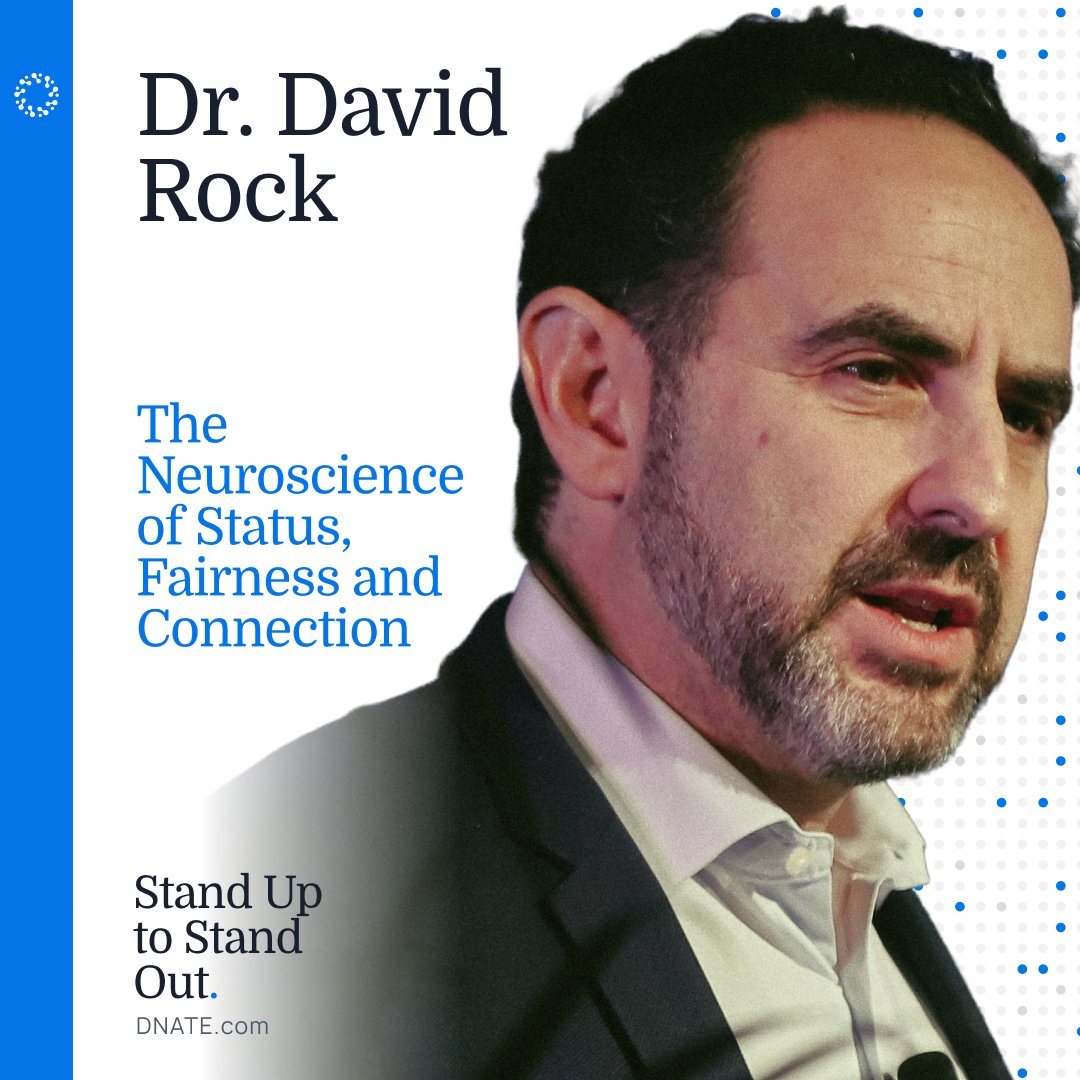
[00:00:11] Speaker B: Think about the last meeting that went sideways. Maybe nobody raised their voice and nobody was technically wrong. But yet someone left feeling small, someone confused and someone decided they'd never trust that person again. That weakens organizations and everyone loses. We might call these soft skills or people skills. My guest calls it biology. His research suggests your brain treats a hit to your status or an unfair deal like a threat to your survival. Dr. David Rock coined the term neuroleadership and co founded the NeuroLeadership Institute. The institute has worked with two thirds of the Fortune 100 companies and helped more than 20 million people perform better. His work was central to Microsoft's culture transformation. He wrote the bestseller your Brain at Work and created the SCARF model. Status, certainty, autonomy, relatedness, and fairness. The five drivers behind why people engage or shut down. His new book, Good with humans, comes out November 17th. It shows how to read those drivers in real time and fix an interaction before it breaks his argument as AI takes over more of our work. Being good with humans isn't a soft skill anymore. It's the most important skill. I am Stuart Papp, founder of DNA, and welcome to Stand up to Stand out. The podcast Communication. Communication has changed my life and it will absolutely change yours, because breakthrough innovating deserves breakthrough communicating. Every episode we bring you industry insiders, subject matter experts, and you can learn from my decades of experience to get the most practical and tactical advice that you can put to work. Now let's dive into today's show.
Dr. Rock, welcome to Stand up to Stand Out.
[00:01:55] Speaker A: Thanks so much for having me, Stuart. I'm looking forward to the conversation.
[00:01:58] Speaker B: As am I. So I'd like to start at the beginning. You've been pioneering in neuro leadership and neuroscience, but I'd like to talk about your first interest in science. As a younger person, who sparked your true interest in science and uncovering what you do today?
[00:02:12] Speaker A: You know, I think as far back as I can remember, I've always been interested in just how things work.
And if you looked around my bedroom as like a five or six year old, you'd see just my drawers strewn with like the remnants of radios and, you know, anything electronic. I was trying to like take it apart and understand it. And my family weren't that sort of connected to electronics or engineering or anything like that. My, my dad was a pharmacist and so I never sort of got that that Input. But I always wanted to know how everything worked. And at some point, I just got really, really interested in my own brain. As a teenager. I was like, how does that work?
Like, how do I take that apart? And there was no kind of one person who really sort of got me on that journey. I think I just, like, finally found something I could kind of keep being interested in. And I think, you know, credit to my mum, who just never discouraged me. She always kept me saying why. She would always encourage me to keep saying why and give me things to say. So I think she was probably the biggest influence in just not shutting my curiosity down. But my curiosity eventually just landed on. Well, the most interesting thing seems to be my own brain and everyone else's brain. And I kind of. My passion for the brain started literally as a. In my mid teens.
[00:03:24] Speaker B: Yeah, I share that with you. I had a similar experience where when I finally got to university and I went to McGill University in Montreal, and there's a lot of neuroscience there, and I thought, you know, it. It all really comes down to how our brain is processing signals and the environment and how it's interpreting reality. And I'm curious, you know, you've taken that and you've really gone far with that in your work and helped so many organizations, but I'd like to help unpack the scarf model for the audience. Where it came from, why those five factors and interestingly, why not other factors? How did you arrive at the scarf model and what it means for people?
[00:04:01] Speaker A: It was actually a long journey from when I first saw the signal to I actually got. The model was about six years, and then it was about two years of writing the first paper on it.
And then it came out in my previous book, your Brain at Work, like kind of a year later. And then we've written three papers on it in total, like serious academic research. And there's now been about 2,000 other research papers actually citing it, taking it apart and exploring it by other people. About 2,000 research citations now. So it's been a long journey. It literally was around the year 2000, 2001, that I kind of first saw the signal. I would describe it as an itch.
It was like an annoying itch. And it was an itch that came from seeing, like, at the time, dozens and dozens, now thousands, but dozens and dozens of studies that basically were saying the exact same thing, but in slightly different words.
And I was like, there's a pattern here somewhere. I know there's a pattern here, right? I know it. There's Just I, I, I can't quite find it, but I know there's a pattern. And what, what the studies were saying at the time was essentially that social things like being left out of a meeting or being treated unfairly or like feeling like controls taken away from you. Like these things that happen in our social context that we used to think were just like, you know, important but not central.
The scientists were finding, neuroscientists were finding that these things were kind of pigging back, piggybacking on the brain's, what's called primary threat and primary reward system. And a primary threat is basically pain. And a primary reward activation is pleasure, right? So they're piggybacking on these, literally the pain and pleasure system, which is like the threat and reward system that you can't ignore.
And so, you know, pain is the body's response to dangerously low resources of some sorts, as is hunger, by the way, as is loneliness, as is physical pain. It's all of these are like, your resources are low.
Pay attention. Like, you ought to pay attention because something dangerous is happening, right? That's what pain is. Pay attention or something really bad will happen. And so you can't focus on your goals when you're, you know, in a lot of pain. And so anyway, long story short, all these studies were coming out kind of GE had just sold and Siemens had just sold FMRI machines. So universities everywhere and university, you know, young graduate students were getting really excited to study things that had never ever been studied before, like how two brains understand each other and whatever. So, so anyway, I just saw all these studies coming out going, fairness is just as rewarding as chocolate. And you know, being included in a group is like being given money and being excluded is like, you know, hitting your hand and actually painful in the brain and all this kind of stuff. And I was like, there's got to be a pattern here. It took, as I said, it took about six years of, from my first noticing the signal to like then kind of trying to put it together. And initially I had kind of cars, C A, R S. And then, and I saw the F was missing and it all kind of came together around 2006.
And then I, then I worked on a proper research paper. So it was a really, really long journey. And then since then I've been studying it constantly, collecting data, teaching it, working with it and, you know, introduced it to more than, you know, more than 10 million people have learned the framework, just, you know, just the scarf model. So it's been a journey.
And I Felt like I had to write this book to kind of finish the journey, although it's not over, but just to capture everything that happened in. In. Over, you know, in about 25 years. And that's. That's kind of what I did.
[00:07:28] Speaker B: And so it. It's fascinating. And of course, it's a very scientific process you went through. And as I was hearing you explain the process, and I'm wondering, through the time where you sort of coined SCARF through today, has anything changed fundamentally in the way you perceive the model or the way you think about it, or the sequence, the index, the weightings, or. Or has it been just confirmed and calcified? Not in a bad way, but confirmed in your research? What, what has happened over the last 15, 20 years?
[00:07:58] Speaker A: It's kind of scary. It's. I always expected, I was open to, like, oh, it could be wrong, or we could have missed something major or something, but that just hasn't happened. What's happened is each of the domains, like status, certainty, autonomy, relatedness, each of the domains has a huge amount of new research come out explaining the mechanisms in that domain, how central it is, how it works, and in. We just published a paper at my institute, we published a paper last year, 2025, kind of summarizing all the research that happened since 2012, which is when we did the last update on Scarf, and the first paper came out, 2008. So we sort of had three papers tracking. And across the three we've just seen. Look, these domains matter even more than we realized to the brain. They're even more fundamental to the brain than we realized. And then what's happened is we've realize all these kind of quirks. So we discovered pretty early on that people have a SCARF priority, like one domain that matters most. Right. Like mine's autonomy. Right. I'm very unemployable. I like to be in charge. I like to feel in control.
And that's great. And I tried to use that as a strength. But sometimes I'm managing someone who's big on certainty, and I just. I just manage them the way I would like to be managed, which is leave me alone. And it doesn't, you know, so. So we learned about, like, SCARF order, and we learned about how the different orders interact with each other. Right,
[00:09:16] Speaker B: Right.
[00:09:16] Speaker A: And then we learned about, like, how they multiply each other. So if you're, you know, mean to someone and unfair, that's much worse than just being mean. Right. But if you kind of hit all five, you know, like, you're mean to someone and you're uncertain about it and you give them no recourse and they used to trust you and it's all unfair. Like you hit all five, you get, you know, and so, so we, we saw the multiple thing, then we also saw the offsetting effect, which is the way you have to get several rewards to balance out one threat. So, you know, and, and these sort of how they balance. And so there's been lots of nuances in understanding how it applies that we publish. And then we also dug into, okay, so what does it mean for, you know, giving feedback? What does it mean for resolving conflict? What does it mean for building teams, for hiring leaders? So there's all these other kind of implications that, that we've been unpacking. So it's been a journey, but nothing's come out, much to my surprise. That said, you know, it's wrong or something, but it doesn't mean it's perfect. There's, you know, it doesn't describe every experience of life. One of my favorite expressions, all models are wrong. Some are useful, right? SCARF is wrong because there are 10 other models that are also validated that are completely different. And so that's of course impossible logically. You can't have 10 completely different models of the brain that are all accurate. All, you know, and all argue with each other. But some are useful, some models are useful. And SCARF is useful in a certain context and particularly useful with rational managers and leaders, right. Who often, because of the intensity of their logic, the intensity of their iq, the intensity of their goal focus, often haven't developed a lot of the people focused side.
And that's really common in pharma and biotech and healthcare, you know, overall, but also in, in tech and in stem broadly. But you've got people who often have very strongly developed conceptual skills, goal focused skills, and those skills actually turn down the people network. So they often just haven't spent that much time really focusing on people. And so Scarf provides this really useful language for explaining why people do what they do and basically, you know, planning ahead, ideally for better interactions. So it's, you know, all models are wrong. Scuff is just useful in certain contexts and happens to be really, really useful for creating better managers and leaders and very, very useful in other domains. But, you know, it's particularly helpful there.
[00:11:39] Speaker B: Yeah, well, what I love about it is you're, you're trying to shape something that is invisible to many people and it's something that is ultimately going to answer. I think the most important any organization should ask themselves which is how should we do our best work together?
You have all these different functions, different goals, different metrics, different KPIs, you name it. But ultimately your job as a leader is to get everyone together and have them do their best work and drive the outputs of the company and the organization. So I love that scarf. Gives language to things that, you know, status is something that is deeply emotional as a certainty. Autonomy, there's. And when emotions get in there, they, they, they tend to distort the way we perceive reality. And I find that this is probably useful as a rubric or framework to deepen discussions, align people and get people back on path, working together. So it's profound.
[00:12:30] Speaker A: The emotions, the strong emotions are social, right? You, this is how it is. Like, we feel strongest about social things. You know, being left out of a group you felt part of is very painful and much more painful than, you know, being left out of something without people, like, there's no people involved. We just don't care as much. So. So we care a lot about our interactions with people. And the theory goes that it's because, you know, we need other people to survive literally until we're like a dozen years old at least. So people and their relation to us and our relation to them so central to our survival, we don't get food from the wild, we get food from other people.
And so it's, it's just critical to survival. So that's, that's the theory as to sort of why these, these emotions are so strong.
[00:13:11] Speaker B: I also find that when it comes to, in terms of understanding people, I think it was Warren Buffett's partner, Charlie Munger, who has Munger. So he has this great book of mental models. But, you know, he says, show me, you know, an incentive and I'll give you what the outcome is. But for many people, being acknowledged, being appreciated. I can't tell you how many times people have said to me in confidence or even in a public forum, it's about being acknowledged, it's about being recognized, it's about feeling appreciated. And, and for somebody who's rational or may think, well, let's just put more dollars at it, more incentive, more, more, more financial incentives that actually plateaus at a certain point. And you have to deal with the human under underneath who's trying to, does this have meaning? Do I belong here? Does this have my shared sense of purpose? I'm sure you've seen that.
[00:14:04] Speaker A: Yeah. No, it's a whole conversation. We wrote a paper, so my institute, the Neuro Leadership Institute. We've published about 60 research papers now since 2008 on just about everything to do with the brain and leadership and learning and change and motivation. And one of them was the neuroscience of total rewards, where we unpacked kind of rewards and whether it's financial or non financial and how the brain processes them. And it's really, really interesting. It turns out that financial rewards intrinsically don't have much value unless you're like five years old and getting money for the first time. It looks exciting.
The reward that, that we get from the financial rewards is actually one of the scarf domains. It's like it, it finally I feel treated fairly by this company or finally my, you know, I'm valued.
And often it's really interesting. People can receive quite a large financial windfall in say a bonus and actually be really annoyed, right. Not be rewarded at all, right. Which you know, be really upset. They can get a $10,000 bonus and be really upset if they were sitting next to someone who worked half as much and they got a $20,000 bonus, right. Suddenly the $10,000 bonus is not rewarding. This tells you that rewards are, it's called assimilated. Rewards are assimilated. Financial rewards are assimilated to intrinsic rewards like status or fairness or autonomy or anyway, so, so they definitely that's the case. But we also did a lot of work on rewards and it turns out because people have different scarf priorities. Like if you're, if you're using non financial rewards, you actually want to give people a reward that they find motivating, not demotivating. Right. So if you, if you say, oh, you look, you've done so well, I'm going to give you an extra day, an extra day a week. You can work from home. The people who value relatedness might be really annoyed. They're like, no, I like how is that a benefit? I like being in the office, I'll miss my friends. Like that's, that's a threat, right.
And vice versa. So knowing people's scarf priority, you're actually much more likely to design reward networks that are non financial that actually aligns, you know, to there. So that, that's an interesting thing. The other thing we found is that just giving people some autonomy, not a crazy amount, but some autonomy, some perception of choice in rewards that they receive goes a long, long way. And we unpacked this and in fact this is one of the chapters in my new book. We did this experiment with General Mills. Do you remember the pandemic? We all remember the pandemic. Remember how much banana bread and sourdough all our friends were baking? Maybe you were baking it, you know, like it, it went crazy. So General Mills basically make all the yeast and most of the flour that was upstream from that massive baking boom. And Suddenly all their 10,000 factory workers who normally work, you know, a cushy five day week were working 24, 7 to keep up and just not, not doing well. And also there was the fear. And so anyway, long story, they were like, look, our people are fully burnt out.
We want to give them all a day off. And I said, no, don't do that. Let's like do an experiment. Let's give them what we call the gift of choice.
Let's give them the choice of having a day off with pay or coming to work if that's what they want to do and they get extra, right? Or let's do a third choice. Let's giving the money to charity just so that it felt like a real choice. Having two things is more of a dilemma. Three things is a choice, right? Anyway, it became the most successful HR initiative in the company's history at the time. And a huge number of the 10,000 people opted in for this initiative. And what was fascinating is about 4,000 people said, actually, I want to come to work and get the extra money. That's much more important to me. And 150 people gave the money to charity, right? Which is so interesting. Not a huge number, but still a meaningful number. But all 9,000 plus people who signed up for it felt appreciated, right? Felt like this greater sense of control when they chose which one of the options, they got rewarded. When they enjoyed the option, they got rewarded. When they reflected on the option, they got rewarded. So there were all these points at which the brain was activating reward networks, which wouldn't have happened if they'd said, you all got the day off. Right? There was a reason that 4,000 people wanted to come to work and some of it was to actually get away from the house. Some of it was they're enjoying the certainty in the structure. And some of it was they just wanted the extra money, but everyone being given the choice was rewarded. So it's a long story, but autonomy sometimes is a really, really important variable when it comes to rewards. Specifically just giving people a little choice, firstly because they'll appreciate it and secondly, they might choose the reward relevant to their scarf profile. Right, Going back to that. So, so three points, number one, people assimilate to their scarf to, to a scarf thing anyway, Financial, financial rewards give people some autonomy so that they feel reward. And then giving that autonomy means they might choose the right reward for them as well. So lots to say about that.
[00:18:43] Speaker B: I love that example because it also exposes something that I think is deeply human, which is this curse of knowledge. We. We forget what it's like to not know what it's like to be ourselves and what, what that gives the audience, you know, the, in this case the employees, is we just don't know what's important to them. By giving them a curated sense of choice, you can actually, they can activate part of their identity, their Persona, who they, what they feel is important, signal that to others. The people who chose the charity, 150 people is not insignificant. They might be signaling, you know, civic virtue, and the others might be signaling to their family. I'm going to pick up some extra money to pay for these bills because my partner is out of work. It just allows so much opportunity. And it also. You just will never know what's important to the other side.
[00:19:30] Speaker A: You can't guess. And we're notorious, humans are notorious for incorrectly guessing what other people are motivated by. We just. We just guess what we would be motivated by, and we're really, really bad at that. So it's good just to ask or give them the choice. It's. It's much more powerful. Yeah,
[00:19:45] Speaker B: I've heard this, and I don't know if this is true or not, but that some of the most successful plastic surgeons don't, don't tell people what they need. They hold up a mirror and say, what do you. What. What frustrates you the most? And just let the person talk themselves into eight procedures or whatever it is, because now they're going to vocalize. This is what's most important. Well,
[00:20:03] Speaker A: they've made the choice. We feel like we've made the choice. Right. Remember the movie Inception? That's a great movie to sleep to because it's. It's all about dreams and it's so long and it gets boring at parts. But there's a really important point that is. Is even in the title, which is that when. When an idea feels like your idea, like it's like actually your idea, you. You basically do it. When an idea feels like someone else's idea, you kind of argue with it. And I write about this in, In Good with Humans again, which is that, you know, when you're trying to give feedback to someone, if you give them feedback about something, that's correct. The more correct you are, the more likely they are to actually argue with you. You're better to, like, get people to give themselves feedback. And then when they'll give you much more correct feedback and it'll be their idea, they're much more likely to act on it. Right. Because it's. When it's your idea, your status goes up, your autonomy goes up. When it's their idea, their status and autonomy goes up. Right. So they're not pushing you away, but people you know, university, like, how do I give more feedback? How do I give them more feedback? No, how do I get people to give themselves more feedback? Is a much better question.
Or how do I get people to ask for feedback? Because when you ask, you're also raising your autonomy. So just a different way of thinking about it through the scarf lens that we found is really useful.
[00:21:20] Speaker B: Do you want your team to have a seat at the table?
Would you like your team to speak with clarity, confidence and influence? Reach out to us DNA.com for more information.
Yeah. One of the things that I've implemented through my programs is that the completion of a program could be 90 days. I make. There's an optional teach back component which I always signal that this is really important, that the person finds the principles they were most resonant with them and then share it with somebody who's on their team or somebody who's in their group. And the reason I do this is because I know they're going to feel more connected and committed to those principles if they have to actually teach them back. And, and they, they've shown examples that when they couldn't get these high schoolers to do their homework, they said, don't, don't worry about your own homework. Just tell the ninth graders what do you think they should do. And of course, the congruency effect kicked in. They were more likely to do their own homework because they were giving advice. Hey, do your homework.
[00:22:14] Speaker A: There's a lot of research on that from many different angles. We looked into it a bit and there's a, there's a type of like, learning which is called social learning. And basically learning is social when whatever content you're learning in that web involves other people.
Right. So if you're learning like how to do calculus, but you're just sitting down learning calculus, it's really hard to remember it. But if you're learning calculus with a friend, right. What will happen is everything that about your friend is in the network with calculus and everything about your friend encodes automatically in the brain. Right. And now you, if you might forget the calculus law. But you'll remember how your friend was feeling that day, and then that will reanimate the whole network for the calculus law because it's all kind of connected. It's like, who was I? Who was I with?
How are they feeling? What. What did they think about it? Oh, okay, I've got it now. So. So that's called social learning. And it's a really powerful thing because basically social memories encode automatically because social's so important to us, right? So when you're imagining teaching someone, like when you're learning something and you're learning it and imagining teaching it, it becomes social memory. You're imagining teaching a person. Plus there's this thing called positive social pressure, also known as status threat. You don't want to look bad, so you pay more attention while you're learning.
Whether you end up teaching or not. It actually turns out to help with embedding. And I. I think it's the extra attention because you don't want to look bad when you're teaching people.
The status threat, you know, gets you learning, I think, and we've studied learning, like attention is a really important variable. Like close attention is necessary for learning, but emotion are also. Emotions are also necessary for learning. We have another framework called the AGES model. Attention generation, emotion and spacing. And you actually have to have pretty high ages, high attention, at least moderate, but preferably high when you're learning something so that it actually sticks. So high attention, high generation, which is making connections between things, high emotions, but also high spacing. And so what. What happens is when you're teaching something or imagining teaching something, you're paying more attention, you've got more emotions, you're generating more connections from other contexts, and you may get a spacing. So lots of different ways of understanding it. But essentially you're right. It's a very good thing to give people something that they have to teach. It turns out, even whether or not they teach it, even just in the learning task, they'll. They'll do better,
[00:24:42] Speaker B: right? Yeah, absolutely. I want to talk about scarf, and then I want to get to your book. But when it comes to knowing thyself so you can help others, is there a sequence that you recommend to a leadership group or new managers or whomever your company might be working with?
Do they have to deeply understand and believe in Scarf themselves and adhere to it before they can start applying it to their team? Or is it the inverse? How do you think about that?
[00:25:08] Speaker A: Look, it's just really helpful to know which scarf Domain is most important to you. It's really helpful. It's not essential, but it's helpful in a lot of ways. It'll explain a lot of decisions you make. It'll explain how you like to interact with people. It'll explain to yourself, like, why you get upset by certain things. And it'll just help you stay in a positive state. So it's helpful to understand your SC domain. And often when you look at how you manage people and the people you're having issues with, there's often this kind of SCARF mismatch, right? So if you're high on autonomy, but they're high on certainty, there can be a mismatch because you'll manage the way you like to be managed. If you're high on relatedness, you really love creating team and shared goals, but you're managing someone with autonomy as the biggest driver. They're like, just leave me alone. I don't want to be part of a team. I just want to get off and do it right. So you'll understand the conflicts that happen. You'll understand your motivators. But there's an argument that you don't have to understand yourself, you just. But you want to understand other people's drivers so that you can, you know, manage them better. There's definitely an argument that if you know someone's a certainty person, you'll manage them better whether or not you know your profile. But I think it's going to be better to know yours. You know, we've thought a lot about how you use scarf, and essentially it's before, during and before, during or after anything important, whether that's an email or a meeting or a whole initiative, right? Before, during or after, think about the threats you might create accidentally, right? You're writing an email to about a conflict. Think about how someone might receive this. Like, oh, look at that. There's a status threat, there's a fairness threat, right? So before or during, you know, while you're having an interaction, you can hear someone saying, that's unfair, right? Oh, okay.
Just created a fairness reaction, right? And after, when there's a problem you're trying to clear up, you can understand, you know, what's happened. So you're sort of using it before, during or after taking into account your profile, but especially other people's profiles. And it'll help you, you know, cause less threat response in others and hopefully cause more, more reward response in others. So it's not just about, just about minimizing threat. That's kind of the first rule, but it's also about maximizing reward. Like, how can I use SCARF to help people grow their status? You know, which positive feedback does that? Right. Acknowledging people grows their status grows their fairness. How do I create more clarity to grow their sense of certainty? Right. So it's about, firstly, like, you know, minimize threat, and then secondly, how do we maximize reward with some of these domains? That's. That's sort of the golden rule.
[00:27:34] Speaker B: Yeah. What I love about it, it's sort of a forcing function to bring things that might be out of your normal purview into the frame to consider for a moment is resonating with this audience from these perspectives or my own perspectives. And so I think there's no. I should say the opposite way. There's always a time to just consider that and say, before I take this action or give this directive or whatever it is, let me try to consider the most important questions. SCARF can bring that into focus, and I think that's very helpful. Let's talk about your new book. It's coming out. When this podcast comes out, it should be imminent. Or if you're listening to this past November 17, 2026, which is. Then it is out and you should all buy multiple copies. If you know people, you should buy a copy for them.
[00:28:18] Speaker A: There it is. That's the galley, not the finished book, but good. Good with Humans is the title. Yeah,
[00:28:23] Speaker B: I love it. So let's talk about. You said this is sort of the culmination of your work, but it's. It's not the end, but it's. It's a summation. And it's of course, good with humans. It's not saying good, just with managers, leaders, and executive.
Can you tell us what drove the book and what. What can we all learn from this book?
[00:28:40] Speaker A: You know, I just saw that SCARF was so central to the quality of all interactions. And I've had so many people come up and say to me, like, literally thousands. You know, this model just helped me so much with my kids, my team, my leader, myself, whatever. Literally thousands of times. I've been on the road speaking about this for, you know, 20 years, since I got the model. And I was. But the model's been sort of hidden at the back of my previous book. And I just really wanted to showcase an idea that seems to have helped so many people. I just thought it deserved, like, its own book. When I introduced it in your brain at work, all I really did was describe the five domains. So nothing about the offsetting effect, the multiplying effect or the, the way these like work together or how they describe conflicts. And there's so much that we've learned since it came out. So I just, I wanted to kind of put it together. I'm going to keep writing. It's not my last work but I, I wanted to sort of capstone 25 years of thinking about people, you know, in this book. So it's, it's a little work focused, but maybe 60, 40, because it's also got like a lot about parenting and relationships and you know, society and community. It's got all sorts of things in there. And the, there are sort of four main characters, but two of them are the parents with real jobs and one of them, and two of them are kids who are like 18 and 23. You know, one finishing high school, one going to university. So it's got, it's got all the other social stuff going on. You know, the 18 year old son has his first girlfriend and what's going on there. And it's, it's, it's got a lot of other stuff about society.
So it's really that a walk through. What does your brain do during life's important moments with other people?
And I wrote it following the same architecture as my previous book which, which took four years to write. Nearly killed me. Previous book was called your brain at work. It's done pretty well in most major languages and that's where Scarf kind of first was introduced at the back of the book. In that book I basically told it as a story over one day for two main characters and their kids were sort of mentioned, but two main characters. And I decided to write this book following the same idea, but over a week rather than a day. And now the characters are 10 years older and got bigger jobs and the kids are, you know, older now and you know, real humans and stuff. So, so I just thought it was fun for people who read that to do it. But you don't have to have read your brain at work to read this one at all. But more fun to read both.
So anyway, the structure is like a week for these characters and the fun part of it is basically I'll take an idea and show you how the characters mess up because they don't understand scarf. And then walk through the science and then show you what they would do differently just intuitively if they, if they applied Scarf. And so we walk through everyday interactions and then harder interactions like giving feedback and dealing with conflict and trying to motivate someone and then all the way through to like, what does it mean for teams and organizations, leadership, relationships, community, you know, all sorts of things. So it's sort of a walk through all of life's main social interactions and looking at it through the lens of.
Of the subtitle. The subtitle is the neuroscience of what makes us tick and what ticks us Off. You're getting. Whether you're talking about how do you motivate a teenager or how do you deal with conflict between two teenagers, you're walking through the neuroscience of what's going on through a scarf lens and kind of how people are interacting with that. So, you know, it was really fascinating to unpack all of those things.
Really hard to find the quality of focus these days with so much digitally going on. So hard to write these days.
Obviously I wrote the whole thing. No AI was used in the writing of the book. But such a hard thing to do to just find the focus. Not, not easy at all. But you know, I managed to do it in a year and a half rather than four years, which I was really relieved by. But yeah, it's follows that structure that the idea is giving people insights. I would just say read it slowly, one chapter a week, digest. Maybe read it with a friend, colleague, book group, but read it and really think about the ideas as opposed to just read it. But you know, it is a story. There's a story that runs through over the week of these characters and kind of what they go through and they start interacting and you know, it's got, it's got a little bit of fun in there, but I just want people to understand the brain and humans better, basically.
[00:32:48] Speaker B: You mentioned two themes there, which is motivation and conflict. And I'm not going to put them opposing, but I do feel like those are some of the harder things to solve for in people. Motivation, intrinsic and extrinsic. I've thought a lot about this. It's one of the hardest things to factor in when you're, when you're speaking to somebody. How do you, you know, tap into their motivation? Because I truly don't think you can motivate someone. You can introduce concepts and put them in an environment and put them in all kinds of situations to hopefully spur their own motivation. But then conflict feels like it's diametrically opposed because then that's where the friction comes in to that person getting those things done. How do you think about those two concepts and in terms of optimizing someone's, you know, motivation, but also helping them navigate through that. Obviously you have tools in your, in your work but how do you think about those two forces?
[00:33:40] Speaker A: Yeah, I just, I just don't think there's such a thing as extrinsic motivation for adults. For kids, you know, candy floss. Extrinsic motivation, amazing. For kids, like chocolate. Extrinsic motivation, amazing. Like, you get this for adults, you don't really get that much. Extrinsic motivation that is anything but a slight bump, you know, a, A nice dessert.
[00:33:58] Speaker B: Yeah. So, and I, I, I agree, but I'm just. The way I've categorized it, and please tell me where, where I got this wrong. Extrinsic was sort of your salary, your title, the stock option. I mean, certainly I, you have to pay your bills and live somewhere. How do you define extrinsic motivation?
[00:34:13] Speaker A: It's just that those things are not motivating if they're not fair. For example, those things are not motivating if they mess with your status. Those things are not motivating if they're uncertain. Right. And so, so the reason I say those things are that they're all intrinsic motivations. Even the things that we think of as external, we assimilate to internal goals. So when that money that we get, we make it mean something different to the person next to us, right? So one person makes it mean all about certainty. They're feeling more certain about their life. Someone else makes it mean completely, like something completely different. Like it's a status bump for them, the money they're getting. So people assimilate back to things that drive them, and they do that really differently.
So, you know, it's really interesting. There's a, There's a whole, we wrote a whole paper on perspective taking, which is basically understanding other people. And it's, it's like imagining what someone else wants, feels how they motivate, right? There's a whole research body of research on perspective taking. And the most. One of the most terrifying statements I ever heard is that when you teach people about perspective taking and they try harder to do it, they become meaningfully more confident in their ability to understand others accurately. But no more accurate.
[00:35:26] Speaker B: Lose, lose.
[00:35:28] Speaker A: Yeah.
I'm like, okay, what's the answer there?
So just trying to understand people actually doesn't work very well. We just feel like we do. It's like, really? And when we talk into this, it turns out to be really, really true. But what works is not trying to understand them, but actually realizing that you don't understand them and asking more questions. And that's just a golden rule with motivation, is just like, ask more Questions, because otherwise you'll just see them through your motivation profile. It's almost impossible not to. And, you know, you're an autonomy guy. You just, you just think everyone's motivated by feeling more in control of things. And no, they might be more motivated by giving their money to charity, which would just blow your mind, right?
So it's. Ask more questions around motivation is the. Is the golden rule. And assume that that extrinsic is really all intrinsic and people assimilate it to something that really matters to them. That would be motivation. Now, conflict, Conflict. I wrote a lot about. I had some really good insights in the book about conflict. And a lot of conflicts between people happen because of this kind of scarf.
This scarf dynamic. It's a really unfortunate dynamic that happens with people. And like in one of the chapters, basically the son, Josh, like, feels treated unfairly. He feels like his status is attacked, but his sister's reaction to his reaction is to feel treated unfairly, and his reaction to her unfairness is to feel more like his status is attacked. So we get into these downward spirals between each other. So I, you know, this will often happen between a couple is that one person will feel like they're being controlled, right? So they have an autonomy reaction, but that reaction makes the other person feel more uncertain, right? And they try to control more, to feel more certain, which makes that person feel more controlled, which makes them. You see what I mean? So we get in these downward spirals around these, these domains. And so conflict is often you trying to get your scarf need met and creating a scarf threat in someone else as a result, and that threat creating a stronger threat for you. And it's just infuriating. It's. And, or might feel unfair, it might feel like it's a status thing overall, but it's, it's frustrating. And so that's the source of a lot of conflict. And it turns out both people are often. It's often just a misunderstanding. Both people are just trying to get their needs met that are perfectly valid needs, but the impact they're having on each other is different to their intent. So that was a really interesting chapter to write about conflict. And I kind of come back to it a couple of times. So. So conflict is. Is kind of scarf domains interacting with each other negatively is what I'm saying.
[00:38:00] Speaker B: Have you found over time that one of these five domains is more expressed over all different populations? Or there's a, you know, or the sequence changes for different people or different circumstances? And again, I can imagine that moment to moment, it's changing and being weighted or, you know, discounted.
[00:38:20] Speaker A: I mean, as events happen in the world, uncertainty goes up, right? Or fairness can go down or different things can happen. Right? And a country feels their status attacked. A country wins the World cup, the status goes up, you know, like all sorts of things happen. But there has been some changes. We looked at it pre pandemic, post pandemic and more recently, and there has been changes in what people tend to value. There's a greater sense of drive for fairness at the moment that's kind of really come up, you know, post pandemic that wasn't really there before. So there are some shifts. We wrote a paper last year that looked at those shifts over time. I don't have all the data in my head, but definitely we were surprised to see some pretty meaningful shifts in what people cared about overall. But individual variation is the most important thing. People individually are motivated or not by the scarf domains. It's relatively stable. Life events can change it for sure. It's relatively stable over time. You meet someone you haven't seen for 50 years, they seem to be the same person in many ways.
[00:39:18] Speaker B: But you've mentioned autonomy for yourself personally a few times in this podcast. And I'm curious is that if I were to look at sort of a five sided, you know, polygon, which is, you know, a pentagon, is your autonomy, is that going to be more expressed for you just because it seems to be a dominant theme for you just in your conversation or not really.
[00:39:40] Speaker A: Yeah. I mean for some people, they're like, they have a slight tendency to, let's say, relatedness, like it's, it is important that they have shared goals with people and feel part of a tribe. Some people feel very strongly about that. Right. So there's, there's, there's sort of a slight tendency versus a strong tendency. I think my autonomy drive is quite strong. So we've, we've been looking at that.
You get some quite some interesting things. The interesting thing with autonomy is I remember this once I was in a room of, of CEOs basically of mid to large companies, like a hundred CEOs in a room. I was giving a talk and I was explaining scarf and I predicted this, but I'd never seen it so clearly. I always ask people to put their hand up for whichever domain is strongest and pretty much the whole room put their hand up when I mentioned autonomy. And the people who didn't put the hand up I think just didn't want to do something someone else told them. To do. They
[00:40:30] Speaker B: were so autonomous, they weren't even going to engage.
[00:40:33] Speaker A: I'm pretty sure. I'm pretty sure it was 100% autonomy in that room. Right.
And so I think people who fight either as an entrepreneur or in the system to kind of be in charge, I think those people intrinsically rewarded by feeling more and more in control. And so I think that's what motivates them to do what ultimately are really hard things. I mean, leadership's not easy, but you've got this intrinsic motivation to feel in control. So I think that gets you through, you know, things that other people just might not get through because you're so rewarded, you know, by that. So I do think there's a senior sort of the higher you go in organizations, the more autonomy plays up.
[00:41:07] Speaker B: Right. Well, I'm curious about any stories or anecdotes you've heard over, over the years where people have used SCARF to dramatic effects. And I'm sure they go on and on, but. But I'm more curious about any outlier, you know, stories where somebody says they used it right before a negotiation or before their child came home or proposing marriage, or any of these sort of seminal human moments where the SCARF model really unlocked a perspective that may have not been, you know, top of mind or unlocked an opportunity or solved a friction point between partners or co founders.
[00:41:41] Speaker A: Many, many, many. Actually, many, many.
I think about my own experience. I had a wonderful marriage for 20 years. We've had a very happy separation or divorce for seven years. We're, you know, good collaborators, good co parents. But I remember when we were married, I would travel around the world for a month, a couple of times a year to run the business and do things. I was, you know, working a lot, and I would come home and I hadn't had much relatedness. And I'd had a lot of autonomy, but not much relatedness. And I would want to spend time with my partner, right? But she'd had lots of relatedness from being with the kids the whole time, but not much autonomy.
So
[00:42:15] Speaker B: I
[00:42:15] Speaker A: would come home, I'd want to spend time with her. She, you know, but she would want me to just take the kids and go off and have time with herself. And we never understood, like, why we were having conflict until we kind of looked at it through the SCARF lens and we're like, oh, that's what's going on. We normalize it. It's not that we didn't care about each other, that we didn't respect each other, we didn't want to give each other what we needed. We just were reacting. So it gave us a language to understand it. And that was really big at the time. There's a lot you can apply scuff to in relationships, actually. You can see, like, the conflicts people have. Just. Just like when you have, you know, betrayal by a friend, for example.
You know, betrayal by a friend is really painful because it's kind of an attack on all five domains, often all, all at once. It's really unfair, and it's an attack on your status and it's uncertain and you feel no control. You know, all this stuff. So. So that's really hard. But to your question, I've been working every year for a long time, maybe a decade, with one of the big universities in Washington, D.C. who educates basically like a senior leadership program for the military, like. Like very senior people in the military and intelligence agencies. And. And they have intelligence agencies from all around the world coming together to. To do this leadership program.
I won't go into detail of it, but. But we go through scarf. We teach them SCARF in the context of building coalitions that work well together. And often they're having to build coalitions with opposing countries, like, oh, we've got to work together on this thing, but we actually hate each other. And it's been very interesting the insights they've had about the challenges of building coalitions. Just many, many times they'll say, general will call out and say, oh, wow, I've just realized, I walk in the room as an American and everyone's status is attacked because we perceive ourselves and position ourselves as the leading country in the world. There's 167 countries. They all believe they're the best country in the world.
But if you're out there saying it loudly, people, you're creating a status attack, a status threat in others. And so they're like, oh, okay, I realize I need to drop my status and focus on relatedness. And relatedness is shared goals.
And if I was to put SCARF in temporal order, like in the order of which you should apply things in a meeting or an interaction, it would be ersk. It would start with relatedness. Because if you don't have relatedness, basically everything else you say, just people don't really hear. Whereas when you have relatedness, when you're on the same side of the table with shared goals, everything else is now easier, right? So the brain processes everything when you have shared goals, much, much better. So, so we teach them about, you know, look, just drop your status a little People will be much and, and focus on your relatedness, which is shared goals. And then you'll be able to collaborate better. And it might not be perfect, but you'll be able to like really build stuff together and think. And I had many, many, many people in the armed Forces intelligence saying, look, that was super, super helpful for understanding what's been going wrong and what we need to do differently in, in, in all these different situations. And hopefully, you know, that's been helpful to, to people you know on that path,
[00:45:24] Speaker B: I think hugely. And it also, it makes you think that you have to really engineer the outcome you're looking for from a meeting. A meeting may have a purpose to solve a problem or to give a meaningful update or to decide on a strategy, but those are all different outputs and ultimately you're not going to get to that output if you can't manage what is happening inside of a room where people feel connected, where there's a true sense of cohesion that, that relatedness. So I see that that sequence makes total sense to me.
[00:45:51] Speaker A: Yeah, I know it's interesting. You can certainly look at political issues through the scarf lens. One of the problems in, in the US in particular and some other countries is you've only got two parties that are sort of the dominant parties. You've actually got others, but they're just not being discussed. And so it's, it's just there's such an ass or them thing that's created and that's in group and out group. And you know, the, the problem is when, when you communicate with someone in your out group, you barely hear what they say. You're excited when they, they, they lose, you're annoyed when they win.
You don't really feel like you don't have any empathy for their pain or any painful experiences. It doesn't occur as pain to you. Whereas an in group member, if they're in pain, you actually sense it. Like you physically sense it. So what's interesting in that research is it's more motivating in the brain. Like it's more activating of reward networks to see an out group member lose than an in group member win. Think about that. It's like, oh, that explains a lot. Like it's more exciting to the brain to see someone on an opposing side lose than it is to see someone on your, your side actually win. And so it just creates all this conflict. So I think, you know, there's, there's some challenges politically when there's only two parties. There's such an US and them, it's just constantly exacerbating kind of conflict. There's a movie, Independence Day 2, which opened with this scene that actually there was a scientific paper on this. I think it inspired the movie, which is, we found aliens. We found aggressive aliens. 20 years in the future as a futuristic movie, and the world had 20 years of harmony because we all had a shared goal. Suddenly, so suddenly, all these countries that were fighting each other became on the same team against an opposing team. Right. So this is relatedness. Uh, I'm not sure how we quite got into that, but it's. There's a lot of problems when, When. When it's us and them.
And really, if we could all kind of get around a shared goal, the political situation and just collaboration between countries generally would be so much better if we could find those shared goals and not have so much in group and out group. So that's. That's certainly going back to your question of sort of, what, what should leaders do? How do you run meetings? Start with relatedness.
Start with shared goals. When you start with that, everything else is so much easier in the brain.
[00:48:02] Speaker B: I agree. And I remember being a kid watching, you know, local sports. Teams would fight each other and be tribal. And then, of course, when that state was competing against another state, all of a sudden foes were now friends. And then it happened internationally. And so I thought, oh, it's all just a perspective, right? Who us and them is. But I thought there was a brilliant campaign in Texas. You've probably heard this, but they were trying to get people to stop littering when they were driving through Texas. And they were appealing with every possible reason, you know, keep it beautiful. And this is us. And. And no campaigns were working until one thing.
And they said on the side of the road, don't mess with Texas, meaning don't litter. And littering went down like 75%. And what I liked about that, it seemed to harvest or harness this sort of us versus the world, but for good. And I feel like if we could do that, then we'd be better off.
[00:48:57] Speaker A: Yeah, lots of. Lots of comments on that. But this framework can be used for good. You can. You can also use it not for good. And, you know, like, I. I know that there was some. Some folks were looking at this and thinking about how to, like, improve their torture techniques in. Against, you know, bad actors and all this stuff. I was horrified, but I couldn't do anything about it. But, you know, you can use it for all sorts of things, but it. It does explain scarf really Explains why people do what they do because there's such strong drivers. Like protecting your status is such a strong driver. I mean, it's the source of road rage, right? It's the source of many things, but also fairness. Like think about the pandemic. People were wouldn't open their door for the UPS driver. And then a week later when George Floyd happened, they were out marching in the streets screaming because.
Because of the unfairness response that that generated. Now we were raw, so the unfairness hit. But these are strong emotions, right? Fairness drives politics, drives law. Right. Status drives just about every brand and just every financial decision. So these are really, really strong drivers. And I think as a manager or leader, understanding these drivers and really recognizing them just give it gives you an edge and it helps you, you know, mess up less and motivate better, basically. And those are, those are good things. You know, if your goal, you know, I know a lot of your folks are healthcare. If your goal is, you know, improving the health and welfare of humanity, it's really great to upset less and motivate better.
[00:50:24] Speaker B: Absolutely.
[00:50:25] Speaker A: To achieve the organization's mission. These are often really important missions, you know. So I think ultimately understanding humans or being good with humans is good for all of us.
I think as we, as we get sort of more digital, being good with humans is going to be even more important.
And SCARF is a language to see ahead of time or in real time or after kind of what's going on. And it just basically how to do it better.
[00:50:48] Speaker B: So I'd be remiss if I missed the topic of AI.
Of course, I don't know how much context I need to give the audience. I think everyone has sort of swung wildly on the pendulum from euphoria and bliss to complete terror and destruction. But I'd be curious to get your thoughts on as you lean into this being more human and being our best selves and how we understand each other and what motivates us.
How can we use this as a force for good, for our own thinking? And what should we not be using AI for?
[00:51:23] Speaker A: Yeah, I can talk a lot about this because we've been seriously digging into this for about two years and just came out with a really strong point of view in the last six months that I've been kind of shouting from the rooftops, particularly to leaders, because the companies are getting this really wrong and doing a lot of harm. I just had a piece come out called AI is fast food for your brain. And it's exactly like that. It's really addictive. And it turns out to be really bad for you if you use it for a lot. Like, if you just use it very sparingly and thoughtfully for you to actually think better, it's amazing. But if you're actually offloading and getting it to do a lot of your work, it's really harmful. You lose skills really quickly, you don't get them back. And one of those skills turns out to be judgment itself, like your ability to know if something's good or not. And we explain like why that is. It's really simple. Anything that you used to take an hour or an afternoon to do and now you do in 10 seconds, can't go back. When you're trying to do it for an hour again, you just get this intrusive thought called I could be finished by now. Why are you wasting your time? I could be finished by. The brain loves the shortcut. And when you find a really good shortcut, very hard to go back.
It's very hard to go back. And you might say, well, that's fine, just let AI do it. Well, 40% of the stuff is wrong, 100% of it is average. And you're losing the ability to judge which is which. So the right way to approach AI, particularly gen AI in the workplace, is, is. Is minimally not for communicating, not for like, no one wants to receive an AI generated message. And thoughtfully, where you're in the lead, you're doing the thinking, and the AI is challenging your thinking. So gen AIs can be amazing, pointed in the right direction can be amazing at helping you not do stupid things, not create scarf threats. Right. Not do dumb things. So if you do the original thinking and then the AI helps you kind of catch things you might be missing, Amazing. That's a really important use. But if you're getting AI to do the sort of drafts of things and then you're just kind of human in the loop, which to me is actually a misnomer. You're not in the loop if you haven't actually been involved in every decision and every step. You can't accurately judge work if you haven't been involved in all the steps of the work. And so you're just guessing and you're guessing incorrectly. So long way of saying really, really important to kind of take ownership of your thinking and actively choose which skills you're okay to lose. You know, are you okay to lose map reading and use, you know, use Google Maps? Yeah, that's fine.
You know, that's fine. You do lose that skill pretty much. You don't know mentally where you are, but it's mostly fine. Right? Do you want to lose judgment? I don't think so. Do you want to lose discernment of what's good or bad? I don't think so. Do you want to lose the ability to communicate clearly to people in ways that they feel your authentic voice? I don't think so. And I think in a world where so much is going to be digitally created, having an authentic voice and connecting on a human level is just going to get increasingly important. We built an AI based on Scarf and all the models that we've built. It's called Niles Ask Niles AI. But Niles doesn't just think that you're the most amazing person, doesn't just give you positive feedback. Niles challenges you. And like some companies are starting to talk about not letting their managers have a conversation with an AI unless it's Niles for anything interpersonal like conflict or feedback or performance issues or you know, any sort of human issues they, they're talking about that, you know, people have to go to Niles use Claude and, and, and OpenAI whatever for processing and finding patterns and all sorts of stuff. But it's about people don't go to an AI that basically agrees with you and says you're always right, which makes everyone else always wrong. And so there's a whole lot of things in that space. I just think we're in a settling in period and it's going to take another five to 10 years for all organizations to build right habits around this stuff. Individual companies can build much healthier habits if they start with let's, let's look at how the brain works here and how does AI interface with the brain and what's healthy and what's not healthy.
[00:55:15] Speaker B: I love your analogy with, with fast food because in inherently that's about, you know, nutrition and what feeds you. And I, I can't help but think that, you know, there's so many shortcuts that one can take, but it's actually not worth it. And I think that's the reckoning that I'm seeing in my own life or with some of my friends and peers is, you know, don't wish for things to be simpler. Of course, the shortcuts I don't want to compute always a bill or have it read my energy bill and I have AI do that just to get insights on how do I understand this byzantine bill for my energy. But other things that are really fun and make life worth living every day I'M grateful that I have, to the best of my abilities, my full capacities to solve interesting problems. That to me is the joy of living. And I don't ever want that to be outsourced.
[00:56:05] Speaker A: Don't lose that. It's so important. And that experience from a brain perspective is the, is the inside experience. It's the moment of insight. The aha. When you solve like, like Sudoku is lots of insight moments, right? Solving problems is lots of insight moments. Insights are intrinsically rewarding. Improve your brain, keep you alive, reduce dementia and Alzheimer's. Like, they're such an important part of human experience. And the last thing we want to do is reduce the number of insights people have. And, and there's a bit of a perfect storm. And I'll wrap up with this on AI, but there's a bit of a perfect storm happening where the tech companies have hacked what's called the default effect. And the default effect is basically make the automatic thing the thing you want people to do, right? So if you're a country, you want people to donate their organs, just say, look, your. Your organs are donated when you die unless you opt out. And now 90% of people donate their organs, right? But if you're a country and you say, oh, look, we actually don't think that's right. We want you to opt in. Now, only 10% of people opt in, right? So the automatic thing was out, and now you have to take an action to opt in. Now you're at 10%. If the automatic thing is in, it's 90%. Now, which one is right? Well, it turns out the way you structure decisions impacts the outcome. It's called the default effect. It's the gold standard in behavioral science for getting people to do something you want, right? McDonald's used it with supersize me.
Would you like fries with that? Right? So anyway, long story short, the tech companies have basically put AI into every single thing you do. And it's saying, hey, would you like me to help you? Would you like me to help you? So you just say, yes, perfect storm is the default effect. Plus your company saying, we bought you this to make you more efficient. Use this widely, terrible idea.
Plus your brain loves a shortcut, very strong reward response. So when you put those three things together, you get people just massively overusing this stuff in organizations. And instead of more time and more insight, people are much more overwhelmed, much more brain fry, and it's just not giving the promises. So companies have just got to kind of catch up and get ahead of this. Bit and just start to think by function. Here are all the ways you're banned from using AI. Here's some great ways to use it, and here's how using it looks where you're actually still getting smarter and enjoying the process. So as opposed to just use this, you know, widely. So that's, that's what we're shouting from the rooftops.
AI is fast food for your brain. You'll find that easily online. The other piece we wrote is AI FOMO to AI Hangover was in Fortune magazine recently. Both of those are easy access to kind of read and get some of that perspective.
[00:58:31] Speaker B: I love that. Well, where should everyone go to find out more about you and your work and the upcoming book Good with Humans, which comes out November 17th. But where would you like the audience to go to find out more about you? Dr. David Rock?
[00:58:43] Speaker A: Yeah, I mean the book Good with humans. Just Amazon or any, you know, any book retailer. It's going to be everywhere. Yeah. As you said November 17th. NeuroLeadership.com Neuro N A U R O Leadership NeuroLeadership.com is my organization. We have some amazing programs, individuals, and most of our works with organizations including a lot of pharma and health and tech.
The. So that's, that's a good place. We do have a podcast ourselves. It's quite inside baseball about like how this work impacts organizations. It's more organizationally focused than individually, but that's called your brain at work. And if you're really, really curious about my work, I would say start with your brain at work. You know, buy both. They kind of look similar. But start with your brain at work, get the sort of foundations and then read Good with Humans and you'll find that's a really interesting, really, really interesting journey. And I'll, I'll close by saying the more you understand your brain, the more neuro intelligence you have. And neuro intelligence today is really a critical capability for thriving through change, for leveraging this new technology for managing yourself.
It's, it's, it's, I think it's going to be Central. And even McKinsey agrees. It's a, it's such a central capacity for success in, in the business world and in life is just to understand your brain better. So, so yeah, check out the book and you can also reach out to me on LinkedIn. I'm. You have to search Dr. Rock on LinkedIn, but that's where I kind of keep all my articles and connections. And so Dr. Rock On LinkedIn, if you read the book. Send me a note there. I'd love to see what you think and I'll, I'll reply to you.
[01:00:11] Speaker B: All right. Well, Dr. David Rock, thank you so much for being my guest on Stand up to Stand Out. I learned so much and lots of actionable takeaways. And I wish you the best of luck with this new book. And I think Everybody should buy 10 copies, one for you and the rest for all your friends and family.
[01:00:26] Speaker A: That's very nice. Thanks so much. Joe. Thanks for your thoughtful questions. Really.
Yeah. Really deep interview getting into some of these things. Thanks so much.
[01:00:32] Speaker B: Hey, it's Stuart again. Before you leave, if you love this podcast, subscribe. And also if you go to dn8.com you'll find a sign up for our newsletter where we give you actionable and practical advice. And be sure to find us on social media. And don't be shy. You can give us a 6 star review but we will settle for 5. See you in the next one.
It.