Episode Transcript
[00:00:00] Speaker A: In our minds we say, how do we regulate technology? And I would say, how do we regulate humans? The problem isn't the technology, it's the humans.
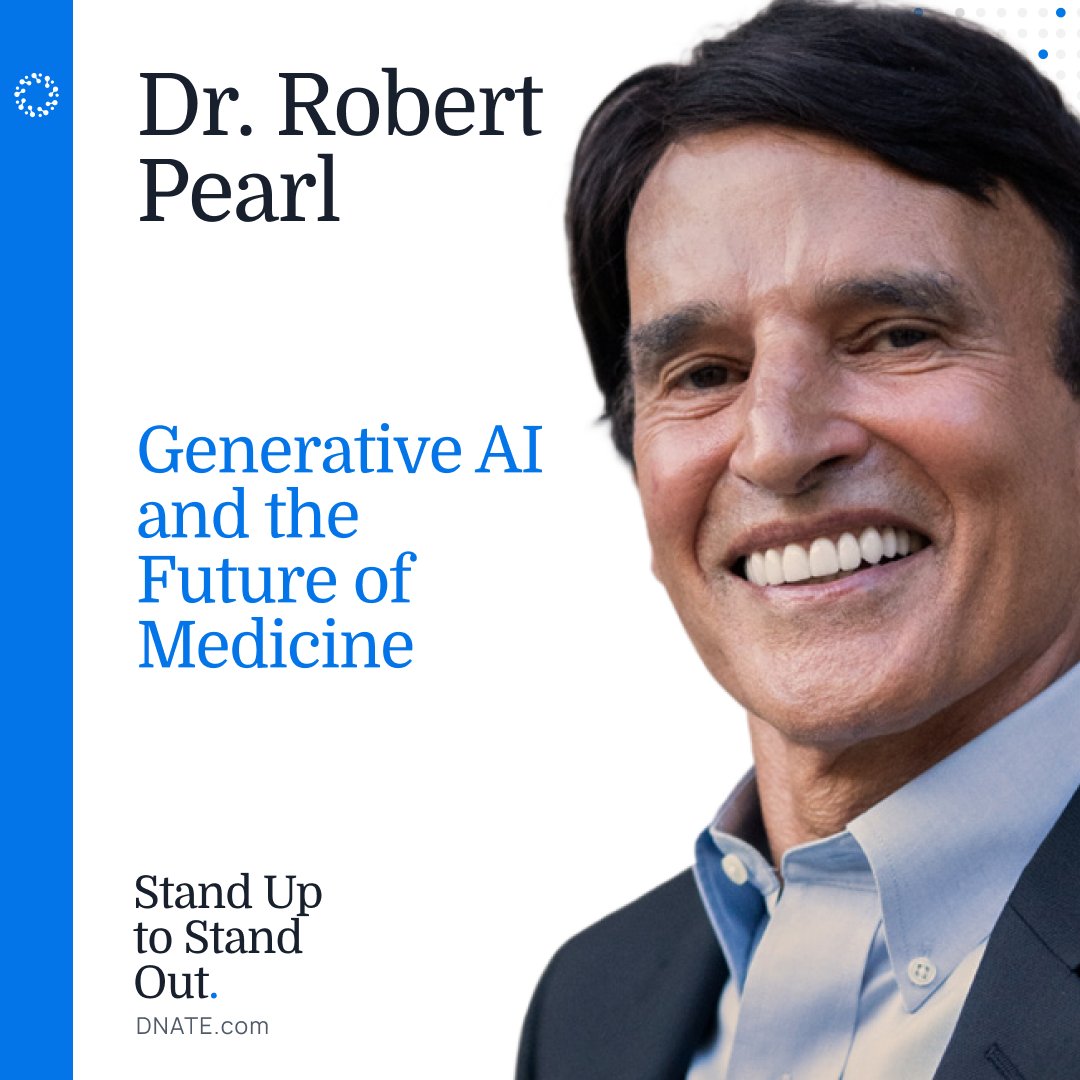
[00:00:08] Speaker B: Our guest today is Dr. Robert Pearl. He served as CEO of the Permanente Medical Group and co CEO for Kaiser Permanente for 18 years. During his tenure he led 22,000 physicians and 100,000 staff, overseeing the care of more than 10 million Kaiser Permanente members on the east and west coast. He was named one of modern healthcare's 50 most influential physician leaders. He's an advocate for integrated, prepaid, technologically advanced and physician led healthcare delivery. He's a clinical professor of plastic surgery at Stanford University School of Medicine and a faculty member at the Stanford Graduate School of Business where he teaches strategy and leadership and lectures on information tech and healthcare policy. His latest book, ChatGPT, MD How AI Empowered Patients and Doctors Can Take Back Control of American Medicine debuted as an Amazon top new release and bestseller with all profits benefiting Doctors Without Borders. It is my honor today to talk to Dr. Robert Pearl and if you don't leave this episode fired up, then rewind and do it again because you will. I am Stuart Papp, founder of DN8 and Welcome to Stand up to Stand Stand Out. The podcast communication has changed my life and it will absolutely change yours because breakthrough innovating deserves breakthrough communicating. Every episode we bring you industry insiders, subject matter experts, and you can learn from my decades of experience to get the most practical and tactical advice that you can put to work. Now let's dive in to today's show.
Welcome to Stand up to standout.
[00:01:51] Speaker A: Dr. Pearl Stuart, it's always a pleasure to join you. I look forward to our conversation today.
[00:01:57] Speaker B: Okay, well let's start at the beginning. You trained as a plastic and reconstructive surgeon and then spent almost 20 years leading the Permanente Medical Group and serving as co CEO for Kaiser Permanente. I'm curious how your view on healthcare changed from serving individual patients to serving more than 10 million members.
[00:02:16] Speaker A: Well, I, I took my medical school at Yale and I went over to Stanford for my residency and I am a big believer in serendipity and I actually got to Kaiser Permanente via that route. I was my last year of my residency training and at that time I thought I'd go to South America for a year and just travel around and fix kids with clef lupin, clef palate. And then the plastic surgeon there was in a tragic plane crash and they called me up and said would you come for a few months you know, that until they could find someone else. I said, sure. You know, I didn't have a game plan. I was, I don't know, 20 some odd years old and wanted to see the world. And I said, sure, I'll come give you a hand. And I loved it.
What I loved about it was the fact that it had collaboration, it had coordination, it had people trying to keep patients healthy.
And so that was the entry that I had into the process.
As a surgeon, I did many, many thousands of cleft lips and cleft palates and other surgeries too, for predominantly kids with birth defects, but for the broader range of problems that were being done.
And it was terrific. In fact, I still hear from the grandchildren of people who have cleft lip and cleft palate that I operated on their mother or their grandmother or someone in the past.
I get graduation pictures, marriage pictures. It is wonderful being a clinician.
Then you move on. I don't know, maybe I had 10,000 patients in total. Now you move on. Taking care, as you said, 10 million people, you don't know them in the same kind of intimate, personal way.
But it also feels good because you feel as though you're taking care of an even bigger population of individuals.
When I took the job as the CEO, and that too is serendipity, when I took that job, I wanted to shift the strategy. Kaiser Permanente had always given good care, but it had been differentiating itself by being lower cost. That was the big differentiator. And I just thought the time had come to really focus on the opportunities to achieve what I would call and talk to the time with all my physicians. Quality and service differentiation at a competitive price. That would seem to be a great strategic market position. Give better quality, better service, and do it for less money. And we became number one in the nation, according to the NCQA, in quality. Our patients had 30% lower chance of dying from heart disease and colon cancer and a variety of other problems. Our access 70% of the routine care, I don't mean the emergent care. Everyone with emergent care got it in that within minutes. But routine care 70% of the time, same day, next day, was unmatched. And our physician satisfaction was 20 points higher than the community around this. I felt really, really good in that role.
The challenge that I saw in my book, ChatGPTMD, that you talked about is the third book that I wrote. But in each of the books that I wrote, I talked about the need for change.
And what really excites me now is the role that generative AI can play. And I'll also say combining that with the GLP1 drugs, that combination will now allow us to do something that I've searched for in my entire leadership role, which is how can we effectively lower the cost of care, make it more affordable for more Americans, not by restrictions, which is how American health care does it today. It's how insurers try to accomplish it today, but by keeping people healthier. According to cdc, effective control of chronic disease would allow us to reduce heart attacks, strokes, cancers and kidney failures by 30 to 50%.
I want listeners and viewers to think about what would the world be like if we had 30, 50% fewer heart attacks, strokes, kidney failures and cancers.
[00:06:35] Speaker B: Generative AI. I think most people know or they think they know or agentic or something that can act on its own behalf. But could you explain the two components, the generative AI and then glp, for people who may not they, they've heard it, but if they had to recite it back, they might struggle a bit. Can you break down those two components into their central elements and then why those two components are so critical for you?
[00:07:00] Speaker A: Let me back up a small bit if I could. Stuart, talk to listeners and viewers about AI overall, and we should stop using that term because it is overly general and it fails to recognize that there's two dominant forms today.
The first one is called narrow AI.
In narrow AI, as an example, researchers take 10,000 mammograms. 5,000 show cancer. 5,000 are either normal or have benign findings. And then the Technology compares the two data sets. It finds not four or five differences, but maybe 40 or 50 asides of probability factor. And with that, it can diagnose cancer actually better than clinicians.
The challenge with it, as the name implies, is it's narrow. It can answer one question if you have a broken rib or pneumonia. A mammogram, even though it's centimeters away, won't give you that answer. A generative AI tool is completely different.
It was never given these data sets. It was given access to the totality of everything on the Internet, to much of what's available, almost every textbook, every journal article.
It's able to answer any question.
And not just being able to answer any question. It's able to do that from the comfort of the patient's home.
It can empower the patient. It can provide information 24 by 7, middle of the night, patient's not sure they have new symptoms, should they go to the ER or not. It can provide that expertise and guidance when it comes to Chronic disease, we manage that in the office every four months. But chronic diseases by definition are continuous. The ability to be able to figure out how a patient is doing and provide intervention and care far sooner.
The ability to be able to support clinicians whenever they are uncertain about the right treatment to provide. This is the opportunity that a generative AI tool has.
the other end of the spectrum, we have the GLP1 drugs. These are weight loss drugs, originally designed for diabetes.
These are medications that are based upon human peptides.
And what they allow us to do is to control obesity.
Up to around 20% of a person's weight can be lost on a GLP1 drug. Actually, on average, can be lost there.
And most recently we saw the introduction of pills because one of the limiting factors has been that the fact that we had to inject these peptides, the GLP1 drugs, and now they can be taken as a pill.
There are still issues around the cost of these medications. But what we know is that obesity is a major contributor to heart disease. We know that it leads to diabetes, which is the number one cause of kidney failure.
And so what we're able to see, I'll even give one more example, there are 13 cancers that are obesity related.
So now we have what I think of as two superheroes. We have the opportunity to use a GLP1 drug to help people who are overweight, who are obese, who are at higher risk of chronic disease, higher risk of developing cancer, to be able to prevent it in the first place.
We advise people will exercise, lose weight. We know that it's almost impossible. Their lives are. Haven't been able to tolerate it. Maybe that's wrong of me to say that we should say they should be able to. I'm a realist. And the reality is that they don't. That's what the data says. So some people will still develop these problems, and when they develop them, let's just take an example. Hypertension, high blood pressure.
High blood pressure affects 126 million Americans. How well do we control it? According to the CDC, 21% of the time blood pressure is under control. Now, is blood pressure important?
It accounts for 40% of strokes.
It's a major contributor to 600,000 deaths annually.
And yet we do such a poor job of doing it. We have medications that work, we have the tools, we have the medical expertise to understand what drugs to give in what order to accomplish it. The whole system is just broken.
Now imagine that we could put this technology into the homes of patients. Imagine that now we could help them to prevent chronic disease in conjunction with a GLP1 drug. But if they have one, we can monitor the patient taking the information that's available today from home monitors, whether it's blood pressure cuffs or whether it's blood glucose monitors for diabetes, it could then be analyzed by a generative AI tool.
What we would then be able to do, there's no doctor who wants to get measurements of blood pressure on every patient with hypertension that would just overwhelm them. But, but we can let them know which patients would benefit. And now rather than waiting a few more months, rather than having to see them in the office now we can control it by changing medications over telemedicine or with a phone call even to the patient that's sitting there.
Now, again, think about what would happen.
Medicine today is $5.7 trillion.
It's projected by the way to go up to over $9 trillion by 2034.
And now we have a tool that could lower it by $1 trillion and be able to flatten the curve.
Given all the economic problems of our nation today, the inflation that sits in place, given the size of the national debt that now is greater than $40 trillion, given all of the problems that happen with long term bonds, all the issues that your clients are constantly looking at, the opportunity to lower the medical costs not by restricting access, but by giving people better care, keeping them healthy, preventing these complications.
I believe that is the solution that our nation has not just for its health care problems but, but for all of its problems, particularly its economic ones.
[00:14:00] Speaker B: When people make incremental changes towards whether it's, you know, GLPs are more normalized, generative AI. I mean we're already seeing this, right? We get more comfortable and comfortable with sharing our data. My smartwatch produced more data today that I share with my running coach, my doctor and pt. I send it in for labs. I now I'm getting a full blood panel. So I'm already using this. But how do we get people more comfortable using this so we can start moving in the right direction? Where do you think? Why do you think people are resistant to it? And that's a complex question. And then on the other side of that, what do you think are some of the levers that are the low hanging fruit or the easier ways to ease people in to gain some adoption and momentum?
[00:14:47] Speaker A: I don't think the resistance is as great as you think. The data says that a third of Americans are already are using a large language model, whether it's ChatGPT or Claude or Gemini. When they have a medical issue and in fact sometimes they're trusting it even more than their clinician, they often are going to use it because they can't see their clinician for several weeks because they can't get through because it's a night or a weekend. So I don't think the resistance is as great as you might think. Now there is an issue that people are a little cautious with their own data and the more information we provide, the better it's going to be. This is a risk benefit analysis that people will need to make, but I'm actually more optimistic. But let me go back to the other point that you're making. It sounds like you and I are both runners. I run 40 miles a week. I love running. I think it is going to improve my long term health. The data says that, that if we could eat better and exercise more and sleep seven hours a night, that we actually can extend our life by a full decade of which nine of the 10 years would be in good health and good strength. And I believe in all of that. But I also know that for a lot of people it's just not possible.
They're working jobs, they have kids at home. Maybe they're working two jobs.
Maybe they're in a situation where their income is not sufficient.
There's a lot of reasons why people can't do it, plus the fact that it's hard. You and I were probably both born with good genetics. So we can thank our parents for the fact that we lifestyle is easier maybe for us than for other folks. That's why the GLP1s is the preventive tool to me have a great positive upside because all you got to do is remember is to take a pill once a day.
That's not hard to do. When you brush your teeth in the morning or at night, take your pill.
And I don't think that people don't take their medications because they don't want to. I think we just make it too hard on them to figure it all out.
And the GLP1s, the fact is that these drugs that cost according to a Yale study, $5 a month, maybe 10 or 15 if we factor in all the other pieces are being sold for $1,000 on the retail market, being sold for 4 or 500. Otherwise we need to address that. That's a different question that needs to go through the government and through various regulators that are out there.
So I think that the opportunity to do that now, what happens when you lose weight? Imagine being 20% or being obese and not being able to lose 20% of your body mess.
All of a sudden you can exercise because you're not carrying all that extra weight. If you and I had to carry a 40 or 50 pound backpack, I'm not sure how much either of us would run every single day. And you realize that things like blueberries, they taste very good, and you want to be able to have more of those and maybe fewer of the cookies that you otherwise might do.
There's a lot of data that says people who lose that extra weight do far better at work.
There's some data even saying that sexual relations improve under that circumstances. And now you start to create what I think of as a virtuous cycle where the weight loss now allows you to do the things that we as clinicians have told people to do but they were unable to do before.
But then, as I said, you now have the situation where despite their efforts or because they couldn't do these things, now they have hypertension, diabetes, chronic heart failure, and we still treat these problems like we used to treat acute problems. You know, if you go back in the last century, you went to the doctor when you had pneumonia, you went to the doctor when you broke a bone, you went to the doctor when you had right lower quadrant pain, and it was appendicitis.
70% of the visits today are for chronic disease. And we are using an acute care model that does not work.
So that's what I would say. I would tell patients, look, here's an application. I need you to go to costco and for $25, buy a blood pressure cuff with a Bluetooth connector.
Here's the application you want to download. It's going to measure your blood pressures three times a day for an entire month.
At the end of the month, I'm hoping that things will have gotten better. If that's the case, it will tell you they've gotten better.
And I may not even need to see you in four months. Let's just see how you're doing over time. You can monitor it yourself.
If you're not getting better, why should I wait three more months? It's not going to get better.
Just let me know and I'll make an adjustment, probably increase the dose or. Now, obviously, if you have a very complex patient on multiple drugs and multiple chronic diseases, these aren't the patients who are going to be helped that much by this technology. You, you've got to see them. But today you don't have time to see them because you have all these Other patients coming to your office and you have 15 or 30 minutes with an individual who's far more complex. Now again, we create a positive aspect as you have the time to sit down for this individual with the very complex problems and better control that.
You know, I can't find anything negative about the incentives that drive the process of keeping people healthy as the means to lower cost, except the inability to have the tools to do it. And when I was the CEO of Kaiser Permanente, that was my frustration. We could do these things. In fact, we did that. We had 90% control of hypertension, not 50% or 21%, but it cost a lot of money because we had to use a lot of people, nurses and pharmacists and doctors to do this monitoring, to speak to the patients. And even then you couldn't talk to the individual every single day. And now we have this ability.
This is the, should be the golden age of medicine. And for American medicine today, it's not.
[00:21:01] Speaker B: Well, you're pointing out something that I've thought a lot about, which is we're always leaking data, right. And the wearables have sort of been able to channel that, right? You got a smartwatch, get your heart monitor. I get notifications every day about low heartbeat or irregular, this or sleep. And so what I think you're talking about, which I'm a huge proponent of, is how can we leverage all of this information to get ultimately a better human connection when we get in front of what is the highest value, which is a face to face human interaction. Right. That's what I think you're saying is you're not only going to get better care and it's going to be better for society, but by the time you need to have that face to face, it's going to be focused on the right topics at the right time, at the right altitude, instead of grasping at straws and digging for causes that you might not even be aware of, even if you're the smartest, greatest clinician on planet Earth. So that seems like an ultra premium value generation from this. Did I get that right?
[00:22:08] Speaker A: You got a lot of things right. The first one is, okay, it tells you what's going on, what are you going to do about it? You don't have the expertise to be able to figure all of that out. And now you're going to call your doctor to get an appointment and the doctor says it's three weeks away. I mean, the whole system doesn't make any sense.
You know, the wearables should tell you what you should do or at least provide some expertise around it. You know, when you asked that question, I was reminded early on, this is soon after the book came out, long before we had. Today, I did a podcast like this one. At the end of the podcast, the host, a woman, said to me, my husband was skiing three months ago. He fell. His arm was over his head. He slid about 100ft. And three months later, and it still hurts him. And you can't use that arm as well as the other side. Dr. Pearl, you're a doctor, and you're a big skier. You're a competitive skier.
What happened? And I said, I think I know exactly the injury he has, but do me a favor. You said, you've never used a large language model for medical care.
Why don't you put the information in there and see what it says? She calls me back five days later. She says, thank you, Dr. Pearl. I put all the information in place. And it said he probably had a rotator cuff tear.
And then it went on to explain what a rotator cuff is, which is a very complex piece of anatomy. Then it said, he probably needs to have an mri.
And I knew what the. I knew that it was now indicated.
And number three, it said, he should see an orthopedic surgeon.
Not because that's what people always say when they want to protect themselves, but because he probably knew needs to have an operative procedure. And we did that. Went to the doctor. Doctor said, probably rotator cuff tear. We knew what the rotator cuff was. We could ask more detailed questions than we ever could have thought to ask in advance.
When the doctor said he needed an mri, we said, yeah, makes total sense to us. We didn't have to ask, was it really indicated? What's it going to cost? This is what he needed to get the care that was required. And after the surgery, the surgeon said, if you had waited three more months, I probably could not have reattached the tendon to the bone because the muscle would have contracted. That's what's possible today. I know a lot of clinicians are afraid. They think back to Dr. Google. You know, think about that. You had a problem in the past. You went to Google. And this is not the Google of today that uses generative AI, but the Google of the past. You get a lot of websites, a lot of links.
What are you going to do? You're not a doctor now. You're getting the kind of information. And here's the other part to it, and it is a piece that I think people have to be, I'll say struggling with. And none of this has a single right answer. I think every one of the listeners and viewers needs to decide it for themselves. The more information you give the generative AI tool, the better the answers are going to be.
Give it all of your medical information.
It's going to give you far better answers than if you're just putting in more general information because it'll give you a general answer to general information, but it'll give you a very specific, a very personalized answer when you start to provide the other pieces in place.
I think for me it's a great trade.
As I said, I'm a big runner, probably like yourself. I have all sorts of injuries from plantar fasciitis to anterior tibial syndrome and, and so on down the line because we all want to over train. And when I get one, I always ask Chachi Beat what should I do?
And I then call my doctor, but by the time he gets back to me, I've already known what to accomplish. And I'll tell you almost every time, the advice is exactly the same. Now, is this technology going to be perfect? The answer is no. But I want to, for listeners and viewers, tell them this may be a little depressing. 400,000Americans die every year from misdiagnoses. A quarter of a million people die from preventable medical errors. Over half a million people die from poorly controlled chronic disease.
The question isn't is this technology perfect? Will it ever make a mistake? The question is, is it going to be better than we have today? And there's no doubt in my mind now this gets back to this self driving cars. If you start with the fact that every time the self driving car has an accident, it's a catastrophe, you come to one conclusion. If you start to say there's 40,000 people die annually with cars every year and it still could be hundreds, maybe a few thousand, but 30,000, 35,000, 38,000 people are going to be alive, otherwise it'd be dead.
I think you come to a different conclusion, right?
[00:27:07] Speaker B: Well, that, that this is the, the, the cost of progress, right? You look back, but before cars there were horses and all kinds of dangers, there was health, sanitation, all that stuff. And then we've made that trade in spades. And then you go to autonomous. So it's always the way things are with technology. I think people are first afraid and it's that bell curve distribution. You've got your early adopters, which I believe you and I are, are sort of in that earlier curve and then people come along and then eventually, hopefully it starts to become a tidal wave.
I think you're also talking about something that is deeply exciting to me, which is, and I use all kinds of different tools now, but you know, creating projects or creating a gem if you use Google products or Claude has projects or whatever it would be, but putting all the relevant information there, whether it's your tax information or your health information.
And then of course, adding agentic qualities to it where it's taking some initiative and saying you should consider this or here's a deadline coming up, or, you know, that's where it gets exciting to me.
And just to go back to your.
What I always think about, and this is something I think about in my career, I think about it with healthcare is can we leverage all this technology to do a lot of the data digging and communicating and synthesizing and trend analysis to then make it so that spending time with other humans can be of a much higher primal value where you can actually have that human connection that we all crave. This is not about us severing off from judgment. I think this is us going full on into having someone else care for you and be concerned for you and want you to succeed and taking advantage of all the information, insights and data and trends that you could possibly bring them to be the best advisor and somebody who cares about you.
[00:29:07] Speaker A: You And I are 100% aligned, Stuart. But I want to go a little bit beyond that. I want to point out to viewers, listeners, this. These tools have been here for three years.
What's called Vibe coding, which is what you're referring to, has been here for one year.
Vibe coding allows an individual with no training in it, but a willingness to learn, to be able to create exactly those applications, to be able to create the tools to create the agents that are going to do the things that we want.
I know that many of the people on this podcast are clients of yours in the financial world. And what they need to be thinking about is the future of technology going to be built in the same way that it was built in the past. Now, what do I mean by that? Well, if you look in the past, we relied on companies to develop the tools. You had a tax problem, you had a TurboTax solution, an application you would put onto your computer to accomplish it. And maybe we deal with the irs, you have to do that.
But we've expected that all these tools would be built to many of them in healthcare, would be FDA approved.
And now we have a different option to personalize care.
Vibe coding allows us to do the same thing, to personalize it around our fears, our concerns, for clinicians to personalize it for the needs of an individual patient. And we start looking at the cost. We're talking about time that's far less expensive than, than some of these drugs that sit in place that also treat a single patient. This is a mindset shift that needs to happen. We need to figure out, are we going to monetize generative AI tools by creating these specific applications by individual companies, and I would think of them as point solutions, or are we going to figure out how do we create the opportunity by teaching patients, by teaching families, by teaching even clinicians how they can use the ones that we currently have in ways to get the right best answers? We haven't figured out exactly what that is, but that is a process that I see actually as being the future and happening over the next few years if the government, the regulatory agencies are willing to allow it to happen.
[00:31:39] Speaker B: Do you want your team to have a seat at the table? Would you like your team to speak with clarity, confidence and influence? Reach out to us DNA.com for more information.
So let's look at the other side of the penny, if you will, because I think there's a reticence to share personal health data because of fear of retribution or judgment, or you won't qualify for X, or you'll be judged for Y. And, you know, there's various laws that are designed to protect people.
You know, you were at Kaiser, of course. I mean, there's just oceans and oceans of data.
And of course people would love to be able to use that data to make better informed decisions. How do you think about that relationship between, you know, protecting people's privacy and their right to that? And also this whole possibility of Vibe coding your way to living for 200 years and having your best life, which I'm all for, and I'm an optimist and excited. But just looking at the other side of the coin for a minute and talking about how we can protect people and make sure that they're not being unfairly targeted or victimized, well, I think
[00:32:53] Speaker A: we make a major mistake in our minds. We say, how do we regulate technology? And I would say, how do we regulate humans?
The problem isn't the technology, it's the humans.
When I was a CEO in Kaiser Permanente, we had to have very strict firewalls between the clinical information we had and the insurance function we offered. We couldn't use our clinical data that was created by clinicians to be able to shape the cost of the premium on the insurance side for the payers.
That's a very good restriction.
We need to be able to protect people's privacies. We need to have legislation that talks about what can the law watch language models do with the massive amount of data we provide to them and obviously the appropriate penalties should that be violated. Just like we have in many, many different industries where there's some banking or finance that we currently have in place.
That's where I think the regulation needs to be.
Yes, errors can happen. People can hack the systems, but they can hack every system.
They could go in there and hack your medical record, they can go in there and hack your insurance, they can go in there and hack a lot of things about your life Today.
I would hope that these large language model companies can protect the people who use the systems better than all these other entities that have our data right now.
So I see it as a different problem. I with the right restrictions and regulations, the right protection, is it going to be perfect? No, it's never perfect. But again, I go back to will it be more safe than today? And my answer is yes. A combination of the fact that it's these companies with, you know, hundreds of millions and billions of dollars who are going to be able to put the systems in place to protect it, which I think they should be able to do better than all these smaller applications that are being developed.
And then number two, that we have the opportunity now to make certain that the firewalls protecting release, availability, provision of information about individuals not only are there but are well understood and are feared. Because if they're not feared, they're going to get broken. That's what we see. It's easier for some of these companies to apologize than to invest what's necessary to protect. And I think that that's a mistake. Just like in medicine, it's always easier to take care of the complication and try to reverse it. Whether it's the heart attack or the stroke or the kidney failure with a transplant, it's always easier. But no, the right place to begin is to prevent the problem in the first place. And that's what I think we need to do. Protecting the privacy is providing the security and then making sure that when there's a problem out there that we attack it aggressively, just like we attack any threat to the American populace.
[00:35:54] Speaker B: One of the things you've spurred me to think about, and I love thinking about, is all the possibilities that are there with these large language models and The AI tools and, you know, personal anecdote. While we were on vacation, my 5 year old daughter had something on her foot. My wife and I were looking at it, you know, in a cabin light and we took a picture of it, we sent it into one of these large language models and we got, you know, and I asked a few different models and you know, it was probably something that we could treat with some Dr. Scholls and it literally cleared up and we felt like this was a miracle. And I feel like this happens on the regular.
And I've had massive breakthroughs by using these tools in ways that I don't think always occur to everyone. I'm wondering, from your perspective as a physician and also personally interested in longevity and wellness and health for everybody, how do you think we're underutilizing some of these tools that would be low hanging fruit that could be leveraged right away, whether it's the blood glucose monitor that you could use, or using smartwatches or whatever it would be. What are some of the underutilized strategies that would be easy for an average person to take advantage of and start seeing improvements?
[00:37:12] Speaker A: I think you need to separate it into two parts. One is the tools that can be used with the physician and the other one being the tools that can be used by an empowered patient.
Generative AI is the first tool that I can think of in the history of medicine that is built for the patient as much as for the clinician. And we keep trying to apply it for the patient in the context of the physician. Your example is absolutely wonderful. And I just had a friend with a very similar situation where their daughter had this rash and didn't quite know what to do. And they called for information to a telemedicine place. They had never seen it before and they didn't trust it. And I said, you know, take a picture exactly what you did and asked the questions. And lo and behold, they came up with the right diagnosis immediately.
Now that is an empowered patient. Now, if they had a question because it contradicted what they had heard on the telemedicine visit, they needed to call back and ask some more questions. They need to feel empowered today. That's not how patients feel.
The one thing I would say to everyone on this call is start experimenting, start using it. Exactly, Stuart, like you did. If you have a problem, consult. And by the way, you can't ask just the prompt, a single question. You got to ask the follow up. You got to get clarifications as you would with a clinician. If the individual gave you the time to be able to delve deeply into it, and you may find something that was not known before, not because the technology was wrong, because it didn't have the information that it needed to. Just like your doctor could skip over something in a rush and fail to come up with the right diagnosis that sits there. I hear stories all the time from individuals, from families where a diagnosis, a very important diagnosis, was missed, either because the clinician wouldn't listen and hear all the challenges, all the problems that were coming up, or because it was so rare that the clinician didn't consider it. And as a parent, if your child has a problem, you're thinking about 24 by 7, and so you're going to factor all those pieces in place. You're not going to just jump, oh, let's do this. You're going to want to make sure it's the safest, best way to do that. I don't think anyone's going to get convinced to use these tools because I tell them, you tell them, because some agency tells them they're going to use them because they tried them, because they work and they have your experience, which is that when I went to see the doctor, they said exactly what the tool had said.
Now, if there's a big deviation, they're not going to want to use it because they're not going to trust it.
[00:39:54] Speaker B: So recently I just hired a running coach in order to do the assessment. He said, okay, we'll come in. I'm going to put you on the treadmill and I'm going to film you from the front and the side. And he did it in slow motion. So we had how many strides per minute? Which was great. But the best thing was just watching this playback where I could see hip alignment and all these things.
And in very short order, you were able to get a real assessment of where some pain was coming or where some opportunities. And in just the last week, it's already taken a lot of time off of my goals for my per km.
And so I just think that's just one microcosm. And I'll give you one other anecdote and I'll tell you where I'm going with this. We have ring cameras at our house, and sometimes I catch a video of me taking out the trash or something like that and thinking, why is your posture so bad? Here, stand up straight. So what I'm saying is, you know, beyond just the data, what if you had someone sort of looking at you and analyzing and thinking you Know, what are the opportunities, what's their activity, how much are they, you know, consuming water? Basically, it's a little Big Brother ish and it, it scares people. But if you think about how do I get better data into a system that can help look out for my best interests and my health protocols, I think the future just looks limitless from this perspective.
[00:41:22] Speaker A: I think you've described it perfectly. The only piece I would say is, can a generative AI tool do as well as your coach?
And my guess is that if it was trained on that, it could.
You would take trainers, and you take 10,000 trainers across the nation using the same set of videos, and you would train the application to be able to provide the answer. Now, will trainers like that because they're going to probably lose their job. No, I mean, this is a different question about the likelihood that generative AI is going to replace people, but technically, could it? Your ring cameras are easy to connect to a generative AI application. Every video is easy to connect. And now, rather than doing it once in a while, you could do it all the time. And you know it's going to say, you know, Stuart, you haven't changed those running shoes in a while because I can see the change in your gate. And now you say, oh, yeah, you're right, you know, it's now been three months or whatever it's going to be, and the shoes are giving out. I need new shoes sitting in play. Or it's going to talk about something else that it can see, because that's what people have to understand.
This is not the narrow AI tool, this is the generative AI tools. It has the ability to learn.
That's what makes it so both scary and optimistic, depending upon if you were to look at an existential crisis, you want to look at an application in our lives, but an application in our lives, I think it can give you that information.
And where I actually think we're going to go over time is not going to be one or the other, it's going to be both.
Because your train is not going to see you every single day, or maybe not even every single week, except in the gym to be lifting weights. But then the individual is not going to watch you running and putting on the treadmill. It's just too much time, it's an expense. Too much, too expensive. You want to think about it that way.
So how about if the trader sets the parameters, puts it all into place, and now the application does it. When you're at home on your treadmill or you take it out the garbage and now creates that information for the trainer so the trainer can give you a different set of exercises or a different set of recommendations without having to start the process at the beginning.
That is what could happen.
But right now we're still far from that. Not because of the technology. The technology is here. We're the ones who basically are resisting using this tool to its maximum because we have legitimate concerns, but it's because we have human concerns, not technological shortcomings.
[00:43:58] Speaker B: Right. But again, I think what, what it points to is the premium of humans being humans within a. With a coach who can leverage all this data, they could actually spend more time talking about mindset or competitive attitude or building community or saying, come join us for a run by the beach.
These are, I always think that our job is not to perseverate over what technology takes away, but to look at what's further up the curve and thinking, how can I lean in and be more advantageous to my clients or be of more service to people by using this technology? And just what we're doing now, the fact that you can record a conversation and put it out to the world so that 8 billion people have access to this information, that, that's just mind blowing. Even as recently as 50 or 100 years ago, that, that just did not exist.
And I don't want to go backwards. So I'm on the same, same boat as you.
I'm also one other topic I haven't hit on and I, I'll, I'll go here for something that I hear all the time.
So all my clients are in biopharma and biotech. They're all in, in drug discovery and gene therapy and gene editing. These are, and they're commercial teams and medical teams. So like you, they have medical degrees and PhDs and deep technical expertise, computational biology, you name it.
And we, you know, we hear a lot about. Actually I have a cohort now at MassBio, so I'm actually coaching a whole bunch. There were, there were five teams that were biotech and now I'm just getting the names of my tech bio cohort that I'm going to be working with through the end of the year. And it's all, it's fascinating. But one thing I hear is, you know, how do we leverage this tool in our, you know, you name it, in our supply chain or in our drug discovery or in our labs. And I know it's already happening, but you know, seems like there's so much potential here to leverage the computational power of these large Language models to be able to synthesize and do things that would just take humans a lot longer. What do you think is possible with innovation in the future of medicine and healthcare, with just the raw power that just seems to keep compounding daily?
[00:46:25] Speaker A: At this point, we're already seeing it. I mean, the world of biotech is completely transformed. This new drug that I mentioned earlier, the analysis of the genetic structure of the cancers is being done by generative AI tools because it can do it so much faster. The ability to understand the human genome, I mean, it's so massive in size, it would take an individual months, years to accomplish it.
It's how fast this, how powerful and rapid this technology is. It can do it a matter of minutes or even days. I mean, there's just so many examples of that.
So I, I don't see any limitation there. And the nice part about that is I think the people who are using it are very encouraged to do so and they're looking for every opportunity, particularly in the early phases and early stages. I think the ultimate analysis is going to still require humans because there are things we're going to see that the technology may miss. Although the technology will help us to see it, but we will see it because the technology will tee it up so well for us. Now I think that that's established. I think the challenge is going to be where the technology is threatening to us.
But I want to go back to something you said earlier because I loved it. I love what you just said about, you know, changing the.
What we rely on the trainer for. Right now we rely on trainers for basic information.
But if the basic information is now going to be provided by a technology, now the trainer can move up to another level. As you said, the trainer can figure out. How do I get Stuart to do the things that the video showed that he should do rather than Stuart nodding his head and then not getting the shift in running gait that's necessary. It can accomplish that. But I want people to think about that in the context of the doctor.
We want to take away the easy to do things, the straightforward, the algorithmic, the predictable information. We want it to replace us between visits consistently.
We take mental health. You see a patient in your office, they're depressed, you worried about suicide, but they're not quite. They're not suicidal. You put them into a facility, but they're not regular. You're worried about it. If you actually lose sleep often over it, you have a tool that can now evaluate them.
Can you make the tool recommend crazy things? Yeah. We know they can do that, but the patient, the person's not, hopefully not going to be doing that. And now they can notify you three days later, four days later, something's gotten worse. And now you can intervene.
You're not intervening when it's not necessary, you're intervening when it's a acute crisis. They're not going to be alive at your next visit.
This is the kind of thing we need to be doing everywhere and where there's a barrier, where we think there's a limitation around it.
[00:49:38] Speaker B: So much to think about. What I loved though was just that sort of. It remind me of Steve Jobs, who I think he traveled to India in the 70s when he dropped out of, I think it was Reed College. But he learned this technique which was the reality distortion field. Have you heard of this?
[00:49:58] Speaker A: I have.
[00:49:59] Speaker B: So I think he met a guru who basically asked him questions about what was possible, so the story goes. And he used it, I guess a fair bit at Apple, but when he wanted to bring out the iPhone, he, he met with the head of Dupont. This Guy had a PhD in chemistry or chemical engineering or materials, whatever it was.
And, and he said to the guy, you know, can we get this gorilla glass you know, done and can we go from where we are to, to getting in the market very quickly? And the guy can't, it can't be done. And he was, it was, it was like, you know, have faith, this can be done. And they went from, I think concept to the market in 270 days, which is just, it just, I mean it's, you know, less than a year to go from that, which is just shocking. But what I love about this is it really coins the essence of what this technology can bring, which is being so uniquely human, relying on each other and thinking big and challenging one another and leveraging courage and the wisdom of the group and collaboration. All of these things never really gets talked about. When we talk about technology, it just, everyone sort of perseverates. It's going to take that person's job or it's going to eat up white collar jobs. And I'm thinking, are those jobs really the jobs that we need? Are they adding true value or is this a revolution that needs to happen across all of life, let alone in healthcare? So obviously, you know where I fall on that, I think we're on the same, same part of that as well. What is the unique humanity here?
[00:51:49] Speaker A: Yeah, I speak at last year, 40 different conferences keynoting them and the Q and A comes up or sometimes people Wait till afterwards, because they don't want to ask it publicly. And they come up to me and they said, you know, Dr. Pearl, you know, I can't work any harder. I'm already working constantly. I'm minimizing my family. Are you asking me to work harder to be able to control chronic disease, to be able to reduce complications like heart attacks and strokes and kidney failures? And I say, no, that's not what I'm suggesting. That's the opposite.
What I'm suggesting is that there are solutions out there, that we're not pursuing it because we're often so exhausted or so blinded by the potential.
I said, the opportunity to work with colleagues, the opportunity to use the technology, the opportunity to prevent the problem in the first place.
Shift the question from how do we do more to how do we find 20 to 30% that we don't have to do because a technology can do it for us better than we can accomplish it more consistently than we can accomplish it. This, I think, is the mindset shift and why I love that story I just told you, and I love the Steve Jobs stories. I knew it. And you know, it reinforced the same theme, is how do we shift our mindset from asking, how do I keep doing what I'm doing more intently to what am I missing?
How do I reshape things? How to restructure health care?
How do I take what seems impossible today because there are no more resources? I've already said we're spending 5.7 trillion, going to $9 trillion, but how much of that?
It's not that it's wasted.
We need to spend those dollars in the broken system we have. We didn't have a broken system. We wouldn't have to spend it and say, how do we fix the system in order to save, save it? We got to make sure we're right.
And the thing about Steve Jobs that I love, and I think he's one of the world's heroes, is he did open the eyes of people to what was possible.
And I think in that way, if we continue that today with now the tools that we have, I wish he was still alive because I think what he would do with gender of AI and Apple would be truly amazing.
And it would be more than financial success. He would focus on the real opportunity to be able to keep people healthier, to extend lives. You know, our life expectancy hasn't increased since 2010.
Fifteen years later, we still live just the same amount of time, despite all the added dollars, despite all the new opportunities that we have. This is the moment that we now can take the leap forward, make it the golden age of medicine. It'll be a combination of human psychology with the technology. It'll be a way of shifting our focus from care that's intermittent to continuous, from care that is episodic, to being patient, empowered. The opportunity of tomorrow is not doing what we did today and yesterday better. It's going to be coming up with a different future, one that I think together we can accomplish. And the result will be hundreds of thousands of lives saved, hundreds of billions of dollars of money saved, and a lot more health and a lot more fulfillment for the world.
[00:55:19] Speaker B: I love it. That is such a perfect place to pause Our conversation. Dr. Robert Pearl, thank you so much for being a guest. It was a true honor, a delight. But I think more than anything, beyond just your vast knowledge, all your contributions, everything you've done, it is your infectious optimism and your excitement that is, it just, it's lit me up. I was already in a good mood, but I feel like ready to take on the world. And I just thank you just for everything that you bring, your amazing books. He's the author of ChatGPTMD, Mistreated, Uncaring, and also an avid speaker. You have a busy fall coming up, but I just want to thank you, Dr. Burrell, for being on the show and for sharing all your wisdom, your excitement and mostly your unbridled optimism. It's wonderful.
[00:56:09] Speaker A: Thank you, Stuart. It's always great to talk to someone like yourself who has a vision of the future. And if listeners and viewers want more information, go to my website, robertprolomd.com and there's a lot of information out there. And most importantly, if you disagree, let me know because that's the only way that I can learn. Thanks for having me as a guest today.
[00:56:30] Speaker B: Thank you. Thank you, Dr. Pearl. Well, I appreciate it. Hey, it's Stuart again. Before you leave, if you love this podcast, subscribe. And also if you go to dn8.com you'll find a sign up for our newsletter where we give you actionable and practical advice. And be sure to find us on social media. And don't be shy. You can give us a six star review, but we will settle for five. See you in the next one.
It.