[00:00:00] Speaker A: One of the things that I normally tell my students, right. Whether managers or executives, close your eyes. Think about at some point in your career, you know, you probably didn't have like a track record and someone really gave you that one opportunity and that opportunity made a huge difference.
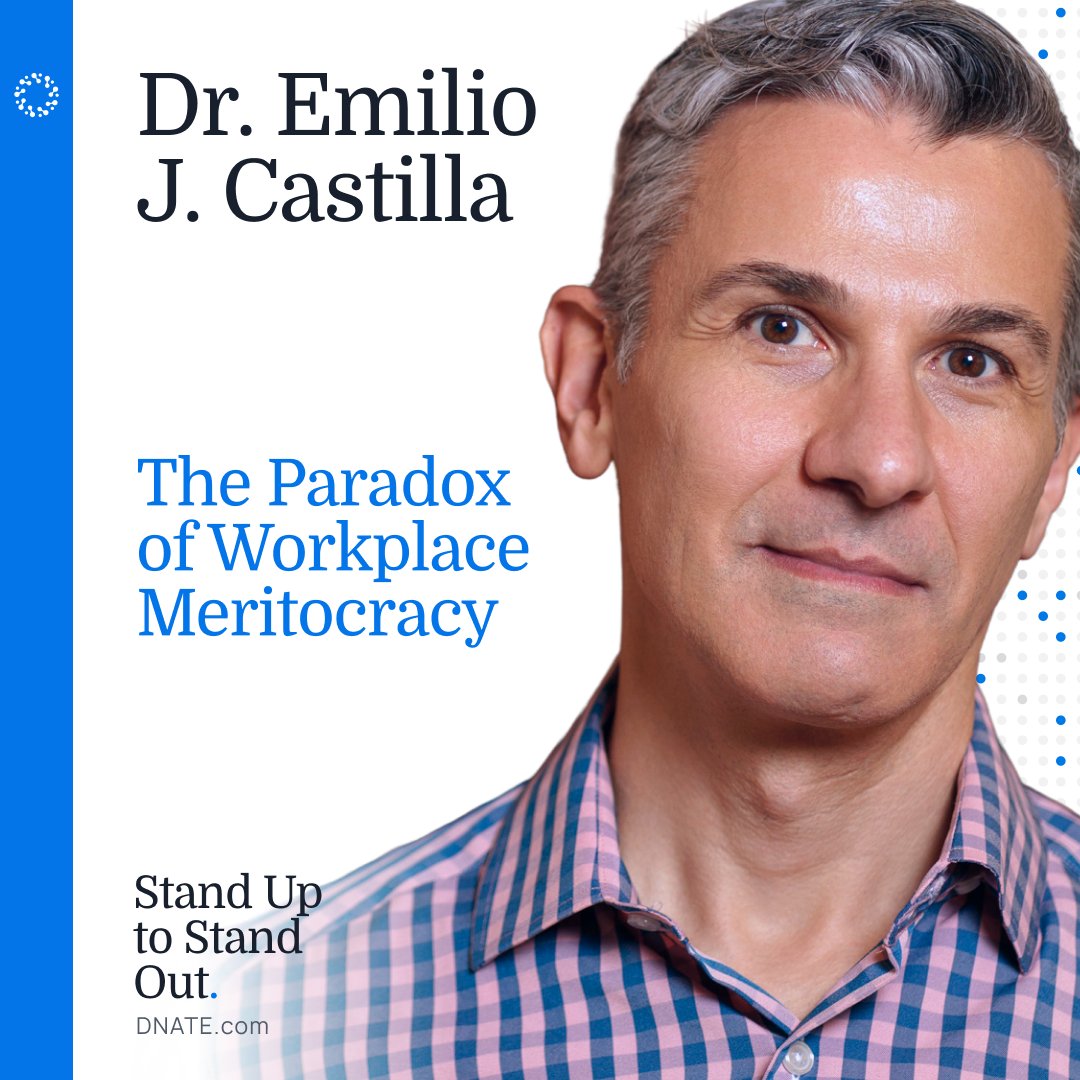
[00:00:15] Speaker B: I'm thrilled to have Dr. Emilio J. Castilla. He is the NTU professor of Management at the MIT Sloan School of Management. He's also the author of the multiple award winning book the Meritocracy Paradox, Where Talent Management Strategies Go Wrong and How to Fix Them. I am Stuart Papp, founder of DN8 and welcome to Stand up to Stand Out. The podcast communication has changed my life and it will absolutely change yours. Because breakthrough innovating deserves breakthrough communicating. Every episode we bring you industry insiders, subject matter experts, and you can learn from my decades of experience to to get the most practical and tactical advice that you can put to work. Now let's dive in to today's show.
Welcome to the show, Dr. Castilla.
[00:01:08] Speaker A: Thank you so much, Stuart, for this invitation. I've been looking forward to having this conversation.
[00:01:13] Speaker B: Let's start at the beginning. You're a social scientist who's, for more than 20 years, you've looked at who gets ahead at work. And, you know, I wanted to talk about all the themes that led you to write this book. Why write this book and why write it now?
[00:01:28] Speaker A: I think the timing of this book is especially important because we actually know a lot about how organizations are making decisions about people in the workplace. And much of the knowledge, I think it remains inside of academic journals. Right? And as a researcher myself, I think we spent a lot of years studying hiring, studying performance evaluations, promotions, compensation, opportunity, and we published some of these findings in some of the top journals in management or in the social sciences.
And other scholars read them and we build on each other's work, and that's essential. But at some point, I began asking myself how much of what we've learned is actually reaching out to people who can make these decisions every day and who can really change the workplace. Because managers don't make these decisions in the laboratory or in experiments. On Monday morning, they have to go to work. Someone has to make decisions about who to hire, someone has to evaluate employees, someone has to decide who gets promoted or who receives a stretch assignment. And these decisions accumulate. And a single decision may seem very small, but over the years, they can really shape an entire career. So I think it's an important time for us to have this conversation and more so also because I think the World is also changing really rapidly. Organizations have much more information about their employees.
I'm sure that you've heard about the field of people analytics and how we can be extremely analytical about the way we think about decisions in the workplace. AI now is also beginning to participate in the decisions that historically were made almost entirely by people. So all of this creates an amazing opportunity for us to have this kind of conversation about meritocracy in the workplace and help managers and executives and employees to start really thinking about, let's be critical about some of these fashionable HR practices and trends and trying to build places that organizations that create excellence and gives opportunity to everybody.
[00:03:34] Speaker B: Could you help define meritocracy? And even more important for me, why does this matter to high performing organizations?
[00:03:44] Speaker A: Oof. Those are two very complex questions too. Let me ask. We got time, you know, we have the time. Okay, so let me just start with the term meritocracy. So what is very fascinating to me is that whether implicitly or explicitly, almost everybody believes that we should be meritocratic. Right? And yet what, what I found in my research is that people have very different definitions of merit and meritocracy. Right? So historically speaking, for those of you who might be interested, meritocracy emerged as an ideal, like a vision of society in which people advance because of their abilities, their efforts, and the contributions to the success of organizations, rather than family background, wealth, demographics, or social connections.
And it's been like a very remarkably powerful idea because it speaks to something that most of us care about, which is having opportunities to succeed in the workplace. And that ideal has really shaped the way we think about modern organizations. And in many ways, it also inspired the development and growth of what we call the strategic human resource management field. Right. Or talent management systems, and even like artificial intelligence, as I was talking about. Right. So what do I mean by meritocracy? In theory, it means like any kind of social system, it could be an organization, a business that basically has processes in place in order to make sure that you advance and reward the most talented, the talented individuals, the individuals that have the merits that are relevant for the success of the organization, but they do not use factors that we will consider non meritocratic, like socioeconomic class, demographics, social networks, a lot of these other variables that are sometimes and often completely uncorrelated with performance. Right. So one of the things that I also say in my book is that for true meritocracy to be effective in practice, at least two conditions need to be met. Right. One of them is that organizations Must reward and advance people on the basis of the qualities that are really relevant for the success of the organization and performance.
Right. And we should be thinking about eliminating a lot of these other variables that are completely non related to performance.
And the second condition, which is very important to me too, is that everybody has to have like a fair opportunity to be able to demonstrate that they have the qualities and that they have the effort to make some of these organizations successful. These two conditions sound very straightforward. But in my experience, and this is actually something that I talk about in my book, they're very, very surprisingly very difficult to achieve in practice. To be clear, you know, I'm not talking that, you know, that meritocracy is a failure or that it's never working. And I'm not criticizing the ideal. I mean, it's quite the opposite. It's just I'm trying to raise awareness that achieving meritocracy is much harder than you think it is, but it is really possible if we actually try to introduce steps that will allow us to do so.
[00:06:59] Speaker B: I want to ask the more critical question, which is, and this is me playing the skeptic, it's not what I believe. But why does this matter to organizations? I mean, meritocracy sounds like an ideal. I want to live in a meritocratic world. At the same time, you know, organizations can decide what's most important to them, what goals are important to them, how they want to get there. And we've all heard stories from, you know, from government and military and business and life where, you know, there's this ruthless, cutthroat world where only the strong survive, etc. Etc.
But let me just ask the more fundamental question, which is why should leaders and executives care about meritocracy from an organization perspective? Talent management from a bottom line profitability perspective.
[00:07:47] Speaker A: Yeah, I'm actually glad you're asking me this question because in a way it's very related to this idea of fairness versus organizational performance. Right. Or the bottom line inside of organizations. And this is an important point that I would like to make because I don't think that being fair and giving opportunities to everybody is a competing objective from organizational performance or the bottom line. Right. You can focus on creating a meritocratic workplace and also you can focus on running a high performing and profitable company at the same time. I don't see any kind of competing approach here. If we take meritocracy seriously based on the definition I gave you, both fairness and effectiveness should actually reinforce one another. A truly meritocratic organization will make better decisions about people, to hire the most capable candidates, to recognize excellent performance, to develop people with potential, to put the right people in the positions where they can contribute the most. But, but think about if that's not the case, right? If there are biases, if there are social barriers, if there are poorly designed performance evaluations or systems that are just not providing equal access to opportunities so that everybody can demonstrate that they can really help your organization be super successful, that's not a fairness problem. It's now organizational inefficiency. So you may hire the wrong candidate. You, you may be overlooking someone who has amazing potential. You may be promoting someone simply because they have greater visibility rather than greater ability. And you may be even losing talent, excellent talent, that are concluding that this is not the right organization because you're having bigger, you haven't figured out ways of really linking performance to great things that can happen to the employees in a way that feels fair.
I think that that fair and effectiveness in the way I think about meritocracy and practices are quite compatible. And my argument is really, really fundamental in the way that organizations perform better when they make better decisions about the people they manage.
And reducing irrelevant biases, removing barriers, removing inefficiencies and distortions that I've seen in the workplace in those decisions, it's what can make these organizations better and more effective.
[00:10:16] Speaker B: Well, it's also a virtuous signal. If people are working in an organization and they see that their colleague was promoted because of their brilliant ideas or their, their visible attributes that, that they can readily control in an, in a dynamic environment, then people will feel more invested and more inclined to want to participate in that, you know, company culture and ultimately what they're trying to achieve.
[00:10:42] Speaker A: That's correct. That's correct. And this is one of the things that I, I, I found when I, when I interviewed some of these professionals or some of these employees and managers, is that a lot of these kind of companies that they say, come and work with us, we have opportunities for you and we have a career management system, come and work with us, great things are going to happen to you. And then they go there and they start really seeing that these processes are not really necessarily operating in those ways. They see that this is not the type of organization that they want to work with. Right. Just think about 2026. Who's going to tell you publicly, no matter how hard you work, steward, we're never going to promote you because, you know, you are not, you know, you don't have the potential And I'm not telling you what that potential means because I have this kind of very particular definition of a potential. They're not going to tell you this explicitly because nobody will want to work for a place that they're not giving you opportunities, that they don't want you to take advantage of what you already have and take it to the next level of help you grow and develop.
Because if they say what I've seen explicitly in some of these organizations, I wouldn't want to work there. But. Right. So that's why I think it's also like less about window dressing, less about really putting like a fancy website where you see smiley face and come work with us. And we are, we take talent management very seriously. To actually prove that you have processes in place that are delivering these kind of outcomes that you think are meritocratic is one of the things that I'm hoping not only leaders pay attention to, but also employees and managers who are going to be working for some of these organizations. They come to some of these organizations being much more critical of what they're getting into to begin with.
[00:12:33] Speaker B: Absolutely. You know, this whole thing reminded me of a story that is shared in a book written by Shane Snow called Smart Cuts. And it's about sort of hacking your way to success. But I'll tell you the story quickly. So there's a young man in the 1980s named Dwayne Edwards. So there's a young man named Dwayne Edwards, and he is desperate to break into the footwear industry to design.
And he has no connections. He has, he has nothing. And he finally gets a temp job. A temp agency placed him in a clerical position.
And he was so possessed by shoe design that there was a suggestion box by his desk. And instead of saying, you know, more muffins on Friday or better coffee every day, he stuffed it with shoe Designs. And after 180 days, the founder of LA Gear, which was a shoe company in the 80s, Robert Greenberg, he discovered all the sketches, had them stacked on his desk, and brought in young Dwayne, who was 19 at the time. Nineteen, with no design experience, no schooling, and he said, are these designs yours? And he said, yes. And. And he actually then gave him a job as the youngest shoe wear designer. And he actually went on to head design at Nike and had a very big career. And I'm telling you this story because while it's not, you know, firmly rooted in this meritocracy, it was someone finding a way to sort of speak up and find a voice and of course, it was treated in a really interesting way that the. The CEO could have said, who's doing this? And this is not what it's designed for. But I'm just. When people hear stories like that, I think they smile on the culture. They feel like, okay, I can matter here too.
I think what your book is talking about, and you can correct me where I'm wrong, is really about implementing the right processes, the right visible mechanics of a meritocracy so that people know not only what the organization values, but how to truly succeed so that it feels like you're in a more fair and even playing field.
[00:14:35] Speaker A: Yes, that's correct. That's absolutely correct. And I'm glad that you share that anecdote because, I mean, I think in a way, one of the things that I normally tell my students, right. Whether managers or executives, I tell them like, you know, close your eyes, think about at some point in your career, some, you know, you probably didn't have, like, a track record, and someone really gave you that one opportunity, right?
And that opportunity made a huge difference. You took advantage of it. You were highly motivated and excited that someone gave you that opportunity. And then you were able to really be more visible. And someone saw like, oh, Emilio, Stuart is doing something really great.
But, you know, if we had used an algorithm to really see whether actually Stuart, Emilio qualified for this position, maybe he would have come, come to. To. To fruition. But that kind of giving opportunity, that organizations don't just reward talent, they create opportunities.
And getting those decisions right matters so much. Right. I mean, I've done this professionally, speaking as an academic, collaborating with companies, try to help them become better places for better opportunities. But it's very personal to me, too. I came to the United States from the old Europe, and I was just kind of super inspired by the American dream. This kind of idea that if you work hard, I don't care where you were born, I don't care what your last name is.
But this idea of coming to the United States and get all these opportunities was really super fascinating to me, right? Because that's when I started really finding myself asking these kind of very simple questions is how do organizations manage that promise of giving opportunities and also really rewarding the best? And how do they. Do they really fulfill that promise? Whether they use the word meritocracy or not is irrelevant to me. But this area of the meritocratic ethos that we've talked about is something that I wanted organizations to also pay attention to.
[00:16:42] Speaker B: And it's something too That I have gotten more emphatic with my senior leaders who bring me in to do various programs with their companies.
And I say to them, you know, and it's not predicated on meritocracy, but it's predicated on modeling leadership. And I say, look, I can bring you all the frameworks, all the studies, all the exercises, all the tools, everything under the sun, but at the the end of the day, they're going to follow what you model and what you prioritize and what you normalize. And so leadership really does have a massive role of influencing how people feel about the culture. And there is their culture is not something that that happens, it's something that you create, you're co creating every single day. And so meritocracy, creating that meritocratic environment really will serve not only the best talent, but also getting the best ideas and ultimately the best product to market or to whomever you're trying to bring your products or services to.
[00:17:42] Speaker A: I truly agree with you. I mean, I think that leading by example is an important way of showing to your organization that you care about having, being fair and being efficient, being meritocratic. Right. Whatever label you want to use in order to really make create like an excellent workplace. And you know, one of the things that I always tell some of these executives that sit in my class as well, some of these leaders that we're talking about, is that all of us, individuals, employees, clients are also collecting our own data about what kind of leader are you on a daily basis.
So leaders who are not able to articulate what's the important criteria that should be met in order to make the project successful, leaders that are not really clear about what do they have in mind when they put these processes of evaluation or of compensation, what are they trying to achieve?
What are the important things that they think are fair for them to consider.
People are going to start wondering, are going to start really paying attention to the daily interactions. They're going to be constructing their old database of impressions.
And those leaders who are very chaotic and are not showing, are not leading by example consistently are actually going to be the type of leaders that people would not want to necessarily work for. Right. As you've probably heard, people leave organizations because of bad bosses. Right.
And I think that that's in a way related to this idea that leading by example, showing that you care about being fair and meritocratic in the way you think about this, that you try to eliminate efficiencies and do you try to really give a genuine equal opportunity to all the people that you are actually managing to be successful within your organization is what's really, at the end of the day want to matter.
[00:19:36] Speaker B: If I follow that logic train of somebody leaving an organization and turnover and churn and burn, that really does slow a company down. And I feel like speed is one of the ultimate competitive advantages for any company. And if you're losing 20%, 30% of your workforce and that institutional knowledge and then you're signaling to others, this is not a good place to be, there's better opportunities elsewhere. And so it just becomes this unvirtuous cycle where people say, I'm leaving, I want to leave too, I'm looking elsewhere and I talk to clients all day and this is what they, they share in private moments that, you know, does it feel like I'm in the right place where we're on a rocket ship and there's momentum and, and energy and, and you know, a virtuous environment? Or do I feel like there's sort of a toxic environment where I need to leave and find somewhere else to go? And I think you can look at those as two trains on, on, on parallel tracks. One is moving at light speed and the other one is sort of puttering along.
[00:20:39] Speaker A: Yes, I agree, I fully agree with this. And, and when you look at some surveys out there and you read some articles out there, one of the conclusions that I always take away with me is this idea that people really leave organizations because they don't feel have opportunities to grow, opportunities to flourish, that maybe they don't feel that their colleagues are giving them that kind of sense of community, that kind of empowers them to also give opportunities. Right. And then the main reason for why people are just really disappointed about working in particular type of organizations is because of lack of opportunities, career opportunities. Right. And I think that whoever or those organizations that are ever are able to manage this in a way that is consistent, in a way that is transparent, in a way that is kind of really genuinely showing evidence that we're actually trying to do our best despite of how difficult it is. It's going to give you like a competitive advantage in the type of organizations that are going to retain the talent and they're going to attract more talent also. Right. Because individuals are going to really quickly figure out that those are the places where maybe those are the best places to work for and those are going to have, those organizations are going to have plenty of applications to select from, plenty of opportunities to really be able to give potential amazing opportunities. So it kind of It's a. It's a. It's a. It's a virtual circle that I think can bring excellence to organizations in the workplace. Yeah.
[00:22:11] Speaker B: The one part we haven't touched on is the paradox component which underpins your book and the thesis, which is there's this meritocracy, but paradox. And what you found, or you can tell me, is that the more an organization seems to champion or talk about how meritocratic they are, the more that leaves them at least prone to biases in their talent selection and management process.
Did I get that right? And if so, could you talk about this paradox and. And how you think companies can start to start to resolve those?
[00:22:44] Speaker A: Yeah, I think what you mentioned is really at the heart of the book.
I mean, you will think that if an organization says we are a meritocracy, which I found in some organizations or some other organizations do not use the term meritocracy, but they say we're rewarding people based on their performance and their hard work. Right.
That I think what happens is that managers feel more objective in the decisions.
And this book has started with a set of experiments with Stephen Bernard, who's like a professor at Indiana University now.
And we find that under certain conditions, the opposite kind of actually happens. Right. We basically created the same organization with the same kind of descriptive information, and we created two different conditions. In one condition, before participants or individuals with managerial experiences got to make decisions, we emphasized that the company was meritocratic. Right. In the other condition, we didn't put so much emphasis on meritocracy, on performance, on being meritocratic. Right. And basically what we found is that then managers had to make decisions about employees with the same performance.
And surprisingly, what we found is that when we were emphasizing meritocracy, we found that there was a larger gender gap in the bonuses that managers were awarding to employees who had the same level of performance, but they were differing in gender. So how can this possibly happen? One of the exponentials that we thought about it relies on this idea of moral reassurance that if an organization is telling you that we are meritocratic, that our decisions are fair, that. That we are really, really totally driven by performance, that can reassure me that I'm already operating very meritocratically. Right. Very objectively. And because I'm confident that I'm being fair, I'm actually less likely to question the possibility that my judgment could be bias. And therefore biases paradoxically creeps into the decision making. Right. And that's the fascinating part, if you allow Me to say is that the bias doesn't necessarily happen because individuals want to discriminate. Right. It can just really happen because it makes us so confident that we're being meritocratic that we really stop checking ourselves. Right. That was the beginning of this book, Stuart, really a number of years ago, because I was really also surprised about this kind of finding. Right. And as the result of this, the cho. I chose the Meritocratic Paradox title because much more like broadly speaking, I'm trying to really bring attention to three important warnings that I think organizations should be paying attention to. One of them is that emphasizing meritocracy as we were talking about it can sometimes backfire and make us less meritocratic.
But I have two other warnings. The second one is that just because you have practices in the workplace, because you have like a strategic HR department, you shouldn't be really assuming that having those processes in place is going to be guaranteeing that there are meritocratic outcomes. And organizations I've worked with some organizations that have very sophisticated systems of evaluation of performance, reward bonuses, identifying high potentials, allocating bonuses, deciding promotions. And yet, because they may not be looking at some of these predictive models that may not be analytical enough, those systems may still not operate, not be operating as intended. That's precisely one of the points that you always have to be monitoring and you always have to make sure that you have processes in place to really allow you to identify where you may have problems. Right. And then target them accordingly to be effective and to remove a lot of these anti meritocratic factors.
[00:27:01] Speaker B: Do you want your team to have a seat at the table? Would you like your team to speak with clarity, confidence and influence? Reach out to us DNA.com for more information.
I'm thinking about something parallel, so go with me on this. As you were speaking, I was thinking about Joe Gerard, who is on the Guinness Book of World Records, the greatest car salesman in history, okay. And he had this method and he's been written about extensively. And then I was thinking about sports where, you know, even somebody who's undersized in the NBA, the National Basketball association, like Spud Webb, I think he was 5 foot 5 inches, but he still made it to the team. And the parallels I see in, in sort of car sales or sports achievements is that it's extremely clear what the objective of the job is, right? Scoring points or selling cars.
I can't help but think part of the problem, and I'm drawing on my own experience, is that often times or I shouldn't Say often times sometimes I feel as though leadership may not be crystal clear with what are the measurable work outcomes that define success in this function, in this organization.
And thus that is what we're measuring to.
So again, if. If you and I are two head coaches at a, at a college, we don't have to like someone to see if they're fast or can jump high or can do something athletic or in car sales, because they're extremely transparent.
So I'm curious about the connection or the correlation between transparency of work outcomes and meritocracy.
[00:28:49] Speaker A: Yeah, that's a very. I mean, you're making me. My head is spinning around with yours as well.
I think you're making important points here. Right.
And I think, like, let me just tackle one at a time. I think that you're absolutely right. And this is actually really consistent with some of the findings of my research or the research that have, that others have done, which is sometimes in particular type of settings is very clear what the criteria is in order to be performing well. Right.
In those kind of situations is very straightforward to find ways to be meritocratic, especially in the. In the context of how you reward them, how you promote them. Right. But in those contexts, I think still important to just take a step earlier in the process and really be able to say, are we able to give opportunities to individuals that maybe are going to be able to really be top performers, but nobody's really paying attention to them?
Because I'm just really looking at criteria that we haven't really figured out just yet.
Right. Or are we just going to the safe places? Right. Let's go to MIT and let's go to Harvard and let's go to some of these top places because we think that that's where we're going to be finding some of these individuals to give them an opportunity. And one of the things that I'm telling them is maybe you should really be expanding opportunity there because, you know, we're still experimenting, right. And there's still like a lot of. A possibility of a lot of individuals that you can maybe identify if you like, really not so narrow in the criteria that you're using at that point in the selection process. Right. What about good enough and then you give them a good onboarding, a good developmental program, then maybe there can be like some of these top players in the world. Right. And this is where like now I'm just going to be. We're going to get very personal store. Right. I'm coming from Barcelona. Right. And you've probably heard about soccer and you've probably heard about the Barcelona soccer team.
So the Barcelona soccer team is an example of an organization that they've been willing to go anywhere in the world, anywhere in the streets of Spain to find some of these individuals, some of these kids that have the potential.
They haven't gone to elite institutions just thinking that that's going to be the best place to find some of the future soccer players. And that's how they discover, how they discover Messi, how they discover someone in Argentina that maybe many other soccer teams were not really looking at. Right. So that's what I'm talking about. In the particular case when we already know what a top performer looks like, that is still you can do a lot of things to broaden opportunity.
Now the second part I think is that it's really true that in particular type of organizations they haven't really figured out what a top performer is. So they're actually operating under, with promotion proxies. And that's where like those organizations have a much harder work to do. Right. Because when they're not able to start like defining particular criteria that they validated whether that's really correlated or not with performance or with success, that's when you start introducing your own biases. That's when you start introducing things that, that, that your gut feeling, your intuition, that's when I think there is room for a lot of improvement. Right. Which is like, let's step back, let's try to really figure out about the basic, the basic criteria that many of us can agree with that will make you good enough to perform on the job and let's see how that works as opposed to steward adding more and more criteria. Everybody's aiming for the top, the top performers, but not everybody's going to be hiring the top 1%. What's going to happen to the rest of the 99% of the population?
They're very talented. If you give them a great opportunity, they're going to really be encouraged and motivated to show that they're willing to be top performers and that they're willing to learn. But if we don't even go to that 99% is when we start reproducing a system of like always searching for the best, even when sometimes we don't even agree what the best is. Which is more problematic in my opinion.
[00:33:12] Speaker B: Right. Yeah, absolutely. Well, you're, you got personal. I'll get personal this. This year in my company I have my very first hire. Um, she's a full stack software engineer, but My intention was not to hire anyone. And the reason, and I'm so delighted she's on our team and, and we just love her. But it really came out of, I had a friend at a university and they were sponsoring these hackathons.
And a hackathon, if I'm sure you're aware, is where people can volunteer themselves to participate in a 24 hour or 48 hour challenge. They're not paid to do it, but they're also given clear criteria. And I was one of the companies, I helped sponsor it for, you know, a short amount, but I, I said here's my challenge for my clients. And I, I put together a brief and then I got together on a call and 16 people answered this challenge. And I, I. The whole promise of it was that in two days we'll not only have, you know, a judging criteria to give you some useful feedback, but some networking as well. That was the whole program. And so people volunteered and signed up. And out of that I had four remarkable entrants to my challenge. And then 48 hours later, we met on campus. And I was so blown away by one particular person who's now working for us.
And I thought, you know, this never would have happened had we not had the conditions of, you know, this scaffolding. And what I mean by that is sort of a safe entrance ramp for them, for us to say, how can we focus on finding the highest performers, but in a way that doesn't leave people exhausted or feeling, you know, that they were treated unfairly. And so I couldn't help but think about that as how many more opportunities out there are for people who just need a chance to show what they can do. And I'll finish with this and let you respond, but so much of my life has come out of me volunteering. Not because I'm some wonderful, charismatic person, but I thought I have to reduce the barriers of entry to get exposure to something. And I think about this shoe designer and I think about ashmi and I think about my own life. So, you know, I know I'm just talking out loud, but I'm thinking about mechanisms that businesses or organizations can put in place to encourage more of a meritocratic environment that also leave everyone feeling safe and cared for. Does that make sense?
[00:35:51] Speaker A: Oh, it doesn't make a lot of sense to me. Yes. I mean, I think we're speaking the same, the same language. Because, I mean, what you're describing as being experimental and trying to really go to places where you can give opportunities to individuals that maybe Otherwise they will not have applied because maybe they also think they're not going to hire me or they're going to think that what I have to offer is completely irrelevant. But at the end of the day, it was very meritocratic because the hackathon, the reason for why you were doing this was also very related to some of the things that are very important for you at the time of making a decision of who to hire, right. To. For them to demonstrate that they had. That they had the skills. But you were not. So.
You were not so distracted or affected by the resume where you started really seeing some of these credentials and some of these kind of signals that lure you away from, like, really the goal that you have, which is giving an opportunity to someone that could be amazing.
But if I hadn't taken that step of broadening and being experimental and try to really find talent in a way that maybe others are not doing it, this will have never happened. Right?
So that's. I think one of the things that many organizations could do is go back to your organization, look at all these processes that you have in place, and do you see opportunities for improving the way you're going to be expanding the talent pool that you're going to be considering that look as the relevant criteria, Right. As opposed to, again, you know, like proxies, you know, And I think that, Stuart, I think it's just really very relevant also now when we think about AI, right? Think about. As you can imagine, I've been paying a lot of attention to what AI can do or cannot do when it comes to really thinking about managing the workplace, right? So when there is like, you know, companies, organizations that they're telling you, we use AI in order to help you improve recruitment and improve hiring. Just think about that twice, right? I mean, what kind of data are these algorithms using when they're trying to really give you recommendations on who to interview from this kind of amazing pool of candidates, right?
You should be. I mean, and one of the things that I say in my book, and I say when I present my book, you as leaders of organizations, as managers, as employees, we're going to be hiring. You need to be almost like social scientists, investigators that say to what extent this information that is given to me is actually going to be relevant for the success of my organization. Should I trust this AI platform?
Where is the data coming from? What kind of criteria is it using to make that kind of decision? Right? So it's very relevant that we as social scientists, as practitioners, as managers, we kind of really Go back to the workplace and diagnose where we think we may have problems. Where are we not giving enough opportunity? Where are we being too narrow or too elitist or paying attention to the wrong variables when we're making decisions. And how like some of these, like a small interventions, right, Because I think of what you just did in this particular hiring situation was like a little intervention of some sort that was experimental at the end of the day, provided you with amazing outcomes and, and, and made you rethink about the way you're going to be thinking about hiring, moving forward, that kind of expanse, opportunity.
[00:39:31] Speaker B: I also think the language, even the word hackathon, made me feel a bit safer, that it was something that people understood, that it was a low stakes experimental. And what you're saying as I'm listening to you, I'm reflecting on my conversation with a previous guest and a good friend of mine. Dr. Carlos Bosques actually has a PhD out of MIT, but he's now the CEO in Cambridge of the Fosse the Food Allergy Science Initiative.
He has a personal passion for food allergies, which is a staggering opportunity. But one of the things he mentioned in the episode, and I'll link the show notes here to your book and to Carlos's episode as well. But, and this is me reading a quote. I see science and research in what we do.
You know, if you're patient and you start asking questions and dissecting and experimenting and listening, trying to see all the elements that are needed, then you can get to an answer with patience. But, and so he talked about this concept of leading through experimentation. Not in every component, but I do think that there's a, a certain value of a leader saying, look, we know what we know, but we also don't know what we don't know. And, and in light of that, we're going to create and you can start filling in some opportunities, whether it's a program or an idea or a hackathon, where we can say let's not let what we think is the right answer dictate the process.
Let's actually put out a challenge and get more curious about are we asking the right questions and see if we can get a better product here. But again, this has to be modeled by, by a leader, somebody who has the chance to shape that culture.
[00:41:15] Speaker A: And I fully agree, I agree with, with, with you.
And it makes me feel like I want to meet Carlos too and see what he has.
Conversations especially we're neighbors.
[00:41:27] Speaker B: Yes. We're gonna, we're gonna make A connection. And his wife, too. Karen is. She's fantastic. So we'll figure out some. Something fun. Maybe we can all have dinner together in Cambridge.
[00:41:38] Speaker A: Oh, my goodness. I would love that. I would love that.
[00:41:40] Speaker B: My treat. You could. I said it here on the. I will do this. I would love it.
[00:41:45] Speaker A: I love what you just said. And I think that this being experimental, I think is one of the things that I think I will totally encourage many organizations to do. Right. That said, I want to say one more thing that I think it's important and I talk about this in my book. Right. There has been already a lot of experimentation out there.
There are many studies out there showing evidence of A and B and C and some of the problems with A, B and C. My book is about bring my own evidence with my work projects with collaborations with companies and other scholars and also like the research collaborations of other scholars to the attention of a lot of leaders.
So that they experiment carefully and they experiment building on what we already know. Because I see a lot of organizations experimenting again because they say, well, let's experiment. And guess what? They're making the same mistakes or things that have already been established in the social sciences. That, that's problematic.
That that's going to introduce bias, that that's going to introduce inefficiency, and just simply because they're experimenting without really doing the research.
So what I will try to introduce is, is leading with experimentation.
That is very well thought out, that is very careful.
That really.
That has really. That already pays attention to what social scientists and other organizations have done before.
So you avoid making some of the same mistakes.
I thought it was important to really qualify that because I see a lot of experimentation. MIT is about experimentation.
But you have to be very careful and you have to pay attention to what you've learned in the past.
[00:43:33] Speaker B: Yeah, that is critical because the foundation should dictate, you know, the future. Are we. Are we. I think about this question a lot. Are we solving the right problem?
[00:43:44] Speaker A: Yeah. Another argument that I make in, in my, in my book is that I've seen organizations experimenting to solve a problem that they do not have because they think that they have that problem.
Because they've been really looking at the media, they've been hearing about organizations similar to theirs, that they have that kind of problem, and immediately they assume, oh, maybe we have that problem as well. And all I'm telling them is go back to some of these processes you have. You may even have information, data, outcomes, variables that can really start really helping you analyze whether you do have that problem.
And then the more information you have about your organization and the way you've been making some of these decisions that have to do with managing people in the workplace, the better you're going to be able to diagnose what your problem is and therefore be much more tailored in the type of experiment or intervention or solution you're going to be introducing. I think you can be much more targeted, much more thoughtful if you really get to the point and the place where you have the problem.
And even better if you can diagnose the symptoms, right? It's even better because then you get to that, right? So, so I always use the analogy of, you know, you go to the doctor and you say, I have a headache. You know, how many things can you possibly take? How many things can you really, the doctor can do in order to really get to the, to the bottom line of why you have a headache? And sometimes could like someone could literally tell you, have you had a glass of water in the last 24 hours? And you say, oh, no, oh, it's dehydration. I mean, why did you even go to the doctor? I mean, I, I, I like to use that kind of metaphor, right, Just to really say when someone will comes to you and say, you may have this problem and, and you may be unfair and you may not be meritocratic or you're not really rewarding the top talent that before you adopt a best practice, just be very, very critical of whether that's really the problem you have.
And if not, use your resources to really tailor to the really like the place where you should be intervening more effectively.
[00:46:03] Speaker B: Easier said than done because I think of Rory Sutherland, who's a famous advertiser in the uk, and he shared a story about an engineering problem, or so they thought, between London and France. And they said, you know, this train isn't going fast enough.
And so they had various engineering bids that came in, you know, billions of dollars. And it turned out that the real problem was people were frustrated because There was no WiFi Internet connection on the train. And if they just spent a fraction of the amount of an engineering fix to actually install reliable WI fi, everyone was happy enough to stay on a slower train. I remember this story because it just highlights, you know, the real problem here is that you have to reframe the problem. What is the problem? It's the user experience.
It's not a speed problem, it's a user experience problem. And there's another anecdote about an apartment building in New York and Everyone's saying that the elevators are slow, so you bring in somebody to make quicker elevators and you know what their solve was? They just put mirrors on every floor. So while you're waiting, you can just fix your coat or your hair. I always remember these stories as a cue to say, make sure you're fixing the right problem and figuring it out. Because your bias may be to quickly go to the solution that you're most comfortable with, not what is the actual problem.
[00:47:25] Speaker A: Correct? That's correct, absolutely. I think that's exactly what I'm talking about. And people, in the particular case of the workplace, people have assumptions about what motivates people to work hard. People have assumptions about what made them successful, but they try not to project on other people. And some of the things that you want to do is start like questioning some of those assumptions. Some of them might be very real, some of them might be assumptions that maybe we need to start really modifying because it's going to be multiplied once you start putting some of these individuals to start making managerial decisions about people.
[00:48:00] Speaker B: Well, I'm so full of ideas now, but I also, I like to be ruthlessly practical as well. And I know this can get a little too prescriptive and I don't want to be prescriptive, but let me paint the picture of what I see all the time. So I'm lucky enough to work with some of the leading companies in biopharma and biotech and even now tech bio, which is now AI driven Bio Biology solutions.
But at the end of the day I invariably see this pattern over and over. A brilliant scientist or a brilliant technician or an MD or PhD, somebody with a really deep technical experience, academic background, running labs or whatever it would be, join industry and then they're presented with a whole new set of challenges.
And one of the challenges I see consistently is going from being more of an individual contributor or maybe running a lab where you have a smaller team, to now having to really manage and run a bigger team.
And I'm thinking of this solely through the lens of meritocracy.
And I'm wondering about two questions. Question one is if I were in that position or you were in that position, what could I do to signal to my team, the people who report to me, that I'd like to start experimenting? So that's the first question. And the second one is possibly more important, which is how could I then also signal to my manager or higher ups what I'm doing in pursuit of what goal is. So the two part question is if I'M a newer manager running a team. How can I maybe implement some ideas to be more meritocratic to get the best out of my team? And two, how do I manage up effectively so that they don't look at what I'm doing and saying, oh, it's finger painting Friday and you're going, we're a lab, we're trying to get a gene therapy to market. And we're like, well, we finger paint every Friday. So anyway, using a little humor here, but I'd be curious about your responses to that two part question.
[00:50:04] Speaker A: Well, I mean, these are two important questions and I think, let me just say this is one of the reasons for why I wrote this book. I mean, part three of the book, I hope that can give these answers, particularly to these individuals, that they're trying to really start the process of managing people and they want to be fair and they want to be meritocratic. Right. I mean, I think there are two things that I want you to hear from me at this point. Right. One of them is not everybody is capable to be a good manager.
So I do see that many times that individuals who are amazing scientists, individuals who are amazing, blah blah, blah, that all of a sudden we think of them as we need to promote them to management and we somehow even idealize this idea that, you know, that's part of like promotions in organizations that at some point you just have to be a leader.
So organizations have to really be very, thinking very carefully about how they make these decisions. And then once they make the decisions, how when they hire or they promote some of these individuals to management, that they develop them to be great managers. I mean, this is also training and development that a lot of these new managers should really ask organizations and say, look, I'm a professor from mit. I've never been in this particular pharmaceutical company, but I could really maybe contribute to the success of this company. But I need some sort of onboarding. I need also a particular type of mentoring. I need a particular type of developmental program that can help me become better at managing people because I cannot do it alone, right? So basic organizations should be developing the potential of becoming great managers.
And they should be very skeptical. Not all of them should be managers to begin with. Right now, from the perspective already you are already in that position, you're already like a new manager and you're already excited about this. What I would really say is try to really look at this from the process of I want to be successful. I want my team members, my employees to be motivated to help Me. And to help the organization be successful, what can I do? What kind of resources I can provide them that can help them be successful in that regard? And by resources, it's not necessarily monetary. But do I need to meet with them once a week? Do I need to figure out ways to. That empower them to really come up with the solutions before they check with me? Go and start really reading some books on management, on leadership. My book to start introducing processes, introducing theories, introducing frameworks that can really start resonating with the way you will want to be as a manager that pays attention to what we know can make you a great manager for that particular organization. And that's how you're going to go from potential to actually really being a good leader of organizations by leveraging what we already know out there and then making it part of your own portfolio of skills and frameworks that you're going to be using in the workplace.
[00:53:12] Speaker B: And I do think that it fundamentally comes down to, yes, you need frameworks and sort of structure. Two, you have to be willing to experiment and try new things, but at the root of it all, you have to build an environment where they trust you and you trust them. And building trust, in my opinion, trust is really the currency of economic, you know, progress. And, and there's a great book written by Stephen Covey, not the one who wrote Seven Habits of Highly Effective People, but his son wrote a book, I think it's called the Speed of Trust. And he really makes the case that trust is the largest economic driver globally. And, and he talks about deals that happen and once you have trust. So I do think that that has to be a fundamental thing that you work on every single day with your team to build that sense of trust.
[00:54:04] Speaker A: Yes, yes, yes, yes. And I think, Stuart, in the particular context of the workplace, the best way to demonstrate that you trust your employee or that you trust your manager is by giving them the opportunity to try.
The opportunity to try and to give them feedback and to really try to develop them.
Because when they give us an opportunity, I mean, by definition an opportunity that we value, you are already trusting that particular individual who gave you the opportunity or the process that our organization has in order to give you that opportunity. Think about it, right? Trust can be so vague, right? That how you operationalize this in the context precisely that we're talking about here is by really giving you a meaningful opportunity, and then you take advantage of it, and I'm going to be there to really help you be successful.
And I also talk to organizations, those organizations that are giving opportunities. And at some point people cannot, you know, this is beyond what they can do. That's okay. We tried and we are going to try to help you to maybe find some other job inside of the organization. Maybe we, maybe you go back to become an individual contributor because you're not a good manager or maybe like even like, you know, maybe this is, we need to terminate this employment relationship. But you know what? We're going to try to help you find another job in another organization.
Those organizations that are really managing opportunity are the ones that I think are showing empirically evidence of why they should be trusting.
[00:55:41] Speaker B: You're making me think of a few things. One, you know, high performing cultures tend to have two things that drive them and there's more than that. But it's a high trust environment, but also high standards. Yes. So you know, we are here because we feel that we can be transparent and vulnerable and at the same time we're after big goals. And so that doesn't shield anyone from hard work of, of trying of maybe not succeeding all the time. And you know, sports is full of these stories. They're very visible with the high performance performers who show up extra. Kobe Bryant was famous for this. Michael Jordan, they just really, they had gears that, that the elite didn't even have. They just were, were just doing things that were beyond that. You talk about a demotion or possibly even even letting people go. And of course you, you were, you were shrouding it with, with respect and kindness. But I think of one of my clients who and was in one role, an absolute superstar, like could not be more revered by the organization but was told by his mentor in order for the company to evolve, we need your role to evolve to more of a manager of superstars. And this was a real and is a real challenge for this person because I think that their whole identity was tied up in being a superstar. And I can't help but think of Michael Jordan who greatest basketball player of all time, there's no question. But really not a wonderful coach.
Why, why is that? Right. Somebody who knows more about competition and sports could not translate that to being an effective coach. Now I'm sure there's case studies and I don't even pretend to know this, but what you're talking about is this safety to find out what your true calling is or your purpose to fulfill on how you're best going to contribute. Individual manager, some people are naturals and then finding a way to get home for you so that you can do your best work. And I think that's. It just, it's fraught with risk.
[00:57:52] Speaker A: This is what organizations should be doing, taking risks. Right. And, and, and managing risk so that at the end of the day helps them to, to, to continue being successful. Right. And I think like, one of, one of the things that I also wanted to say too is, and I think it was also like what we were talking about earlier is that not everybody should be a coach, not everybody should be a manager. Right. But at least. But. Right. So I think it's not a good idea for particular type of organizations to really try to really force individuals to go into positions for which they're not going to be good performers. Everybody has to find their own position, their own career path that really fits their own merits.
Right?
Now you need to understand, and you also need to really provide opportunities for employees or for managers, regardless of which path they take, that there are ways of progressing.
But we shouldn't really be forcing and putting people in positions for which they're not qualified just simply because we think that this is now what we need to do for you or for the organization, because that's not meritocratic. In a way, we all have our own talents and we should be doing the things that we're passionate about. And at the same time, we can perform at our highest level. And if we show evidence that we want another opportunity in one direction, maybe a company should be able to give us a chance. Or if we don't think that's we're qualified for that, why. Why really go in that direction? Right.
We all have to really find. I mean, it's like if I, if I came to you, Stuart, and I said, no, now I just want you to do exactly what you're doing now, but now do it here at mit, and I want you to do it at mit, Sloan, and I want you to do it for this particular type. Of course, you know, maybe it's intriguing to you and you want to give it a try, and then your question will be, okay, I want to learn more about it. Are you going to be giving me the right training? Am I going to be. Do I get to know the people I want to be working? I mean, you'll do your research, but if you don't want to do it, why? Right? I mean, this is like, at the core of, like, finding the right position, the right career path that manages that, that that matches your merits and your talents is like the way we're going to be thinking about, about being meritocratic in practice.
[01:00:10] Speaker B: I can't help but think the meta skill that encompasses this entire conversation and I think high performance in general is self awareness.
I really think if you don't know yourself, then you're not going to succeed in life. You can definitely get on various roles and runs, but I think really knowing yourself is one of the most powerful things. And then of course you can apply that to organizations. And I think that brutal transparency, saying I'm very good in this role, this doesn't appeal to me. So how do I find my best possible home here? But also at the same time allowing for experimentation, saying I, I think this is something that I could succeed in. I want to signal, you know, that I'm treating this with respect, but I also want to have some scaffolding to have a safe landing if this is not the right thing. And so that's where my brain is going and I'm full of creative ideas. Now in my conversation with you, what can you do from where you sit, where your manager sits, where organization sits, to really incorporate this concept of meritocracy in a way that not only creates, you know, a wonderfully fully self expressed organization and individuals, but is also at the same time achieving their goals of, you know, profitability, sustainability. Because that ultimately for a publicly traded company is what they have to answer to is to shareholders and stakeholders and patients if they're in the healthcare field. And so they have a responsibility to be profitable, to continue to keep going. How they manage that, how they steward the capital, that's all up to them. But ultimately that is the purpose is we have to be able to grow and thrive.
[01:01:50] Speaker A: And again, I think it's compatible.
Right? It should be compatible with this idea of having processes in place that are just really providing you what you think you're actually really getting. Right. And one of the things I will say, Stu, that you made me also think about this too is yes, but so I agree with you about like self, you know, knowing yourself and be very self aware of what your skills and talents are. Right.
That said, I mean I also think that that because of this experimentation or because at some of these organizations may be extremely strategic in the way they think about motivation and they think about talent and they think about potential, they might be able to really also help individuals learn something about themselves that they don't know just yet. Right. Think about good performance evaluations can prompt us to start really thinking about Emilio, you're actually really good for podcasts. Why aren't you doing many more?
I will have never thought, oh, I want to do Podcasts more often. Right. So sometimes organizations can actually provide us through some of these processes that they have for opportunities for us to learn things that we didn't know about the workplace that expand our opportunity. So that will be the thing that I will add to what you just said. Right. And because of that, because those organizations are really showing evidence that they can really manage talent effectively by providing opportunities for growth and potential, is when you start, like, having individuals who are highly committed to these organizations, excited to have these organizations be successful, excited to bring more revenues and more clients. Right. Because it's just part of, like, the gratitude and the excitement that this organization really made me who I am now precisely because of, like, as a result of this working relationship that we've established. Right.
[01:03:55] Speaker B: My takeaway from this whole conversation, which is full of revelations, but my bottom line takeaway, and you're going to correct me where I'm wrong, is know what you know, be willing to admit what you don't know, and be willing to experiment in service of everyone's benefit.
[01:04:13] Speaker A: Yeah, I think, I think it's really great. Right. And monitor, you know, try to really make sure that your assumptions and some of the decisions that you've made in the past seem to be in agreement with what you think you're accomplishing. Right. That's exactly the way I want you to think about it. Right. And. And when you start, like, really looking at all of this is that, are there particular places where I could do better?
Right. Where I could really.
Or I feel confident that what I've been talking about or what I think we're doing is actually really accomplished. And if it's not the case, small interventions, small changes sometimes can get you a long way. Right. It doesn't have to be intimidating. It's not about changing completely the way you're hiring now, or changing completely the way you're evaluating performance.
It's just about, like, places where you can do a better job in being more meritocratic, in having this idea that we're actually really doing what we're supposed to do. Sometimes it's like tweaking, tweaking some of these things that you're already doing and becoming better and better over time.
[01:05:21] Speaker B: I really see that as simpatico with experimenting and being scientific in your approach, but with a purpose of finding what is true and what will be virtuous and what will serve you in the organization.
So I would encourage every single person listening to it, and we'll have direct links in the show notes to go pick up a copy of the multiple award winning book the Meritocracy Paradox with my guest. My final question is where would you like people to go to find out more about you, your work, your writings and the book?
[01:05:53] Speaker A: Thank you so much. Yes, yes. If you want to get deeper, please look at the book.
You can find it on Amazon, you can go to Columbia University Press and many other booksellers and outlets. And if you like to learn more about myself and my research and the work I'm doing, you can visit my
[email protected] I really wrote this book precisely because I wanted these ideas to be accessible beyond academics, to managers, to employees, to students. I hope I've shown you evidence in our conversation today and I really want you to understand the way organizations work when it comes to managing people in the workplace. You know, I hope that you read the book and I will encourage you to reach out to me also through LinkedIn if you agree or disagree. All I want is just to encourage you to look at this management of people in the workplace with a different perspective. And, and thank you so much for giving me this opportunity to be here with you and to talk to you and to reach your audience.
Truly thankful for this opportunity.
[01:07:03] Speaker B: Well, thank you Dr. Emilio J. Castilla. I am so grateful to have had this conversation with you and we'll include everything in the show notes and I look forward to hosting a dinner with you and some other guests from the show. So we'll follow up with that. Hey, it's Stuart again. Before you leave, if you love this podcast, subscribe. And also if you go to dn8.com you'll find a sign up for our newsletter where we give you actionable and practical advice.
And be sure to find us on social media. And don't be shy. You can give us a six star review, but we will settle for five. See you in the next one.